
Papaver orientale ‘Allegro’
$12.99
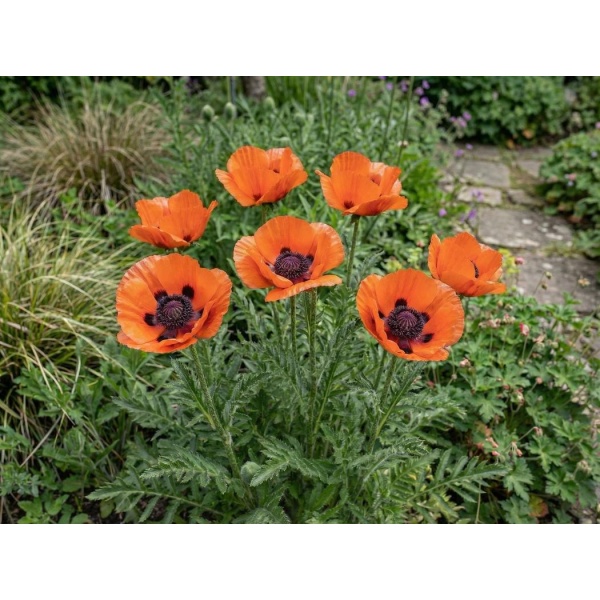
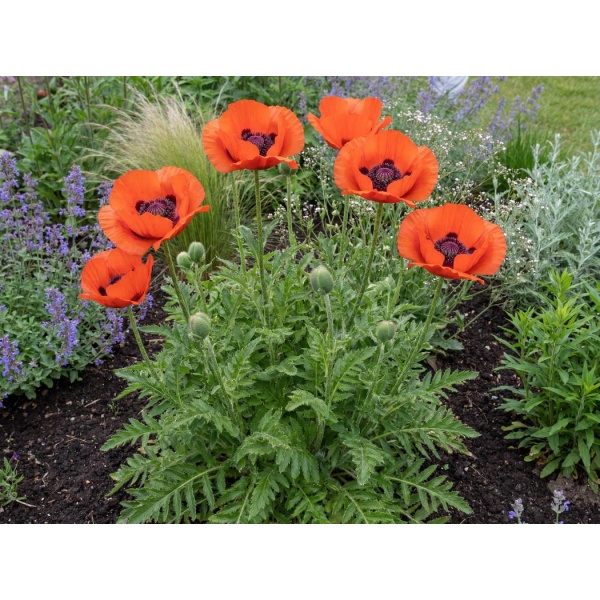
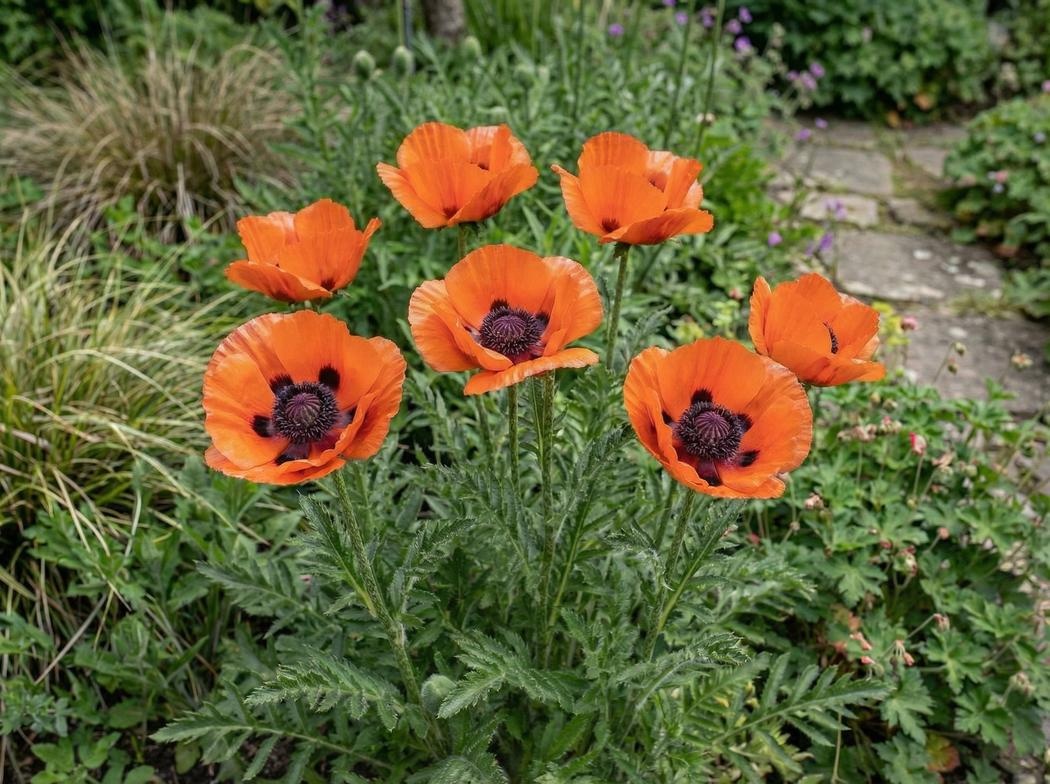
Papaver Oriental Group Allegro is a compact Oriental poppy with silvery divided foliage and large orange-red flowers marked by dark basal blotches.
- Description
- Additional information
Description
Papaver Oriental Group Allegro is a dwarf clump-forming perennial with serrated, pinnately divided grey-green foliage. Short bristly stems carry solitary crepe-papery orange-red flowers with dark basal blotches from June into July.
Grow it in full sun in fertile, medium-moisture, well-drained soil. Avoid winter waterlogging, remove spent stems before seed forms, and use later-growing companions to cover the summer-dormant gap.
Additional information
| Height | 10 in – 1 ft |
|---|---|
| Spread | 10 in – 1 ft |
| Flowering months | June, July |
| Synonyms | Papaver (Oriental Group) Allegro, Papaver Allegro, Papaver or. 'Nana Allegro', Papaver orientale 'Allegro', Papaver orientale Allegro |
| Family | Papaveraceae |
| Hazardous | yes |
| Variegated | no |
| Color flower spring | Red, Orange, Black |
| Color flower summer | Red, Orange, Black |
| Aspect | South, West |
| Foliage | Deciduous |
| Habit | Clump-former |
| Moisture | Moist but Well Drained, Well Drained Soil |
| Ph | Acid, Alkaline, Neutral |
| Position | Full sun |
| Scent | No |
| Shape | Mound-forming, Upright |
| Suggest planting location | Pollinator Garden, Flowering borders, Cottage and informal gardens, Wildlife friendly gardens |
| Type | Perennial |
| Use for | Deer resistant, Low maintenance, Pollinator-Friendly |
| Years to max height | 1 |
| Drought resistance | moderate |
| Soil | Chalk, Clay, Loam, Sand |
| Local names | Allegro Oriental Poppy |
| Blomidon Item No | MO23021318, ZPAPORA5RD, 201815035, 201921153 |
| Propagation | Propagate by root cuttings in autumn or early winter; division in spring is also possible. |
| Pests | May be susceptible to aphids. |
| Diseases | Botrytis, powdery mildew, fungal wilts, verticillium wilt, and root rot may occur. |
| Pruning | Remove spent flower stems before seed forms and cut back foliage as it yellows and dies down. |
| Hazardous information | All parts are toxic to humans and pets if ingested; keep ornamental material away from children and animals. |
| Watering instructions | Keep soil moderately moist and well drained; avoid winter saturation. |
| Sunlight instructions | Grow in full sun on a south- or west-facing site. |