
Papaver nudicaule ‘Pacino’
$12.99
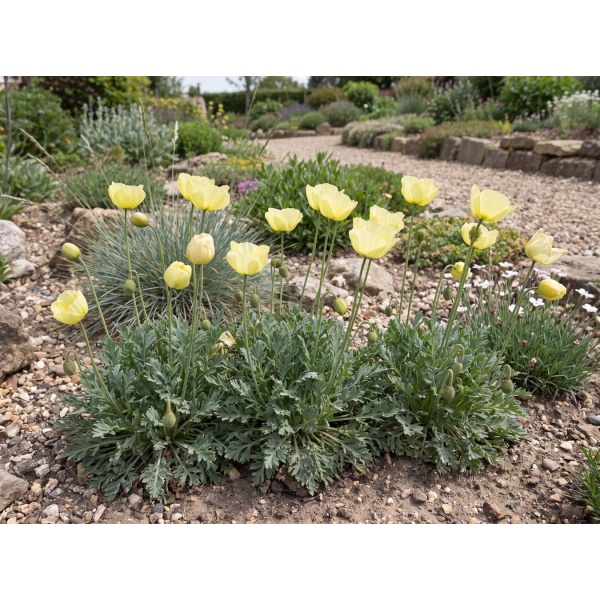
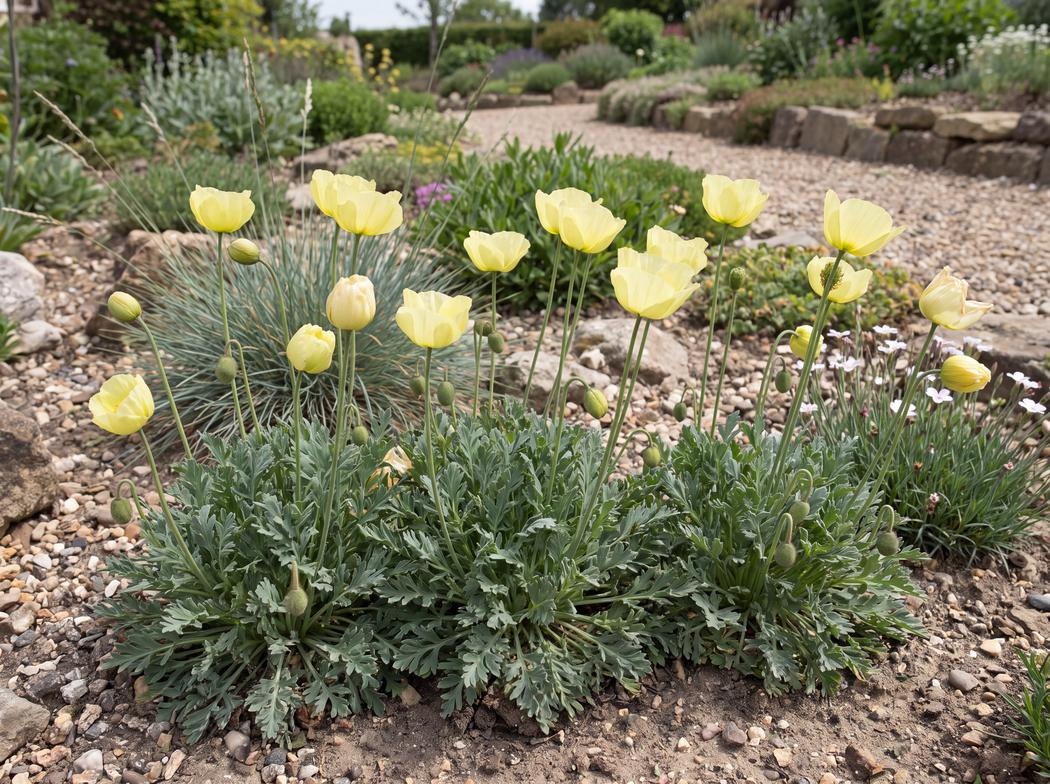
Oreomecon nudicaulis Pacino forms a low mound of finely divided gray-green leaves, topped by lightly fragrant pale lemon-yellow cups for sunny containers and rock gardens.
- Description
- Additional information
Description
For a sunny container, gravel garden, or rock garden, Oreomecon nudicaulis Pacino forms a low mound of finely divided gray-green leaves beneath lightly fragrant pale yellow flowers from late spring into summer.
Plant it in well-drained chalk, loam, or sand. Deadhead spent flowers to prolong blooming. The foliage and fruiting pods are poisonous if ingested.
Additional information
| Height | 5 in – 10 in |
|---|---|
| Spread | 5 in – 2 ft |
| Flowering months | May, June, July, August |
| Synonyms | Papaver miyabeanum Pacino, Papaver nudicaule 'Pacino', Papaver nudicaule Pacino, Papaver Pacino |
| Family | Papaveraceae |
| Hazardous | yes |
| Variegated | unknown |
| Color flower spring | Yellow |
| Color flower summer | Yellow |
| Aspect | South, West |
| Foliage | Deciduous |
| Habit | Bushy, Clump-former, Compact |
| Moisture | Well Drained Soil |
| Ph | Acid, Alkaline, Neutral |
| Position | Full sun |
| Scent | Fragrant Light |
| Shape | Mound-forming |
| Suggest planting location | Urban and courtyard gardens, Patio and container use, Cottage and informal gardens, Rock and alpine gardens, Gravel and stone gardens |
| Type | Perennial |
| Use for | Bee-Friendly, Low maintenance, Container Planting |
| Years to max height | 1 |
| Drought resistance | moderate |
| Soil | Chalk, Loam, Sand |
| Local names | Iceland Poppy, Arctic Poppy |
| Blomidon Item No | MO23027997, ZPAPNUP5RD |
| Usps | Pale lemon-yellow cups rise above finely divided gray-green leaves., Its compact mound fits sunny containers and rock gardens., Grow in full sun with well-drained soil. |
| Cultivation | Grow in full sun with well-drained chalk, loam, or sand. Deadhead spent flowers to extend blooming. |
| Propagation | Sow seed in fall for spring flowers, or sow under cover in late winter and transplant for summer flowers. |
| Pests | Aphids may feed on the plant. |
| Diseases | Downy mildew, powdery mildew, fungal wilts, and verticillium wilt may occur. |
| Pruning | Deadhead spent flowers during the flowering season to prolong blooming. |
| Hazardous information | The foliage and fruiting pods contain toxic substances and are poisonous if ingested. |
| Watering instructions | Water moderately, but keep the soil free draining. |
| Sunlight instructions | Plant in full sun with a south- or west-facing aspect. |