
Papaver orientale ‘Beauty of Livermere’
$12.99
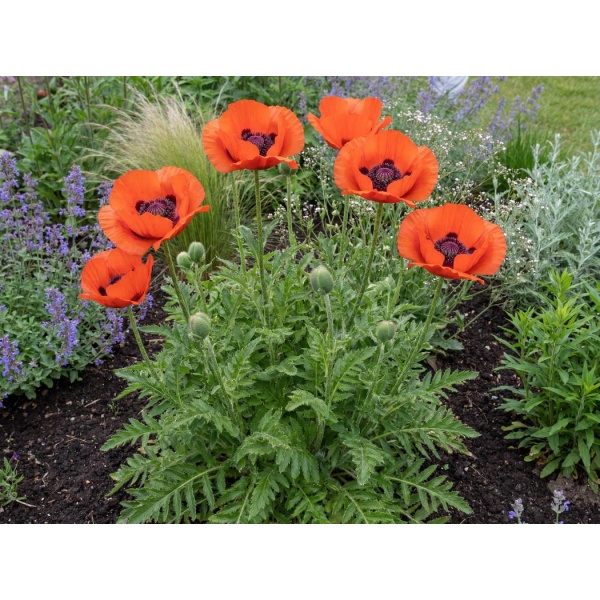
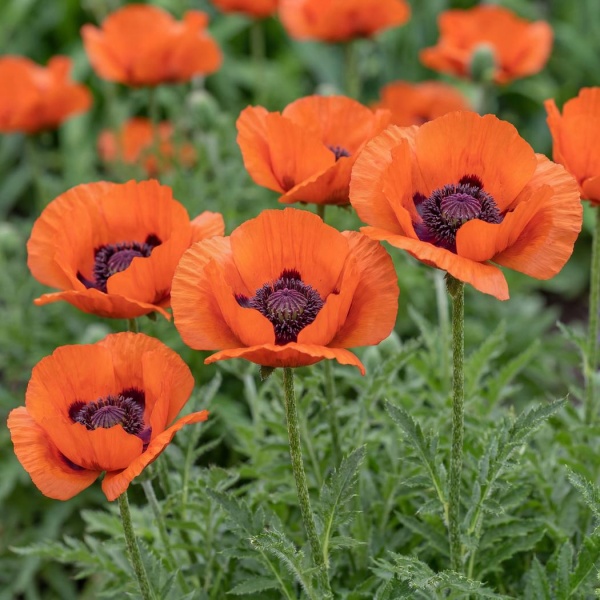
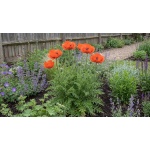
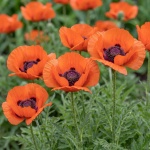
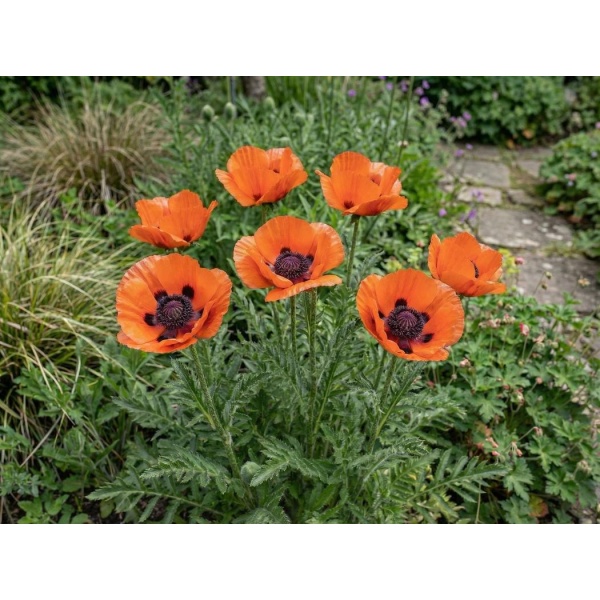
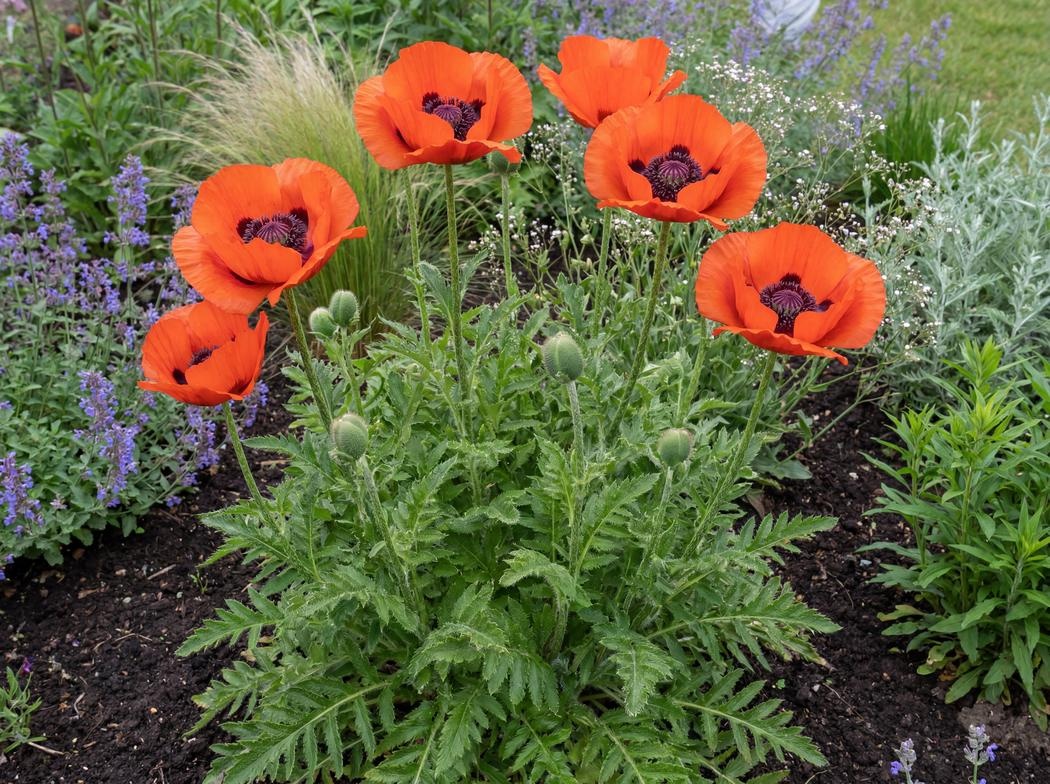
Papaver orientale Beauty of Livermere is a tall perennial poppy with bristly foliage and huge scarlet flowers marked boldly with black.
- Description
- Additional information
Description
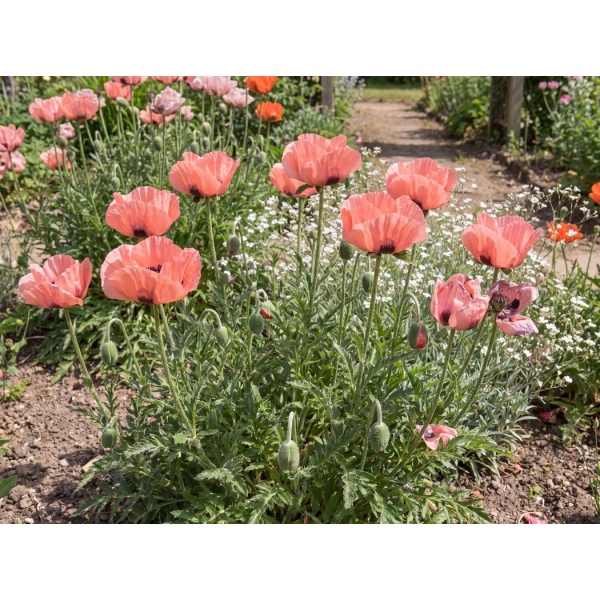
Papaver orientale Beauty of Livermere is a vigorous herbaceous perennial with a low clump of coarse, bristly green leaves. Tall hairy stems carry solitary scarlet flowers with crepe-like petals, broad black basal blotches and dark central stamens.
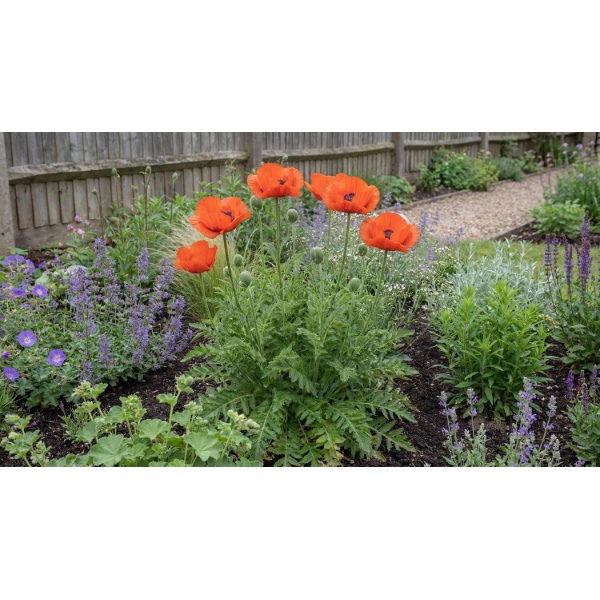
The dramatic flowers open from late spring into early summer and provide nectar and pollen for insects. Each flower is short-lived, but several stems renew the display, while airy companion plants can fill the space as the foliage enters summer dormancy.
Grow it in full sun and moist but well-drained chalk, clay, loam or sand. Improve poor soil with organic matter, avoid overfeeding and winter wet, deadhead if seedlings are unwanted, and trim yellowing foliage after flowering. All parts are toxic if eaten.
Additional information
| Height | 2 ft – 3 ft |
|---|---|
| Spread | 2 ft – 3 ft |
| Flowering months | May, June, July |
| Family | Papaveraceae |
| Hazardous | yes |
| Variegated | no |
| Color flower spring | Red, Black |
| Color flower summer | Red, Black |
| Aspect | South, West |
| Foliage | Deciduous |
| Habit | Bushy |
| Moisture | Moist but Well Drained, Well Drained Soil |
| Ph | Acid, Alkaline, Neutral |
| Position | Full sun |
| Shape | Upright |
| Suggest planting location | Urban and courtyard gardens, Flowering borders, Cut flower use, Cottage and informal gardens |
| Type | Perennial |
| Use for | Deer resistant, Cutting Garden, Pollinator-Friendly |
| Years to max height | 2 |
| Drought resistance | yes |
| Soil | Chalk, Clay, Loam, Sand |
| Local names | Beauty of Livermere oriental poppy |
| Blomidon Item No | MO23021321, 7937677295667, ZPAPORBOL5RD, ZPAPORBOL001G, 201815036, 201784686, 201938119 |
| Propagation | Propagate by root cuttings in late autumn or early winter, or divide established clumps in spring. |
| Pests | The plant may be susceptible to aphids. |
| Diseases | The plant may be susceptible to downy mildew, powdery mildew, botrytis, and root rot in poorly drained soil. |
| Pruning | Trim yellowing foliage after flowering, remove dead leaves in spring, and deadhead before seed forms if self-seeding is unwanted. |
| Hazardous information | All plant parts and sap contain toxic alkaloids and should not be eaten by people or animals. |
| Watering instructions | Water while establishing; keep soil drained and avoid excessive winter wet. |
| Sunlight instructions | Grow in full sun for sturdy stems and abundant scarlet flowers. |