
Inventory Table View
Showing 101 - 120 out of 1371
Page 6 out of 69
| Image | Name and SKU | Stock | Price | Quantity | |
|---|---|---|---|---|---|
|
|
 |
A choice plant for massing and grouping, featuring unforgettable 'herringbone' branching in horizontal tiers; pretty pink flowers in spring followed by brilliant red fruit in fall | Plant Form: arching | Hardiness Zone: 6 | Grow Height: 3 feet | Grow Spread: 7 feet | SunLight Requirement: full sun to partial shade | Moisture Requirement: dry to moist | Flowering Period: in mid spring | Fall Color: red | Landscape Application: Massing;Rock;Garden;Groundcover COTHO0003G |
20
Cotoneaster horizontalis- Rockspray |
$43.99
|
|
|
|
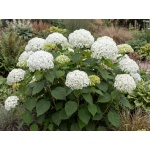 |
Hydrangea arborescens Annabelle forms a rounded deciduous shrub with huge green-to-white spherical flower heads for moist summer borders and cut arrangements. HYDARA0002G |
46
13211 3 ft – 6 ft 4 ft – 6 ft July Hydrangea Annabelle, Hydrangea arb Annabelle, Hydrangea arborescens 'Annabelle' Hydrangeaceae yes no Green, White Green, White East, South, West, North Deciduous Bushy, Clump-former Moist but Well Drained Acid, Neutral Full sun, Partial shade Round Urban and courtyard gardens, Flowering borders, Cottage and informal gardens, Rain Garden Shrub Cutting Garden 10 no Clay, Loam, Sand Annabelle smooth hydrangea Huge spherical white flower heads can reach 25 centimeters across., Blooms work well in both fresh and dried arrangements., Large white flower spheres create a bold summer focal point. Take softwood cuttings in summer. Aphids, capsid bugs, hydrangea scale, and vine weevils may occur. Leaf spot, powdery mildew, gray mold, and honey fungus may occur. Cut stems close to the ground in late winter to renew growth and support large flower heads. The plant can irritate skin, and it is harmful to pets if eaten. Wear gloves and keep it away from pets. Water regularly so the soil remains moist but not waterlogged. Provide partial shade, or full sun only where soil stays reliably moist. Annabelle Hydrangea |
$54.99
|
|
|
|
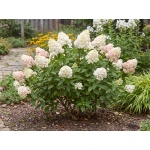 |
Hydrangea paniculata Bobo HYDPAB0003G |
10
Hydrangea paniculata Bobo 76374 2 ft – 3 ft 3 ft – 4 ft July, August, September Hydrangeaceae yes unknown White, Pink White East, South, West, North Deciduous Bushy Moist but Well Drained, Well Drained Soil Acid, Alkaline, Neutral Full sun, Partial shade Mound-forming Flowering borders, Cut flower use, Patio and container use, Cottage and informal gardens, Garden edging and borders Shrub Structural, Cutting Garden, Container Planting 5 moderate Plant in moist but well-drained soil with some sun for strong stems and abundant flowers; in hotter parts of the range, provide shade during the hottest part of the day. Clay, Loam, Sand Bobo Panicle Hydrangea, Dwarf Panicle Hydrangea Compact mound smothered in sturdy white flower panicles., White summer blooms develop a soft natural pink blush., Give sun and moist, well-drained soil for strongest flowering. |
$74.99
|
|
|
|
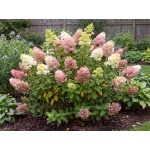 |
Hydrangea paniculata Jane brings lime-green summer panicles that soften to cream, pink, and burgundy on a compact, sturdy shrub for borders, foundations, pots, and cutting. HYDPALIL0003G |
1
63615 3 ft – 5 ft 3 ft – 5 ft July, August, September Hydrangea paniculata 'Jane', Hydrangea paniculata 'Little Lime' PBR, Hydrangea paniculata Jane Little Lime, Hydrangea paniculata Little Lime Hydrangeaceae yes no Purple, Pink Green, Pink, Cream East, South, West, North Deciduous Bushy, Columnar upright Moist but Well Drained Acid, Alkaline Full sun, Partial shade Mound-forming, Upright Urban and courtyard gardens, Flowering borders, Cut flower use, Patio and container use, Cottage and informal gardens Shrub Cutting Garden, Foundation Planting, Container Planting 5 Clay, Loam, Sand Little Lime panicle hydrangea, Little Lime hardy hydrangea Take softwood cuttings in summer; they usually begin rooting in about 20 days under warm, controlled conditions. Watch for aphids, capsid bugs, and hydrangea scale. Watch for leaf spot, gray mold, and honey fungus. Prune in late winter or early spring before new growth starts because flowers form on new wood. Hydrangea paniculata Jane is toxic if eaten by people, pets, or grazing animals, and handling may irritate sensitive skin. Keep it away from anyone likely to chew it. Keep soil consistently moist but well drained; water freely in dry weather. Give full sun to part shade, with reliable moisture in sunnier sites. Hydrangea paniculata Little Lime |
$74.99
|
|
|
|
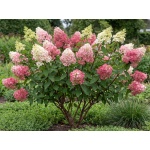 |
Hydrangea paniculatta Vanilla Strawberry HYDPAVS0003G |
5
Hydrangea paniculatta Vanilla Strawberry 76385 6 ft – 7 ft 5 ft – 6 ft July, August, September, October Hydrangeaceae yes no Red, Brown, Pink Red, White, Pink, Cream East, South, West, North Deciduous Bushy Moist but Well Drained Acid, Alkaline, Neutral Full sun, Partial shade Upright, Arching Urban and courtyard gardens, Flowering borders, Hedges and screening plants, Coastal conditions, Cottage and informal gardens Shrub Hedge, Cutting Garden, Screen 2 no Plant in moist but well-drained, humus-rich soil in full sun or partial shade. Keep soil reliably moist in full sun. Prune in early spring and use a balanced fertilizer according to label directions. Clay, Loam, Sand Vanilla Strawberry Hydrangea, Vanille Fraise Panicle Hydrangea C126, MO23045956, 121420, 134824, 144496, 121421, 104298, 110600, 118398, 104144 Creamy white panicles age through pink to strawberry red., Large blooms are excellent for fresh and dried arrangements., Full sun or partial shade and reliably moist soil support bloom. |
$79.99
|
|
|
|
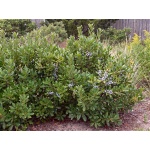 |
An interesting native shrub known for its unusual small, waxy gray fruit which tightly hug the branches through the winter; thrives in poor, sandy or gravely acidic soils, some suckering, excellent for massing; fruit are often used for candles MYRPE0003G |
25
Northern Bayberry 78329 6 ft – 8 ft 5 ft – 10 ft April, May, June Cerothamnus pensylvanica, Myrica pensylvanica Myricaceae yes unknown Green, Yellow East, South, West Deciduous Bushy, Suckering Moist but Well Drained, Well Drained Soil Acid, Alkaline, Neutral Full sun, Partial shade Round, Upright, Spreading Banks and slopes, Hedges and screening plants, Coastal conditions, Wildlife friendly gardens Shrub Deer resistant, Bird-Friendly, Erosion Control yes Clay, Loam, Sand Northern bayberry MO23005953, MYRPE0002G, MYRPE0003G, 201961075 Aromatic green foliage forms a dense, durable screen., Pale waxy fruit persists from late summer into spring., Persistent pale fruit and strong salt tolerance suit exposed coastal gardens. |
$46.99
|
|
|
|
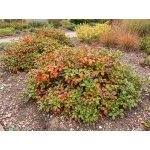 |
A low growing and compact shrub with interesting foliage turning brilliant colors in fall and bright yellow flowers in spring; makes an excellent groundcover as it tends to sucker, filling in areas quickly, does well in shade RHUARG0403G |
25
Gro-Low Fragrant Sumac 76410 2 ft – 3 ft 6 ft – 8 ft Rhus aromatica 'Gro-Low', Rhus aromatica 'Grow-Low', Rhus Aromatica Gro Low, Rhus aromatica Gro-Low Noble, Rhus aromatica Grow-low Anacardiaceae unknown unknown Yellow East, South, West Suckering Acid Prostrate, Mound-forming, Spreading Banks and slopes, Flowering borders, Wildlife friendly gardens, Ground cover planting Shrub Deer resistant, Ground cover, Erosion Control Gro-Low Fragrant Sumac MO23082807, RHUARG0002G, RHUARG0403G, 201961097, 202066360, 201823168 Glossy green leaves turn red, orange, yellow, and purple in fall., Its low, spreading growth covers bare ground quickly. |
$43.99
|
|
|
|
|
Staghorn Sumac RHUTY0003G |
6
Rhus typhina Staghorn Sumac |
$43.99
|
|
|
|
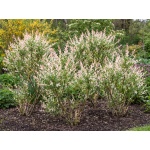 |
Salix integra Hakuro-nishiki is an arching deciduous shrub with pink spring growth, cream-white variegation, yellow fall color, and red winter stems. SALINHN0002G |
2
76458 4 ft – 6 ft 5 ft – 7 ft March, April, May Salicaceae unknown yes Yellow East, South, West, North Deciduous Bushy Wet or Damp Soil, Moist but Well Drained Acid, Alkaline, Neutral Full sun, Partial shade Round, Arching Urban and courtyard gardens, Flowering borders, Hedges and screening plants, Cottage and informal gardens, Pond Margin Shrub Hedge, Pollinator-Friendly, Erosion Control 10 Clay, Loam, Sand Dappled willow, Flamingo willow, Japanese dappled willow, Nishiki willow, Shrimp willow Pink new leaves mature through cream, white, and green variegation., Arching growth forms a colorful hedge or pond-edge shrub., Sun or part shade supports vivid pink and cream variegation. Take softwood or hardwood cuttings; collect dormant hardwood cuttings in late winter. Aphids, scale insects, borers, lace bugs, leaf beetles, sawflies, and caterpillars may occur. Willow anthracnose, blights, crown gall, powdery mildew, leaf spots, scab, rust, cankers, and honey fungus may occur. Lightly cut stems back in late winter or early spring to encourage colorful new growth and control size. Keep the soil consistently moist, especially while the shrub establishes. Grow in full sun or partial shade, with afternoon shade in hot summers. Tricolor Willow |
$39.99
|
|
|
|
|
Sambucus nigra Eva Black Lace Elderberry SAMNIBL0002G |
19
Sambucus nigra Eva Black Lace Elderberry |
$59.99
|
|
|
|
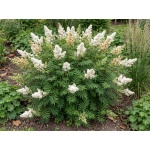 |
An exciting new development for gardeners and very different from the species, the foliage of this compact rounded shrub emerges with rich shades of pink and red fading to a cheery chartreuse with rich autumn tones, showy white plumes of flowers in summer SORSOS0503G |
17
Sem False Spirea 70385 5 ft – 7 ft 3 ft – 7 ft June, July, August Sorbaria sorbifolia Pia E, Spiraea sorbifolia Rosaceae yes unknown White White East, South, West, North Deciduous Bushy, Suckering Moist but Well Drained Acid, Neutral Full sun, Partial shade Upright Banks and slopes, Flowering borders, Hedges and screening plants Shrub Hedge, Pollinator-Friendly, Erosion Control yes Clay, Loam, Sand Pia False Spirea Pink-orange spring leaves mature beneath long white panicles., Suckering growth quickly fills hedges and contained shrub groups., Full sun or partial shade and moist soil support the fullest bloom. |
$46.99
|
|
|
|
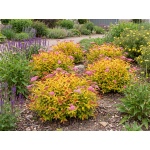 |
Spiraea japonica Walbuma forms a low, spreading mound of red new leaves that turn gold beneath bright pink summer corymbs. SPIJAMC0003G |
8
76469 10 in – 2 ft 2 ft – 3 ft June, July Spiraea japonica Magic Carpet, Spiraea japonica Walbuma (Magic Carpet), Spiraea x bumalda Walbuma Rosaceae unknown unknown Pink East, South, West Deciduous Bushy, Compact Moist but Well Drained, Well Drained Soil Acid, Alkaline, Neutral Full sun, Partial shade Round, Mound-forming, Spreading Urban and courtyard gardens, Patio and container use, Garden edging and borders, Rock and alpine gardens, Ground cover planting Shrub Butterfly-Friendly, Pollinator-Friendly, Container Planting 2 yes Plant 75 cm apart in moist, well-drained soil in full sun to partial shade, feed before spring growth, and prune in late winter if needed. Chalk, Loam, Sand Magic Carpet Spirea MO23025855, SPIJAMC0002G, SPIJAMC0003G, 201909975, 201961109, 202066344, 160073, 79713, 83362 Red new leaves turn gold beneath bright pink summer corymbs., Use this low, spreading shrub as border edging or in containers., Full sun and well-drained soil produce the brightest foliage color. Propagate by softwood cuttings. Aphids, leaf rollers, and scale may occur. Leaf spot, fire blight, powdery mildew, and root rot may occur. Prune in late winter to early spring if needed; remove faded flower clusters to encourage rebloom. Water when the top 2 inches of soil are dry, especially at first. Grow in full sun to partial shade; full sun gives the brightest color. Spiraea japonica Magic Carpet |
$37.99
|
|
|
|
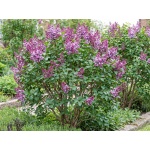 |
Syringa Bloomerang, dark purple Lilac SYRBLDP0002G |
17
dark purple Lilac, Syringa Bloomerang 48819 4 ft – 6 ft 3 ft – 5 ft May, June, July, August, September, October Oleaceae unknown no Purple Purple Purple South, West Deciduous Bushy Moist but Well Drained Alkaline, Neutral Full sun Fragrant Round, Mound-forming, Upright, Spreading Flowering borders, Cut flower use, Patio and container use, Hedges and screening plants, Cottage and informal gardens Shrub Deer resistant, Butterfly-Friendly, Cutting Garden 5 no Grow in organically rich, evenly moist, well-drained soil in full sun. Good air circulation supports healthy foliage. Prune only after the spring bloom. Loam Bloomerang Dark Purple Lilac, Reblooming Lilac, Lilac Dark buds open into fragrant violet-purple panicles., Spring flowers return from summer into fall., Full sun and evenly moist, well-drained soil support the best bloom. |
$64.99
|
|
|
|
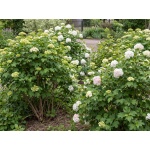 |
Viburnum opulus 'Sterile' forms a large rounded shrub with white snowball flower clusters, colorful fall foliage, and no fruit. VIBOPS0503G |
24
76498 8 ft – 13 ft 8 ft – 13 ft May Viburnum macrocephalum Sterile, Viburnum opulus 'Roseum', Viburnum opulus Roseum, Viburnum opulus Roseum Sterile, Viburnum Opulus Sterile Viburnaceae unknown no White, Pink White, Pink East, South, West, North Deciduous Bushy Moist but Well Drained, Well Drained Soil Acid, Alkaline, Neutral Full sun, Partial shade Round, Spreading Urban and courtyard gardens, Cut flower use, Hedges and screening plants, Coastal conditions, Cottage and informal gardens Shrub Hedge, Butterfly-Friendly, Cutting Garden 5 moderate Plant in full sun or partial shade in moderately fertile, humus-rich, moist but well-drained soil. Prune after flowering when shaping is needed. Chalk, Clay, Loam, Sand European Snowball Bush, Snowball Tree, Red Guelder Rose Rounded sterile flower clusters create a classic snowball display., Its broad bushy form works well as a flowering hedge., Grow in sun or partial shade in humus-rich, drained soil. Propagate by softwood cuttings in summer. Aphids and viburnum beetle may occur; viburnum crown borer can cause stem dieback. Phytophthora, honey fungus, gray mold, leaf spot, stem blight, and powdery mildew may occur. Prune immediately after flowering when needed; the shrub also tolerates hard renovative pruning. Keep humus-rich soil moist but well drained during establishment. Plant in full sun or partial shade for a strong flowering display. Eastern Snowball Viburnum |
$54.99
|
|
|
|
|
Rosa Blaze Improved ROSCLBLIM0003G |
15
Rosa Blaze Improved |
$54.99
|
|
|
|
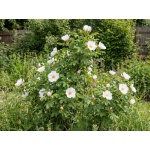 |
Rosa rugosa Alba creates a fragrant white-flowered hedge whose scarlet hips keep the garden colorful after bloom. ROSRUA0003G |
9
41354 3 ft – 5 ft 3 ft – 5 ft June, July, August Rosa rugosa 'Alba', Rosa rugosa alba, Rosa rugosa f. alba, Rosa rugosa Thunb., Rosa rugosa var. alba Rosaceae yes unknown White White East, South, West, North Deciduous Bushy Moist but Well Drained, Well Drained Soil Acid, Alkaline, Neutral Full sun, Partial shade Fragrant Round Hedges and screening plants, Coastal conditions, Cottage and informal gardens, Wildlife friendly gardens Shrub Hedge, Bird-Friendly, Pollinator-Friendly 2 yes Chalk, Clay, Loam, Sand White Japanese Rose, Ramanas Rose, White Wrinkled Rose MO23010035, ROSRUA0002G, ROSRUA0003G, 201816638, 201816640, 201708378, 201791999, 201911649, 201648230 Plant in fertile, moist but well-drained soil at 150 cm spacing. Provide full sun or partial shade and remove unwanted suckers. Pure-white flowers open from blush-pink buds through summer and fall., Very prickly growth makes an informal hedge for exposed gardens., Grow in full sun or partial shade in moist, well-drained soil. Take hardwood cuttings in fall. Watch for aphids, rose leafhopper, spider mites, scale insects, caterpillars, and rose sawflies; deer and rabbits may also damage growth. Possible diseases include black spot, rose rust, rose powdery mildew, rose dieback, replant disease, and honey fungus. In late winter or early spring, remove dead or congested wood and unwanted suckers. Cut overgrown stems to the ground only when rejuvenation is needed. The hips are ornamental and should not be eaten; wear gloves when handling the very prickly stems. Water during dry spells, but keep the root zone well drained. Grow in full sun for best flowering; partial shade also suits it. White Rugosa Rose |
$49.99
|
|
|
|
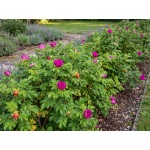 |
Rosa rugosa is a vigorous, fragrant shrub rose with wrinkled green foliage, deep pinkish-purple summer flowers, and large orange-red hips that feed birds into winter. ROSRU0003G |
1
61693 5 ft – 8 ft 5 ft – 8 ft May, June, July, August, September, October Rosa andreae, Rosa coruscans, Rosa ferox, Rosa pubescens, Rosa Rosa rugosa, Rosa rugosa 'Rubra', Rosa rugosa Rubra, Rosa rugosa Thunb. Rosaceae yes unknown Purple, White, Pink Purple, White, Pink Purple, White, Pink East, South, West Deciduous Bushy, Suckering Moist but Well Drained Acid, Alkaline, Neutral Full sun, Partial shade Fragrant Round, Upright, Arching Hedges and screening plants, Coastal conditions, Edible fruit plants, Cottage and informal gardens, Wildlife friendly gardens Shrub Bird-Friendly, Pollinator-Friendly, Edible 2 yes Plant in moist but well-drained soil at 150 cm spacing. Provide full sun, remove unwanted suckers, and avoid extremely wet sites. Chalk, Clay, Loam, Sand 8, 9, 10, 11 Rugosa Rose, Japanese Rose, Beach Tomato, Seaside Rose, Sea Tomato, Ramanas Rose C163, MO23010034, ROSRU0003G, 201816634, 201816637, 201816636, 201816635, 201708376, 201911650, 202055537, 201816641, 201816643, 201816642, 201894096, 201912202, 201648231, 201928219 Propagate by hardwood cuttings during the dormant season. Aphids, beetles, borers, scales, rose midges, leafhoppers, spider mites, and thrips may occur. Rose rust, rose rosette, black spot, and powdery mildew may occur, although the thick foliage is relatively disease resistant. Remove dead or older stems periodically and cut out unwanted suckers to contain the spread. The stems carry dense sharp prickles; wear gloves when handling or pruning. Water as needed to maintain moist but well-drained soil; never leave the root zone waterlogged. Grow in full sun for the strongest flowering and disease resistance; partial shade is tolerated. Rugosa Rose |
$49.99
|
|
|
|
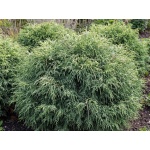 |
Chamaecyparis pisifera Filifera Nana is a dense dwarf evergreen conifer with dark green cord-like foliage on hanging shoots. CHAPIFAN0003G |
14
38560 2 ft – 3 ft 2 ft – 3 ft Chamaecyparis pisifera 'Filifera Nana' Cupressaceae yes unknown East, South, West Evergreen Bushy, Pendulous Moist but Well Drained Acid, Neutral Full sun, Partial shade Round Low maintenance planting, Urban and courtyard gardens, Patio and container use, Rock and alpine gardens Conifer Architectural, Hedge, Low maintenance 20 yes Clay, Loam, Sand Dwarf Thread Sawara False-Cypress MO23012287, CHAPIFAN0003G, 111331, 202073170, 201811659, 201681559, 202066194, 202042898, 202066305 Propagate by grafting or semi-hardwood cuttings. Aphids, juniper scale, shoot-boring moths, and bagworms may occur. Honey fungus, Phytophthora root diseases, root rot, and juniper blight may occur. No routine pruning is required; avoid cutting into old wood. Contact may irritate the skin and eyes. Wear gloves and avoid touching your eyes when handling. Water during establishment and extended drought; keep soil drained and avoid waterlogging. Grow in full sun or partial shade. Dwarf Threadleaf Falsecypress |
$64.99
|
|
|
|
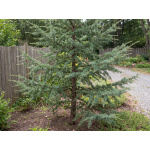 |
A tall spire-like coniferous tree with deciduous needles starting bright green in spring and turning brilliant gold in fall; prefers extremely moist locations and sandy soils; can look a little odd in winter without needles, but shines the other 3 seasons LARLA0003G |
7
Tamarack 79353 1500 cm – 2300 cm 700 cm – 1000 cm Pinaceae yes unknown Red, Yellow East, North Columnar upright Acid Pyramidal Hedges and screening plants, Wildlife friendly gardens, Bog Garden, Rain Garden Conifer Bird-Friendly, Naturalizing, Screen Tamarack, Eastern Larch, American Larch, Alaska Larch, Hackmatack, Black Larch, Red Larch, Eastern Tamarack 122072, 144545, LARLA0003G, LARLA01007G, LARLA0175WB, LARLA0200WB, 100-8448, 100-10084, 3LL 122, 3LL 115, 3LL 118, 3LL 120, 3LL 155GB Soft blue-green needles turn yellow in fall., Grows in sunny rain gardens with moist soil. |
$64.99
|
|
|
|
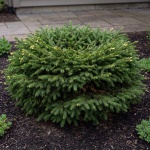 |
Picea abies Nidiformis forms a low, wide evergreen mound with a distinctive nest-like center, bringing year-round structure to sunny borders and containers. PICABN0003G |
10
3065 3 ft – 5 ft 8 ft – 13 ft Picea abies 'Nidiformis' Pinaceae yes no East, South, West, North Evergreen Bushy Moist but Well Drained Acid, Neutral Full sun No Spreading Low maintenance planting, Patio and container use, Garden edging and borders, Rock and alpine gardens Conifer Structural, Ground cover, Container Planting 20 moderate Clay, Loam, Sand Bird's Nest Spruce, Nest Spruce MO23012829, 119904, 120830, 120831, 125379, 106651, 106623, 108780, 108357, 112794, 104140, PICABN0003G, 100-9325, 201965242, 201634813, 202016684 Dark green needles build a distinctive flat-topped, nest-like mound., Slow growth brings year-round structure to borders and containers., Best in full sun with evenly moist, well-drained soil. Propagate by grafting or with semi-hardwood cuttings. Adelgids, red spider mites, and conifer aphids may attack the foliage. Honey fungus may affect the plant. No routine pruning is needed; remove only dead or damaged shoots when they appear. The short needles are prickly and may scratch skin during close handling. This is a mechanical injury risk, not evidence of toxicity. Water when the top 2 inches of soil are dry; keep drainage open. Grow in full sun with shelter from cold, drying winds. Birds Nest Spruce |
$109.99
|
|