
Salix gracilistyla Mount Aso
$46.99
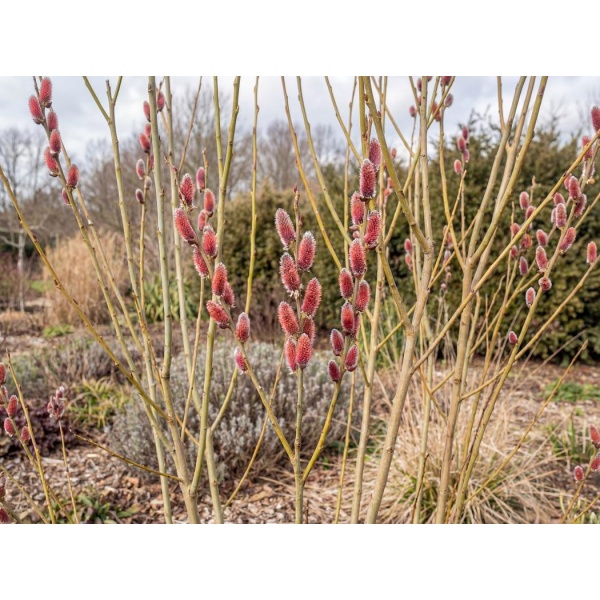
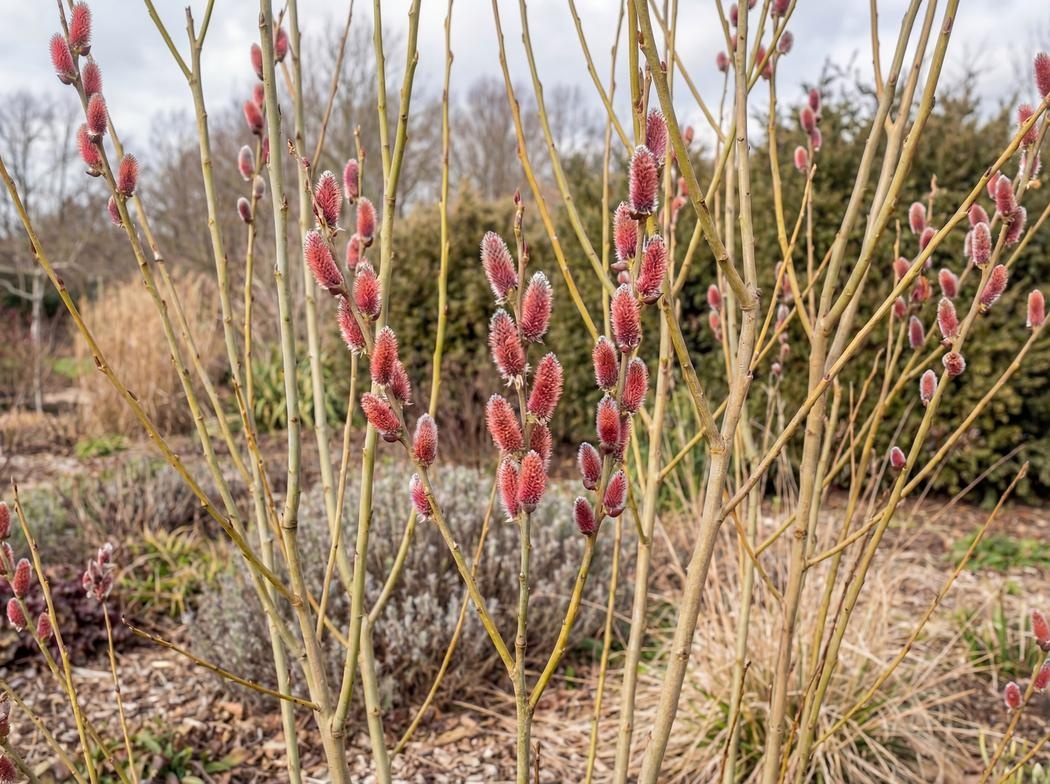
Salix chaenomeloides Mount Aso is a bushy deciduous willow whose reddish-brown shoots carry silky rose-pink catkins before blue-green leaves emerge.
- Description
- Additional information
Description
Salix chaenomeloides Mount Aso is a bushy ornamental willow selected for a profuse late-winter and early-spring display of rosy-pink male catkins.
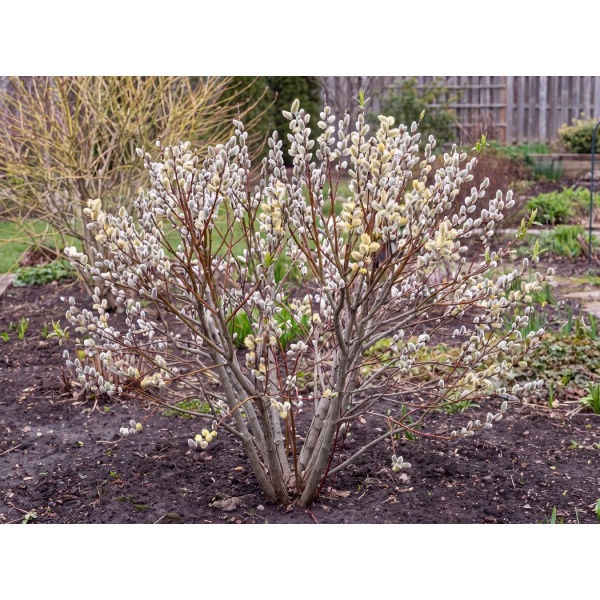
The silky catkins open along polished reddish-brown twigs, fade through silver-gray, and reveal muted yellow pollen before the leaves emerge.
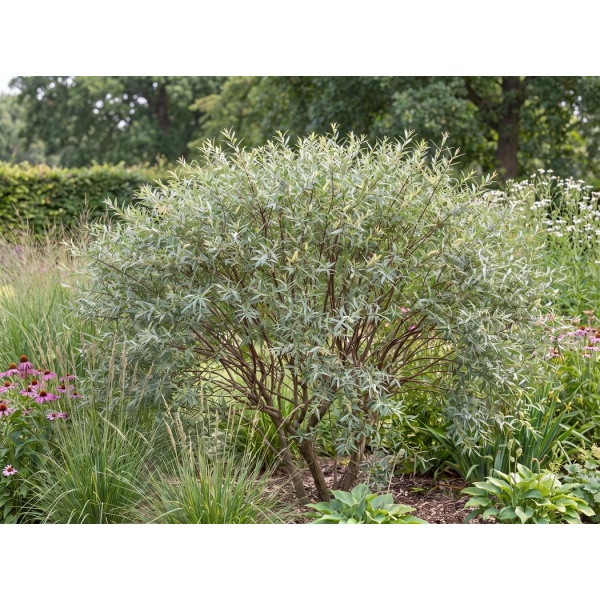
Later, alternate blue-green leaves with finely toothed margins and silvery undersides clothe the broadly upright, arching shrub.
Grow it in full sun and deep, moist but well-drained soil, and coppice after flowering to renew the best catkin-bearing shoots for cutting.
Additional information
| Height | 5 ft – 10 ft |
|---|---|
| Spread | 5 ft – 10 ft |
| Flowering months | February, March, April |
| Synonyms | Salix caprea Mount Aso, Salix gracilistyla 'Mt. Aso', Salix gracilistyla Mount Aso, Salix gracilistyla Mt. Aso, Salix gracilistylus Mt Aso |
| Family | Salicaceae |
| Hazardous | unknown |
| Variegated | no |
| Color flower spring | Yellow, Pink, Gray, Silver |
| Color flower winter | Pink, Silver |
| Aspect | East, South, West |
| Foliage | Deciduous |
| Habit | Bushy |
| Moisture | Moist but Well Drained |
| Ph | Acid, Alkaline, Neutral |
| Position | Full sun |
| Shape | Mound-forming, Upright, Arching |
| Suggest planting location | Urban and courtyard gardens, Cut flower use, Coastal conditions, Cottage and informal gardens, Wildlife friendly gardens |
| Type | Perennial |
| Use for | Hedge, Cutting Garden, Pollinator-Friendly |
| Years to max height | 5 |
| Drought resistance | no |
| Soil | Clay, Loam, Sand |
| Local names | Mount Aso Willow, Japanese Pink Pussy Willow, Pink Pussy Willow |
| Blomidon Item No | MO23053251, SALGRMA0002G, 100280, 201967281, 201961103, 201993976, 201993527 |
| Propagation | Root softwood cuttings in early summer or hardwood cuttings in winter. |
| Pests | May be affected by aphids, caterpillars, leaf beetles, sawflies, and willow scale. |
| Diseases | May be affected by willow anthracnose, rust, honey fungus, or rot where drainage is poor. |
| Pruning | For the best catkin display, prune hard in March after flowering every one to three years, removing old wood to encourage vigorous young shoots. |
| Watering instructions | Keep deep soil evenly moist, but avoid standing water. |
| Sunlight instructions | Grow in full sun for dense shoots and the richest pink catkins. |
| Common Name | Salix gracilistyla Mount Aso |