
Hippophae rhamnoides “Orange
$64.99
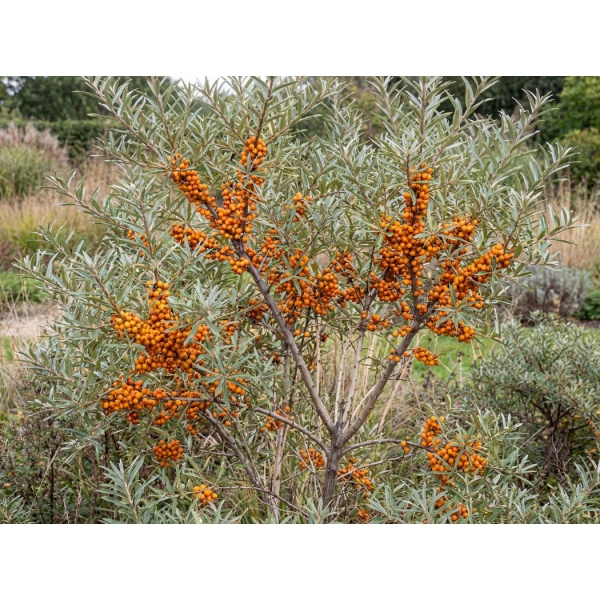
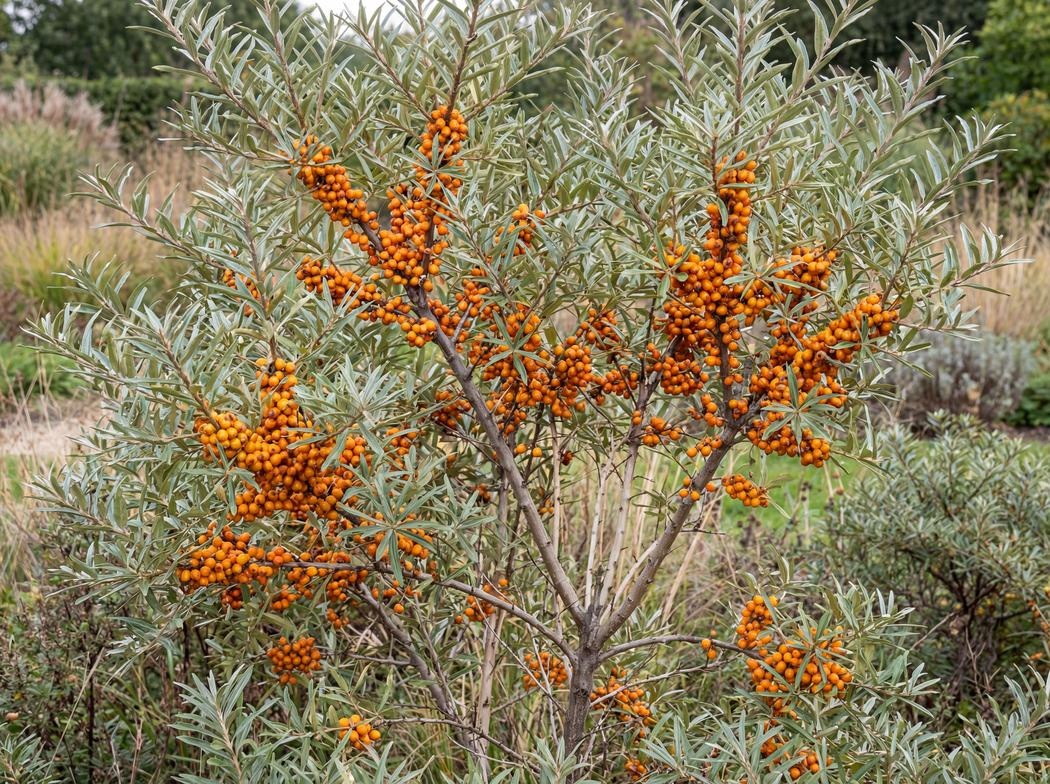
Sea buckthorn is a tough, fruiting shrub with narrow silver-gray leaves, small spring flowers, and bright orange berries in fall. It is valued for its edible fruit, wildlife cover, and use in exposed sites.
- Description
- Additional information
Description
Hippophae rhamnoides ‘Friesdorfer Orange’ is a hardy sea buckthorn grown for both its ornamental value and its heavy crop of orange berries. Its narrow silver-gray leaves give the shrub a light look through the growing season, while the bright fruit adds strong color from late summer into fall. This variety is known for being self-fertile, so a single plant can set fruit on its own. It grows in an upright, bushy habit and also forms a dense barrier because of its thorny branches. The combination of useful fruit and strong garden presence makes it a very practical shrub.
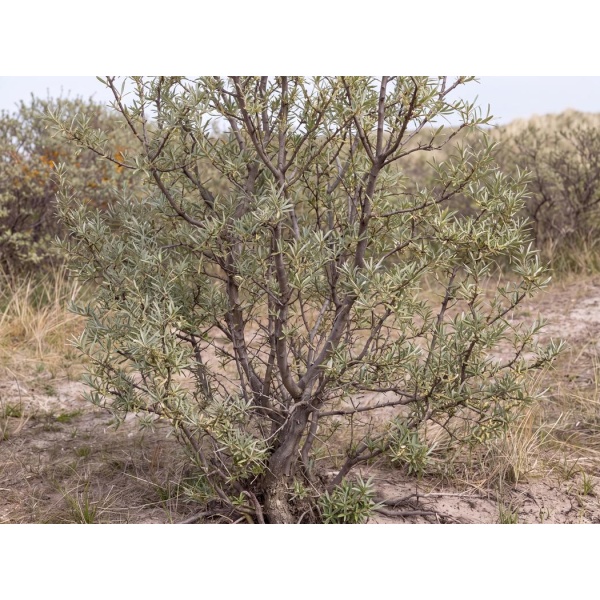
This shrub is a strong choice for coastal gardens, sunny borders, slopes, and informal screening. It handles poor soil, wind, and dry conditions once established, which makes it useful in places where less hardy shrubs may struggle. The flowers are small and not showy, but they are followed by eye-catching berries that also help feed birds. Its dense growth also gives birds shelter and nesting cover, adding extra value in wildlife-friendly planting. The silver foliage and orange fruit give interest across more than one season.
Pruning needs are light and mostly involve removing dead, damaged, or crowded shoots in late winter. Older branches can be thinned from time to time to keep the plant open and fruiting well. Propagation is usually done from hardwood cuttings, semi-ripe cuttings, or by lifting rooted suckers. The plant is usually healthy, though fruit fly problems can appear in some areas, and poor drainage may lead to wilt or root problems. Given a sunny, well-drained spot, it is a reliable shrub with both ornamental and practical value.
Additional information
| Height | 8 ft – 13 ft |
|---|---|
| Spread | 5 ft – 8 ft |
| Flowering months | April, May |
| Synonyms | Hippophae rhamnoides 'Friesdorfer', Hippophae rhamnoides "Orange, Hippophae rhamnoides Orange Delight, Hippophae rhamnoides Orange Glow |
| Family | Elaeagnaceae |
| Hazardous | no |
| Variegated | no |
| Color flower spring | Brown, Yellow |
| Aspect | South, West |
| Foliage | Deciduous |
| Habit | Bushy, Columnar upright |
| Moisture | Moist but Well Drained, Well Drained Soil |
| Ph | Acid, Alkaline, Neutral |
| Position | Full sun |
| Scent | No |
| Shape | Oval |
| Suggest planting location | Banks and slopes, Low maintenance planting, Hedges and screening plants, Coastal conditions, Wildlife friendly gardens |
| Type | Shrub |
| Use for | Hedge, Bird-Friendly, Screen |
| Years to max height | 10 |
| Drought resistance | yes |
| Soil | Loam, Sand, Gravelly soil |
| Local names | Sea buckthorn |
| Blomidon Item No | HIPRHOR0002G |
| Diseases | Sea buckthorn is generally healthy in the right place, but poor drainage can lead to wilt or root problems. Heavy, wet soil is the main risk, so good drainage is important for steady growth. |
| Pruning | Pruning needs are light and mostly involve removing dead, damaged, or crowded shoots in late winter. Older branches can be thinned from time to time to keep the plant open and fruiting well. |
| Common Name | Sea Buckthorn |