
Astilbe ‘Delft Lace’
$28.99
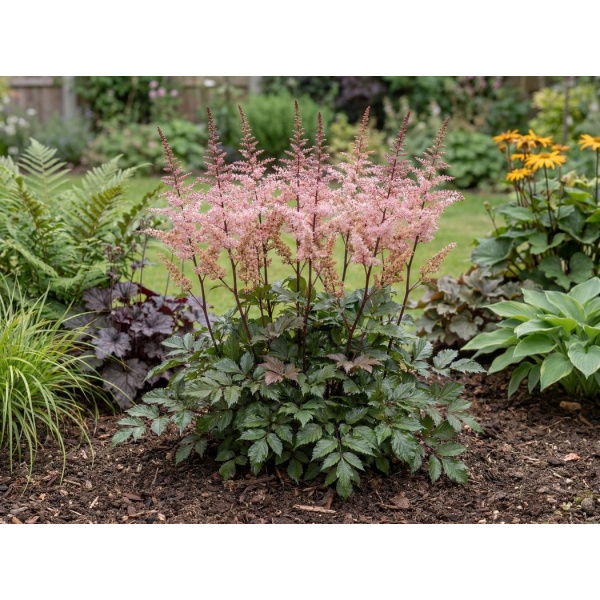
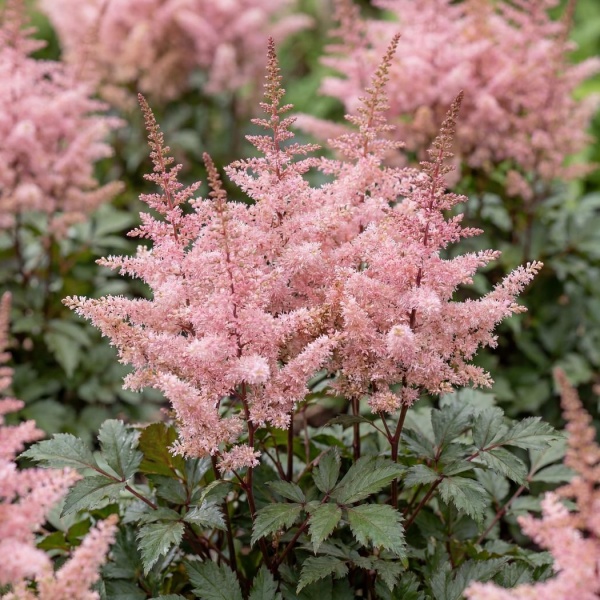
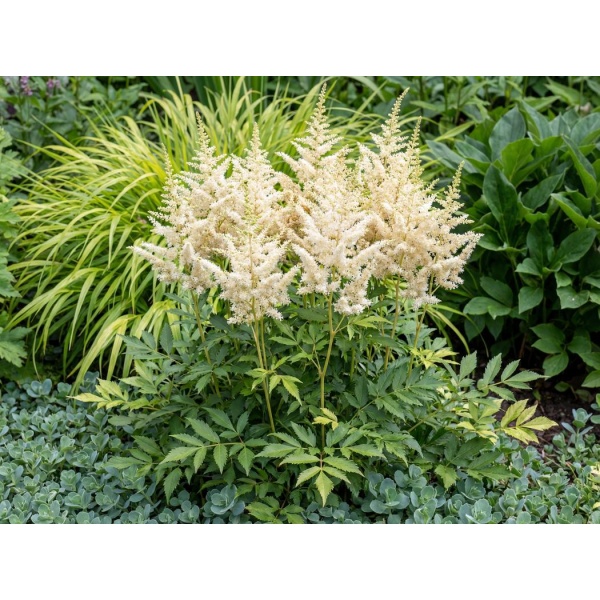
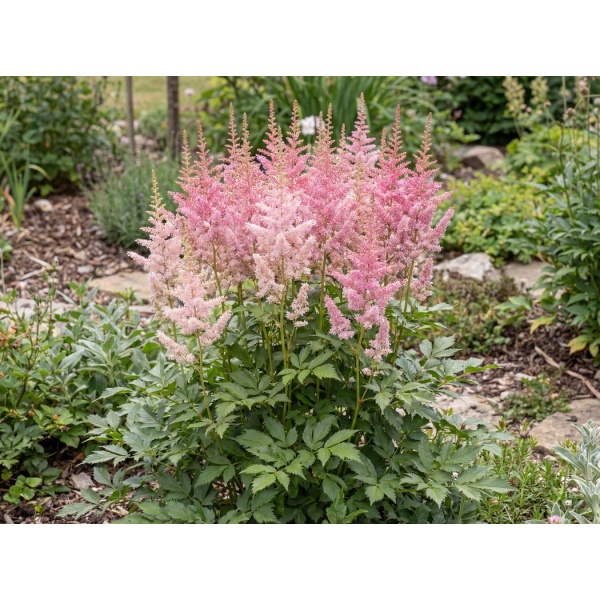
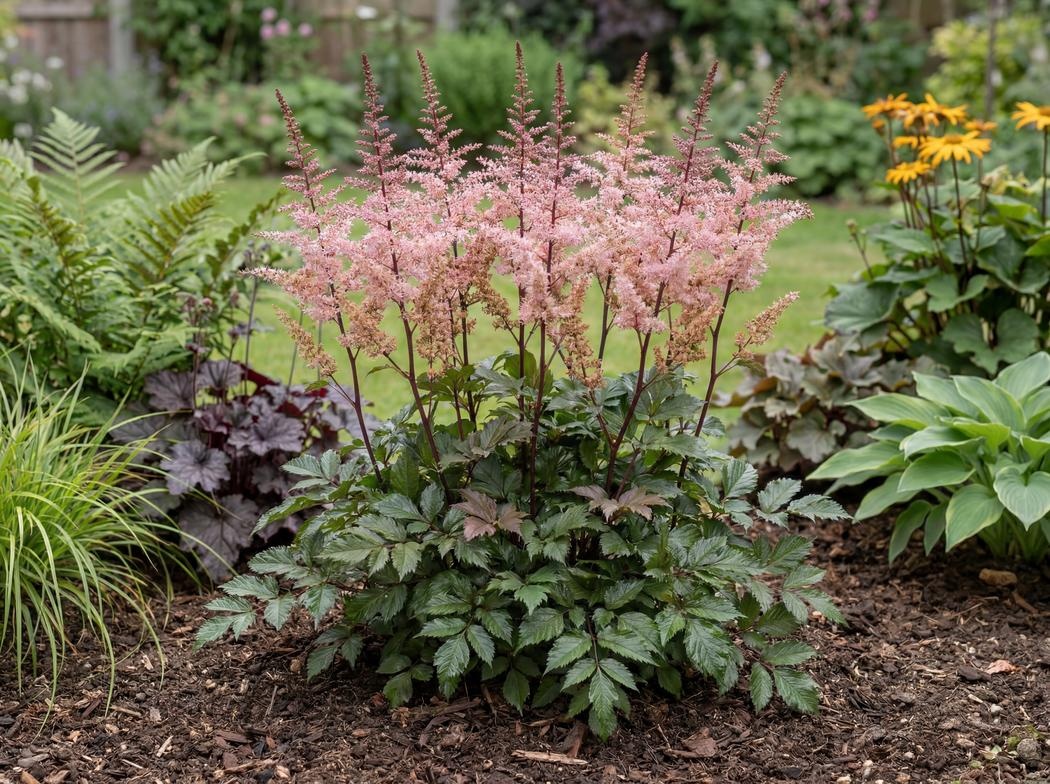
Astilbe Delft Lace carries soft pink, feathery plumes on red stems above deeply divided foliage flushed purple in spring.
- Description
- Additional information
Description
Astilbe Delft Lace forms a sturdy upright clump with finely divided, dark green foliage that emerges with a purple flush. Red stems lift feathery plumes from salmon-pink buds into soft apricot-pink and deeper pink tones in early summer.
The plant reaches about 60-90 cm high and 60 cm wide, making it useful in shaded borders, mass plantings, containers, and cutting gardens. The dried seedheads can remain for winter structure.
Grow it in fertile, moisture-retentive soil in partial shade. Water consistently, especially as foliage and plumes develop, because dry soil quickly scorches the leaf margins. Divide crowded clumps every three to four years and feed lightly in late spring.
Additional information
| Height | 2 ft – 3 ft |
|---|---|
| Spread | 2 ft – 2 ft |
| Flowering months | June, July |
| Synonyms | Astilbe 'Delft Lace', Astilbe hybrid Delft Lace, Astilbe japonica Delft Lace |
| Family | Saxifragaceae |
| Hazardous | unknown |
| Variegated | unknown |
| Color flower summer | Pink |
| Aspect | East, North |
| Foliage | Deciduous |
| Habit | Clump-former |
| Moisture | Moist but Well Drained |
| Ph | Acid, Neutral |
| Position | Partial shade |
| Scent | Fragrant |
| Shape | Upright |
| Suggest planting location | Shade Garden, Urban and courtyard gardens, Flowering borders, Patio and container use, Cottage and informal gardens |
| Type | Perennial |
| Use for | Bee-Friendly, Cutting Garden, Container Planting |
| Years to max height | 2 |
| Drought resistance | no |
| Cultivation | Plant in fertile moisture-retentive soil in partial shade, mulch with organic matter, and divide crowded clumps every three to four years. |
| Soil | Clay, Loam |
| Local names | Delft Lace Astilbe, False Spirea |
| Blomidon Item No | 7937657897011, ZASTCHDL0001G, ZASTCHDL0002G |
| Propagation | Divide overcrowded clumps every three to four years, discarding old woody rhizomes. |
| Pests | Vine weevil may damage the roots; Japanese beetles may feed on foliage. |
| Diseases | Powdery mildew, bacterial blight, and Fusarium wilt may occur. |
| Pruning | Remove faded flower stalks for a tidy look or leave the dry plumes for winter interest; clear old foliage in spring. |
| Watering instructions | Keep soil consistently moist but not waterlogged, increasing water as foliage emerges and plumes develop. |
| Sunlight instructions | Grow in partial shade; full sun is suitable only where the soil stays consistently moist. |
| Common Name | Delft Lace Astilbe |