
Hemerocallis ‘Hyperion’
$27.99
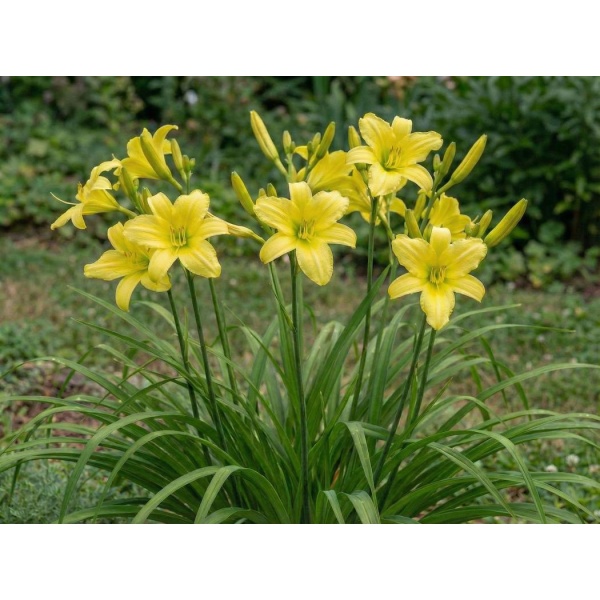
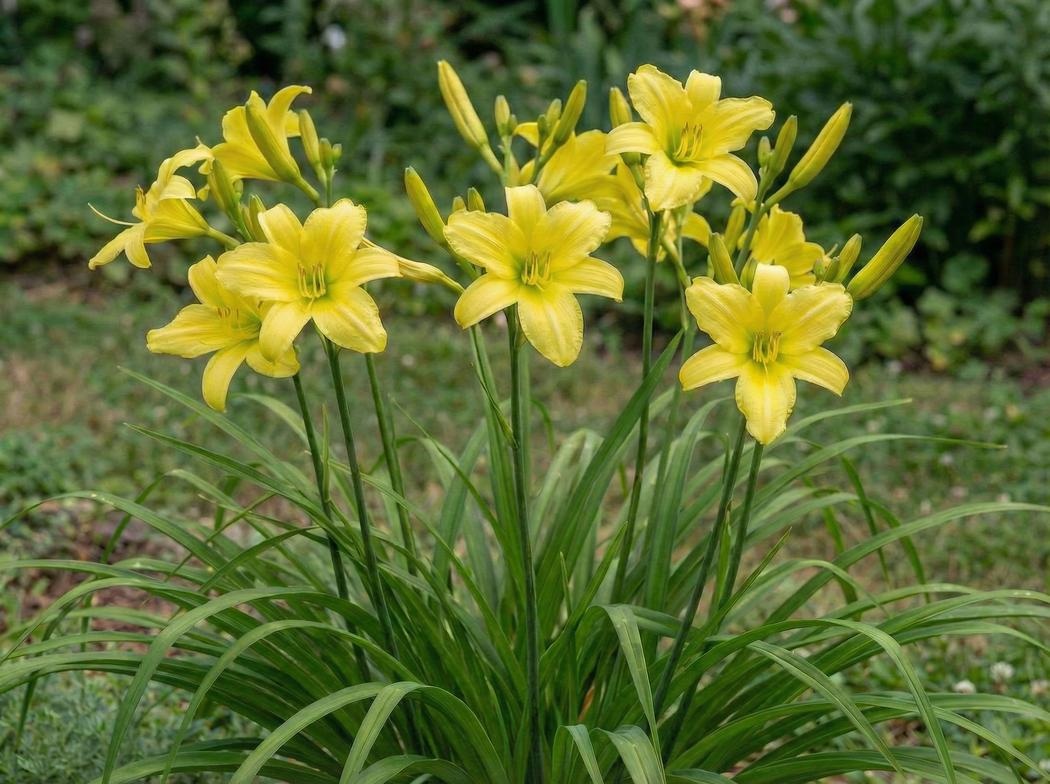
Hemerocallis Hyperion is a historic dormant daylily with arching green foliage and fragrant single canary-yellow midsummer flowers on tall scapes.
- Description
- Additional information
Description
Hemerocallis Hyperion is a historic diploid daylily registered in 1924. It forms a deciduous clump of arching, strap-like green leaves and sends up approximately 100 cm scapes carrying fragrant single flowers. The extended blooms are pale canary yellow with delicate green-yellow throats and appear in midsummer.
Grow it in fertile, moist but well-drained soil in full sun or partial shade, with the best flowering in full sun. Water deeply in dry spells, divide established clumps every few years, and remove finished scapes. Every part of Hemerocallis is highly toxic to cats and can cause acute kidney failure, so exclude cats from the planting area.
Additional information
| Height | 3 ft – 3 ft |
|---|---|
| Spread | 1 ft – 2 ft |
| Flowering months | July |
| Synonyms | Hemerocallis 'Hyperion' |
| Family | Asphodelaceae |
| Hazardous | yes |
| Variegated | no |
| Color flower summer | Green, Yellow |
| Aspect | South, West |
| Foliage | Deciduous |
| Habit | Clump-former |
| Moisture | Moist but Well Drained, Well Drained Soil |
| Ph | Acid, Alkaline, Neutral |
| Position | Full sun, Partial shade |
| Scent | Fragrant |
| Shape | Mound-forming |
| Suggest planting location | Flowering borders, Patio and container use, Coastal conditions, Cottage and informal gardens, Garden edging and borders |
| Type | Perennial |
| Use for | Butterfly-Friendly, Edging Plant, Low maintenance |
| Years to max height | 2 |
| Drought resistance | yes |
| Soil | Chalk, Clay, Loam, Sand |
| Local names | Hyperion Daylily |
| Blomidon Item No | 7937666613299, ZHEMHY0001G, 201813215 |
| Cultivation | Grow in fertile, moist but well-drained soil in full sun or partial shade. Water deeply in dry spells, divide established clumps, and remove finished scapes. |
| Propagation | Propagate by division in early spring or early autumn. |
| Pests | Aphids, slugs, snails, daylily gall midge, spider mites, and thrips may occur. |
| Diseases | Fungal leaf spot, rust, bacterial leaf and stem rot, and crown rot may occur. |
| Pruning | Remove spent flowers for neatness, cut scapes after flowering, and remove dead foliage as required. |
| Hazardous information | All parts are toxic to cats; ingestion may cause vomiting, inappetence, lethargy, kidney failure, or death. ASPCA lists Hemerocallis as non-toxic to dogs. |
| Watering instructions | Keep soil moist but well drained; water deeply during dry periods. |
| Sunlight instructions | Grow in full sun for the strongest flowering; partial shade is tolerated. |