
Hemerocallis “Always Afternoon
$27.99
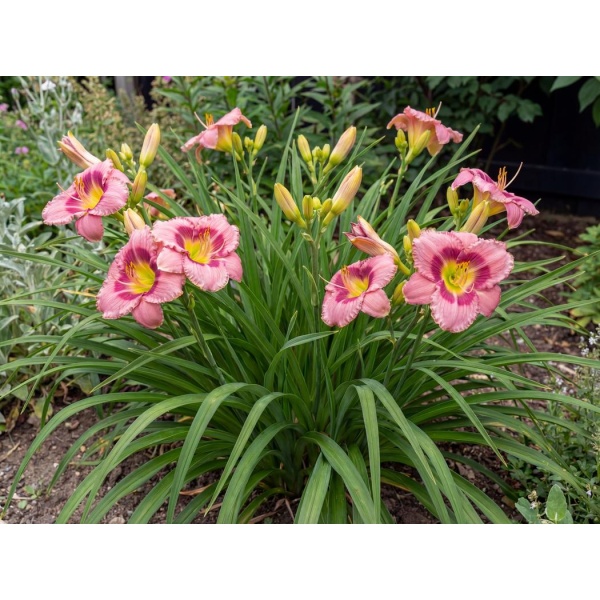
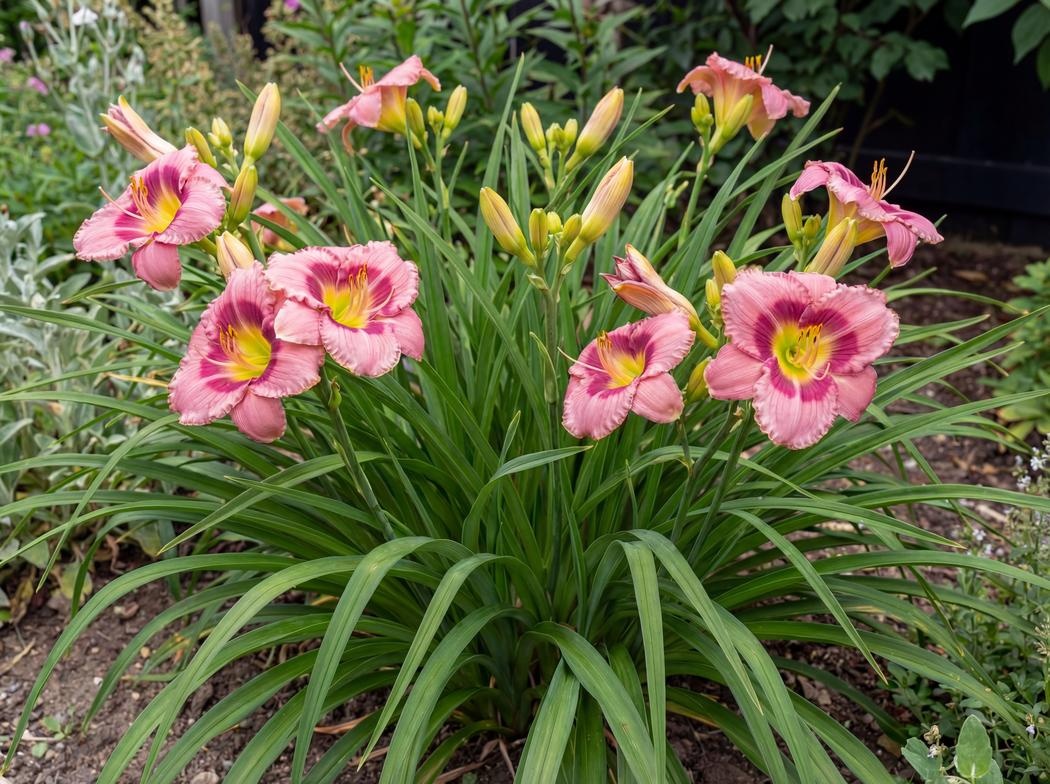
Hemerocallis Always Afternoon pairs raspberry-pink ruffled flowers and plum-purple eyes with arching green foliage and repeat bloom.
- Description
- Additional information
Description
Hemerocallis Always Afternoon forms a tidy clump of arching strap-shaped leaves and upright, branched scapes carrying large raspberry-pink flowers.
Each funnel-shaped bloom has ruffled petals, a plum-purple eye zone, and a green throat. The extended flowers open in early to midsummer, and established plants can rebloom later.
Grow it in fertile, moist but well-drained soil in sun or partial shade. Divide congested clumps, remove finished scapes, and water during dry spring and early-summer weather.
Additional information
| Height | 2 ft – 2 ft |
|---|---|
| Spread | 1 ft – 2 ft |
| Flowering months | June, July, August |
| Synonyms | Hemerocallis "Always Afternoon |
| Family | Asphodelaceae |
| Hazardous | yes |
| Variegated | unknown |
| Color flower summer | Green, Purple, Pink |
| Aspect | South, West |
| Foliage | Semi-evergreen |
| Habit | Clump-former |
| Moisture | Moist but Well Drained |
| Ph | Acid, Alkaline, Neutral |
| Position | Full sun, Partial shade |
| Shape | Mound-forming, Upright, Arching |
| Suggest planting location | Flowering borders, Patio and container use, Coastal conditions, Cottage and informal gardens, Garden edging and borders |
| Type | Perennial |
| Use for | Rabbit resistant, Low maintenance, Container Planting |
| Years to max height | 2 |
| Drought resistance | yes |
| Soil | Chalk, Clay, Loam, Sand |
| Local names | Always Afternoon Daylily |
| Blomidon Item No | ZHEMAA0001G |
| Cultivation | Plant in fertile, moist but well-drained soil. Give full sun for strongest flowering or use light partial shade. Water in dry spring and early-summer conditions to support bloom. |
| Usps | Large raspberry-pink flowers carry a bold plum eye and green throat., Extended early flowers can be followed by a second flush of bloom., Provide sun, spring moisture, and room for arching leaf fans. |
| Propagation | Divide established clumps in early spring or early autumn. |
| Pests | Aphids, slugs, snails, gall midges, spider mites, and thrips may occur. |
| Diseases | Fungal leaf spot, daylily rust, and bacterial leaf or stem rot may occur. |
| Pruning | Remove spent flowers and cut finished scapes low, then clear dead foliage. |
| Hazardous information | Toxic to cats and harmful if ingested. |
| Watering instructions | Keep soil moist but well drained and water during dry spring weather. |
| Sunlight instructions | Give full sun for strongest bloom or provide light partial shade. |