
Hosta ‘Blue Mammoth’
$32.99
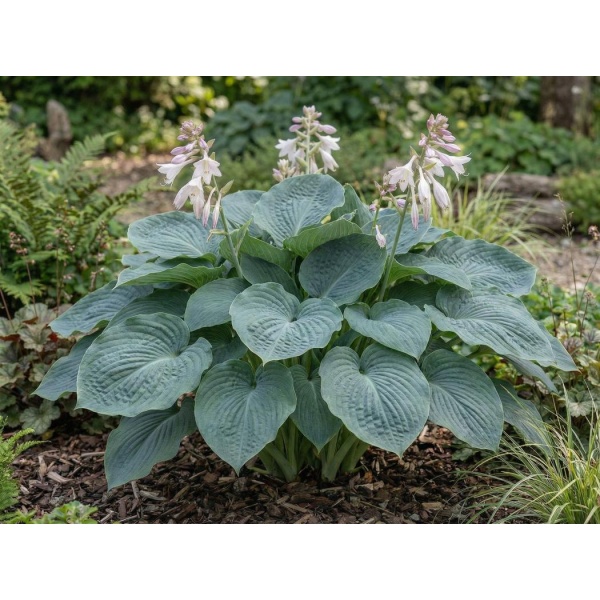
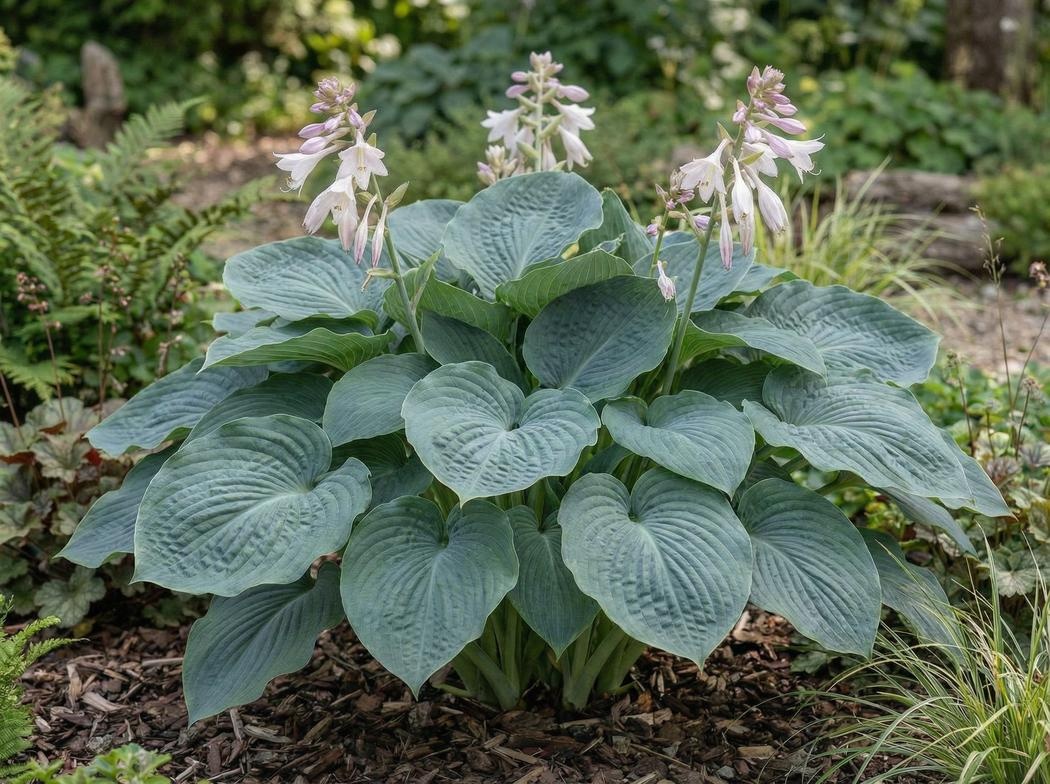
Hosta Blue Mammoth forms a huge mound of heavily puckered powder blue-green leaves, with tall grey-green scapes carrying white to pale lavender summer flowers.
- Description
- Additional information
Description
Hosta Blue Mammoth is a giant deciduous shade perennial descended from Hosta sieboldiana Elegans. Mature plants form imposing mounds about 60–90 cm high and 90–122 cm wide, while flower scapes may reach approximately 122 cm. Thick, heavily corrugated, wide-oval to heart-shaped leaves can grow about 41 cm long and 30 cm wide and carry a powdery blue-green surface.
In midsummer, upright grey-green scapes rise above the foliage and carry funnel-shaped flowers ranging from white to pale lavender. The bold leaves remain the primary feature, providing strong texture and cool colour in large woodland borders, shaded courtyards and specimen plantings.
Grow in fertile, organically rich, evenly moist but well-drained soil in partial to full shade. Light shade preserves the blue waxy coating, while harsh sun and dry soil reduce leaf quality. Water beneath the leaves, mulch annually, protect emerging shoots from slugs and divide only when the mature clump requires control.
Additional information
| Height | 2 ft – 4 ft |
|---|---|
| Spread | 3 ft – 4 ft |
| Flowering months | June, July, August |
| Synonyms | Hosta 'Blue Mammoth', Hosta sieboldiana Blue Mammoth |
| Family | Asparagaceae |
| Hazardous | yes |
| Variegated | no |
| Color flower summer | White |
| Aspect | East, West, North |
| Foliage | Deciduous |
| Habit | Bushy, Clump-former |
| Moisture | Moist but Well Drained |
| Ph | Acid, Alkaline, Neutral |
| Position | Partial shade, Light shade |
| Scent | No |
| Shape | Mound-forming |
| Type | Perennial |
| Use for | Shade Garden, Container Planting |
| Years to max height | Reaches full giant clump size in two to five growi |
| Drought resistance | no |
| Soil | Clay, Loam |
| Local names | Blue Mammoth Hosta, Blue Mammoth Plantain Lily |
| Blomidon Item No | ZHOSBM0001G |
| Cultivation | Give dappled shade and regular deep watering. Renew the mulch without covering the crown and remove any virus-suspect foliage with clean tools. |
| Propagation | Propagate true to type by division in early spring before leaves unfurl or in late summer after active growth slows. |
| Pests | Slugs, snails, foliar nematodes, deer, rabbits and voles may cause damage. |
| Diseases | Hosta Virus X, tobacco rattle virus, tomato ring spot virus, leaf spot, anthracnose and crown rot may occur. |
| Pruning | Remove collapsed foliage in late autumn or before spring growth, and cut spent flower scapes when seed is not required. |
| Hazardous information | Hosta contains saponins and is toxic to dogs, cats and horses; ingestion may cause vomiting, diarrhoea and depression. |
| Watering instructions | Keep soil evenly moist through active growth and apply water beneath the leaves so the broad surfaces stay cleaner and drier. |
| Sunlight instructions | Grow in light to full shade, with gentle morning light at most, to preserve the powder-blue leaf coating. |