
Hosta ‘Curly Fries’
$21.99
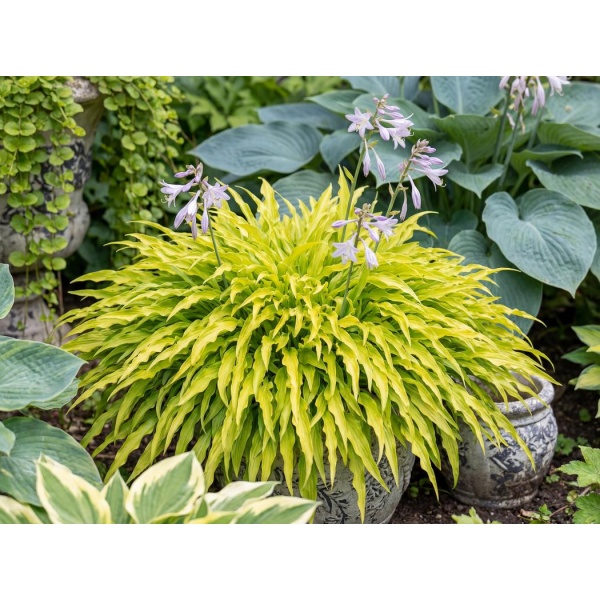
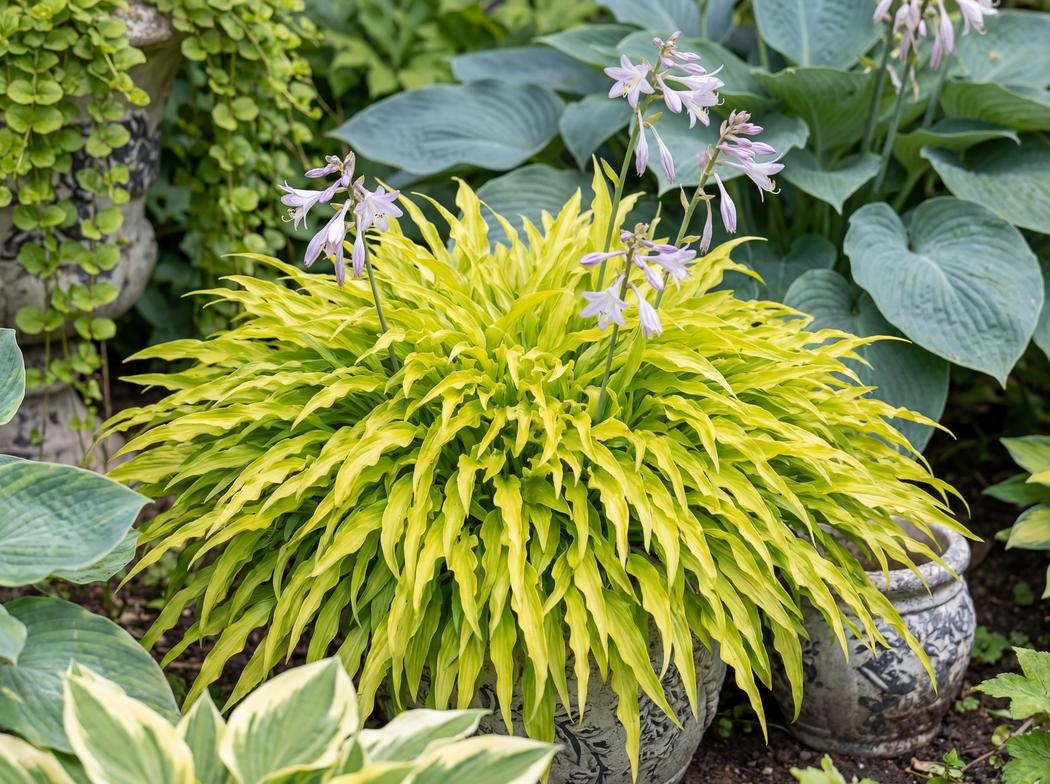
A compact hosta with narrow, dramatically rippled chartreuse leaves that arch into a lively mound. Lavender flowers rise above the foliage in midsummer.
- Description
- Additional information
Description
Hosta Curly Fries forms a small, arching clump of exceptionally narrow, rippled leaves that open chartreuse and brighten toward pale yellow or cream. Mature plants may show red-speckled petioles, while upright stems carry lavender flowers with darker purple striping in midsummer. Its compact scale and animated foliage suit shaded border fronts, containers, ground cover, and underplanting. Give it fertile soil that stays moist without becoming waterlogged, shelter it from drying winds and hot afternoon sun, and use morning sun to strengthen the leaf color.
Additional information
| Height | 5 in – 5 in |
|---|---|
| Spread | 1 ft – 1 ft |
| Flowering months | July, August |
| Synonyms | Hosta 'Curly Fries' |
| Family | Asparagaceae |
| Hazardous | yes |
| Variegated | unknown |
| Color flower summer | Purple, Blue |
| Aspect | East, West, North |
| Foliage | Deciduous |
| Habit | Clump-former |
| Moisture | Moist but Well Drained |
| Ph | Acid, Alkaline, Neutral |
| Position | Partial shade, Full shade |
| Shape | Mound-forming, Arching |
| Suggest planting location | Shade Garden, Patio and container use, Garden edging and borders, Ground cover planting, Underplanting for roses and shrubs |
| Type | Perennial |
| Use for | Edging Plant, Shade Garden, Container Planting |
| Soil | Chalk, Clay, Loam, Sand |
| Local names | Curly Fries plantain lily |
| Blomidon Item No | ZHOSCF4.5PT |
| Cultivation | Grow in fertile, moist but well-drained soil in partial to full shade, with morning sun for stronger leaf color and shelter from hot afternoon sun and drying winds. |
| Propagation | Divide established clumps in early spring or late summer, keeping one to three healthy buds on each division and watering after replanting. |
| Pests | Watch for slugs and snails; aphids, thrips, spider mites, vine weevils, mice, and voles may also cause damage. |
| Diseases | May be susceptible to virus diseases, leaf spots, and petiole or crown rot. |
| Pruning | No regular pruning is needed. Remove naturally collapsed foliage and old flower stalks at the end of the season. |
| Hazardous information | Hosta contains saponins and is toxic if eaten by pets and grazing animals; keep it out of reach. |
| Watering instructions | Keep the soil evenly moist, especially early in the growing season and during dry spells, while avoiding waterlogged conditions. |
| Sunlight instructions | Grow in partial to full shade, with morning sun if possible for the brightest chartreuse foliage. Protect it from hot afternoon sun and drying winds. |
| Common Name | Curly Fries Hosta |