
Hemerocallis ‘Chicago Apache’
$28.99
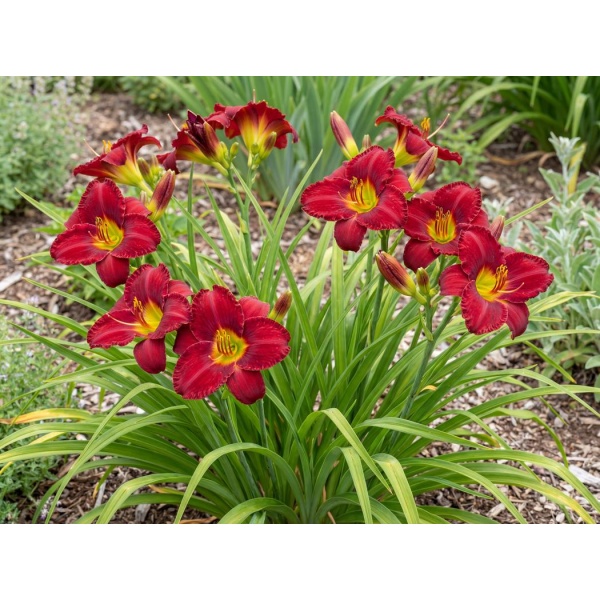
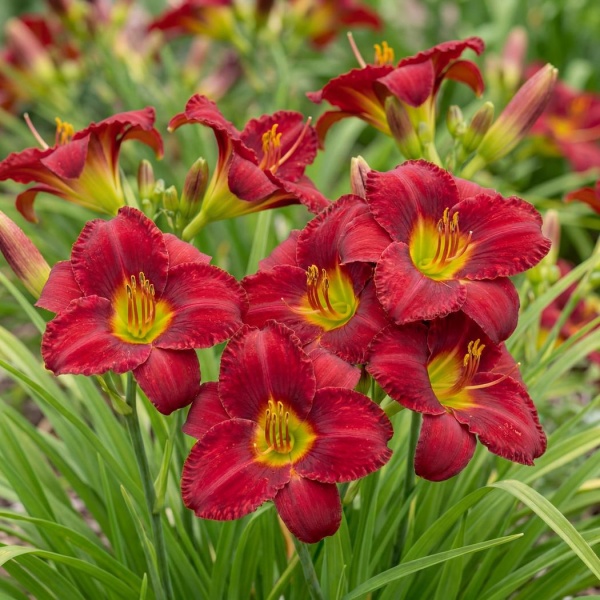
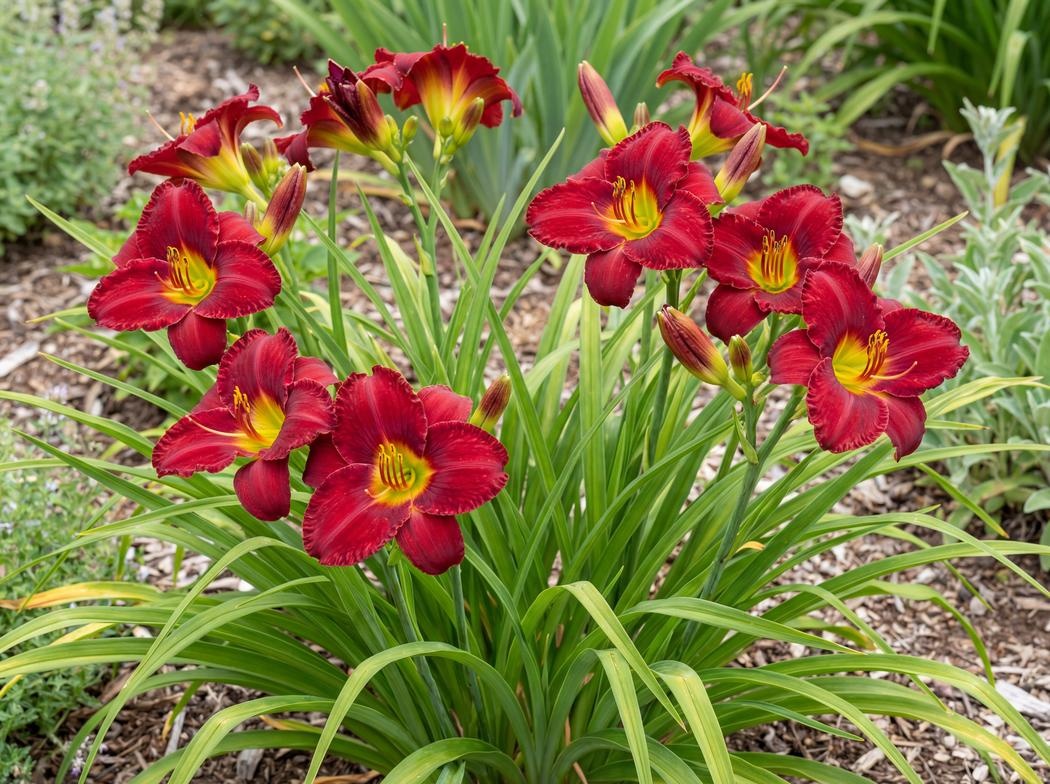
Hemerocallis ‘Chicago Apache’ is an upright, clump-forming perennial with arching green leaves and large scarlet-red summer flowers around a green throat.
- Description
- Additional information
Description
Large scarlet-red flowers with gently ruffled petals rise above arching green foliage on this upright daylily. Multiple buds open in sequence through midsummer, extending the display beyond the life of each one-day bloom.
Grow Hemerocallis ‘Chicago Apache’ in full sun or partial shade and fertile, moist but well-drained soil. Water in dry spring weather, divide established clumps in early spring or early fall, and cut back spent flower stems after bloom. Daylilies are toxic to cats, so keep this plant out of their reach.
Additional information
| Height | 2 ft – 3 ft |
|---|---|
| Spread | 5 in – 2 ft |
| Flowering months | May, June, July, August |
| Synonyms | Hemerocallis 'Chicago Apache' |
| Family | Asphodelaceae |
| Hazardous | yes |
| Variegated | unknown |
| Color flower spring | Red, Yellow |
| Color flower summer | Green, Red |
| Aspect | South, West |
| Foliage | Deciduous |
| Habit | Clump-former |
| Moisture | Moist but Well Drained |
| Ph | Acid, Alkaline, Neutral |
| Position | Full sun, Partial shade |
| Shape | Upright |
| Suggest planting location | Flowering borders, Coastal conditions, Cottage and informal gardens |
| Type | Perennial |
| Use for | Butterfly-Friendly, Cutting Garden, Container Planting |
| Years to max height | 2 |
| Soil | Chalk, Clay, Loam, Sand |
| Local names | Chicago Apache Daylily |
| Blomidon Item No | 7937666416691, ZHEMCA0001G |
| Usps | Scarlet-red flowers carry a contrasting green throat., Multiple buds extend the bloom display for two weeks or more., Full sun or partial shade with moist, well-drained soil suits it. |
| Propagation | Divide established clumps in early spring or early fall. |
| Pests | Watch for aphids, slugs, snails, hemerocallis gall midge, spider mites, and thrips. |
| Diseases | Fungal leaf spot, rust, and bacterial leaf and stem rot may occur. |
| Pruning | Cut back flower stems after flowering and remove dead foliage as needed. |
| Hazardous information | Daylilies are toxic to cats, so keep this plant out of their reach. |
| Watering instructions | Water during dry weather from spring into early summer. |
| Sunlight instructions | Grow in full sun or partial shade, preferably facing south or west. |