
Hemerocallis ‘Bela Lugosi’
$27.99
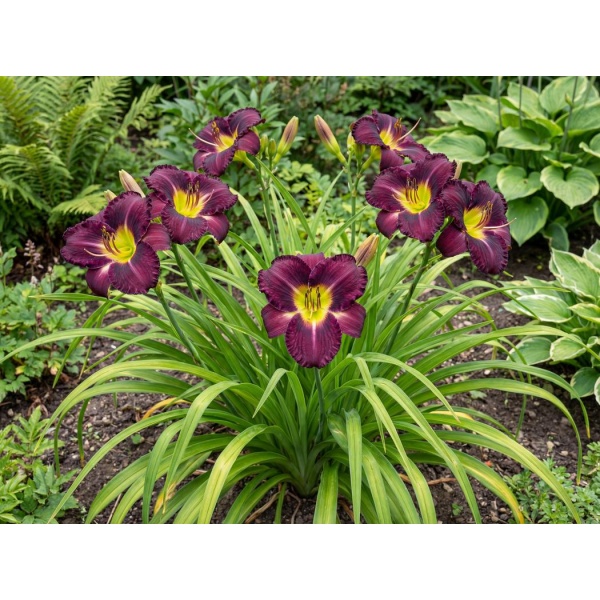
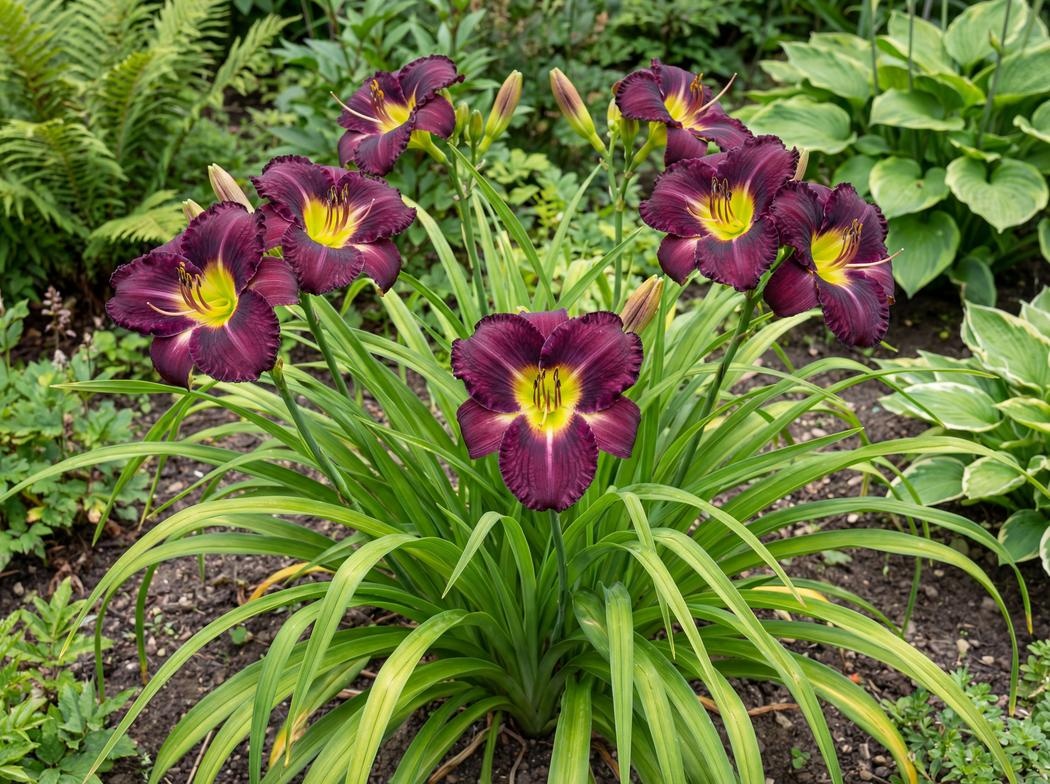
Hemerocallis Bela Lugosi carries large purple midsummer flowers with lime-green throats above an upright leafy clump, fitting borders, mass plantings, and patio containers.
- Description
- Additional information
Description
Large purple flowers with lime-green throats make Hemerocallis Bela Lugosi a strong midsummer focus above an upright clump of strap-shaped foliage. Branching stems hold the single, ruffled blooms above the leaves.
Plant it in full sun in fertile, moist but well-drained soil. It also handles heavy clay and poorer soils. Use it in flowering borders, masses, or patio containers, and water during dry spring and early-summer weather to support flowering.
This plant is toxic if eaten by cats; keep it out of their reach.
Additional information
| Height | 3 ft – 3 ft |
|---|---|
| Spread | 5 in – 2 ft |
| Flowering months | July |
| Synonyms | Hemerocallis 'Bela Lugosi' |
| Family | Asphodelaceae |
| Hazardous | yes |
| Variegated | unknown |
| Color flower summer | Green, Purple |
| Aspect | South, West |
| Foliage | Semi-evergreen |
| Habit | Bushy, Clump-former |
| Moisture | Moist but Well Drained |
| Ph | Acid, Alkaline, Neutral |
| Position | Full sun, Partial shade |
| Shape | Upright |
| Suggest planting location | Urban and courtyard gardens, Flowering borders, Patio and container use, Cottage and informal gardens, Prairie style planting |
| Type | Perennial |
| Use for | Rabbit resistant, Pollinator-Friendly, Container Planting |
| Years to max height | 2 |
| Soil | Chalk, Clay, Loam, Sand |
| Local names | Daylily, Day Lily |
| Blomidon Item No | MO23046865, ZHEMBL0001G |
| Usps | Large purple flowers carry a bright lime-green throat., Forms a strong focal point in borders, masses, and containers., Full sun and moist, well-drained soil support the best flowering. |
| Propagation | Divide established clumps in spring or fall, keeping at least three growing points in each division. |
| Pests | Watch for aphids, slugs, snails, gall midge, spider mites, and thrips. |
| Diseases | Watch for fungal leaf spot, rust, and bacterial leaf or stem rot. |
| Pruning | Deadhead spent flowers for appearance. Cut back flower stems after blooming and remove dead foliage as needed. |
| Hazardous information | This plant is toxic if eaten by cats; keep it out of their reach. |
| Watering instructions | Water during dry spring and early-summer weather to support flowering. |
| Sunlight instructions | Grow in full sun for the strongest flowering. |