
Aconitum fischeri

$27.99
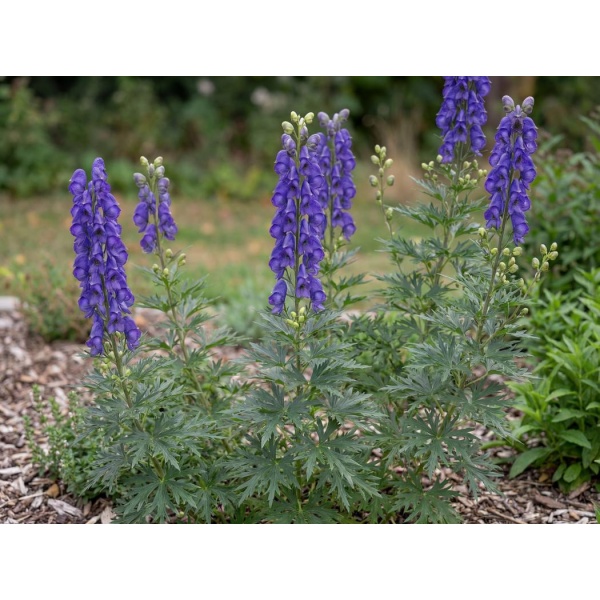
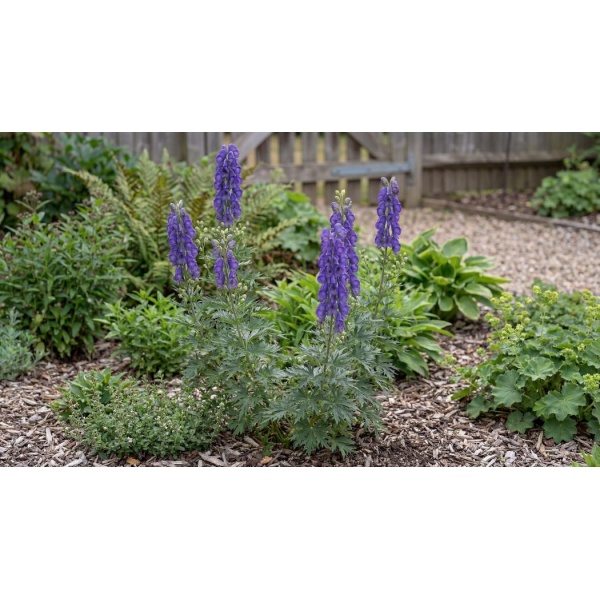
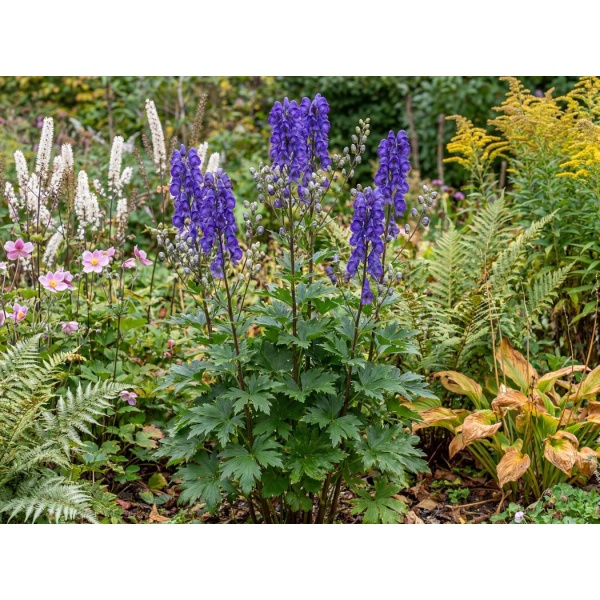
Aconitum napellus raises violet-blue flower spires above deeply divided foliage in moist, partly shaded borders, while requiring careful handling because every part is toxic.
- Description
- Additional information
Description
Aconitum napellus raises dense violet-blue flower spires above a narrow, upright clump of deeply divided dark green foliage in midsummer. Its height suits the middle or back of a moist border, while the hooded flowers also provide distinctive stems for cutting. Every part is toxic if eaten and skin contact should be avoided, so gloves are needed when handling the plant.
Plant in deep, humus-rich soil that stays consistently moist yet drains well. Partial shade is ideal, though full sun can work where mulch and regular moisture keep the roots cool. Cut back dead stems after flowering, and divide established clumps in autumn or late winter when propagation is needed.
Additional information
| Height | 3 ft – 5 ft |
|---|---|
| Spread | 5 in – 2 ft |
| Flowering months | July, August |
| Synonyms | Aconitum ampliflorum, Aconitum fischeri, Aconitum napellus subsp. napellus, Aconitum napellus subsp. pyramidale, Delphinium napellus, Napellus vulgaris |
| Family | Ranunculaceae |
| Hazardous | yes |
| Variegated | unknown |
| Color flower summer | Purple, Blue |
| Aspect | East, West, North |
| Foliage | Deciduous |
| Habit | Bushy, Clump-former |
| Moisture | Moist but Well Drained, Wet or Damp Soil |
| Ph | Acid, Alkaline, Neutral |
| Position | Full sun, Partial shade |
| Shape | Upright |
| Suggest planting location | Woodland Garden, Flowering borders, Cut flower use, Cottage and informal gardens |
| Type | Perennial |
| Use for | Deer resistant, Rabbit resistant, Bee-Friendly |
| Years to max height | 2 |
| Soil | Chalk, Clay, Loam, Sand |
| Local names | Blue monkshood, Monkshood, Aconite, Wolfsbane |
| Blomidon Item No | MO23014809, 7937656062003, ZACOFI0001G, 201924114, 201810456, 201924116, 201920909, 201924119 |
| Usps | Violet-blue hooded flowers rise in dense midsummer spires., Tall flowering stems suit moist borders and cutting gardens., Moist rich soil and afternoon shade support strong upright flowering. |
| Propagation | Divide established clumps in autumn or late winter, wearing gloves while handling the plant. |
| Pests | Aphids may occur. |
| Diseases | Crown rot, powdery mildew, and Verticillium wilt may occur. |
| Pruning | Cut back dead stems after flowering while wearing gloves. |
| Hazardous information | Every part is toxic if eaten, and skin contact should be avoided; wear gloves when handling the plant. |
| Watering instructions | Keep the soil consistently moist without letting it become waterlogged. |
| Sunlight instructions | Grow in partial shade, or full sun where soil stays moist. |
| Common Name | Azure Monkshood |