
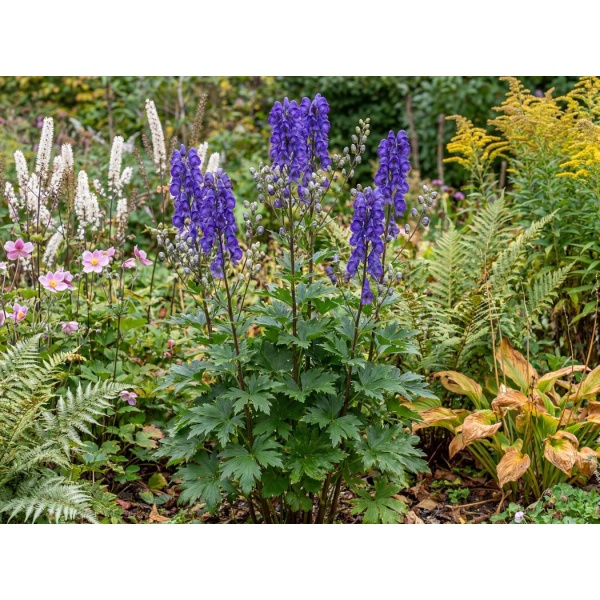
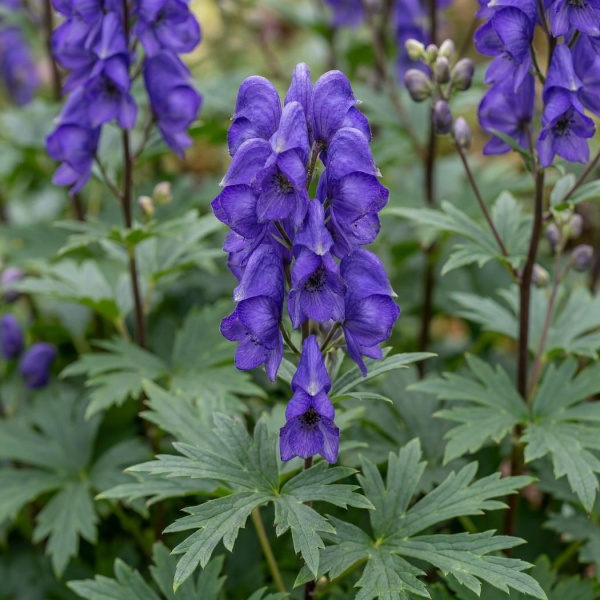
Aconitum carmichaelii ‘Arendsii’
$17.99
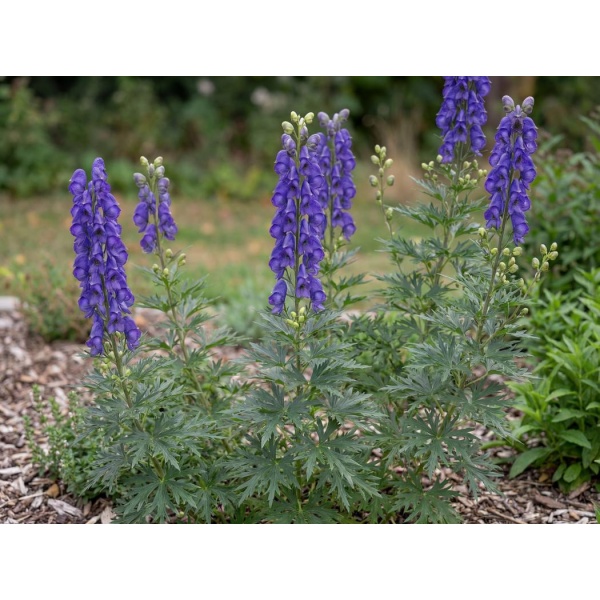
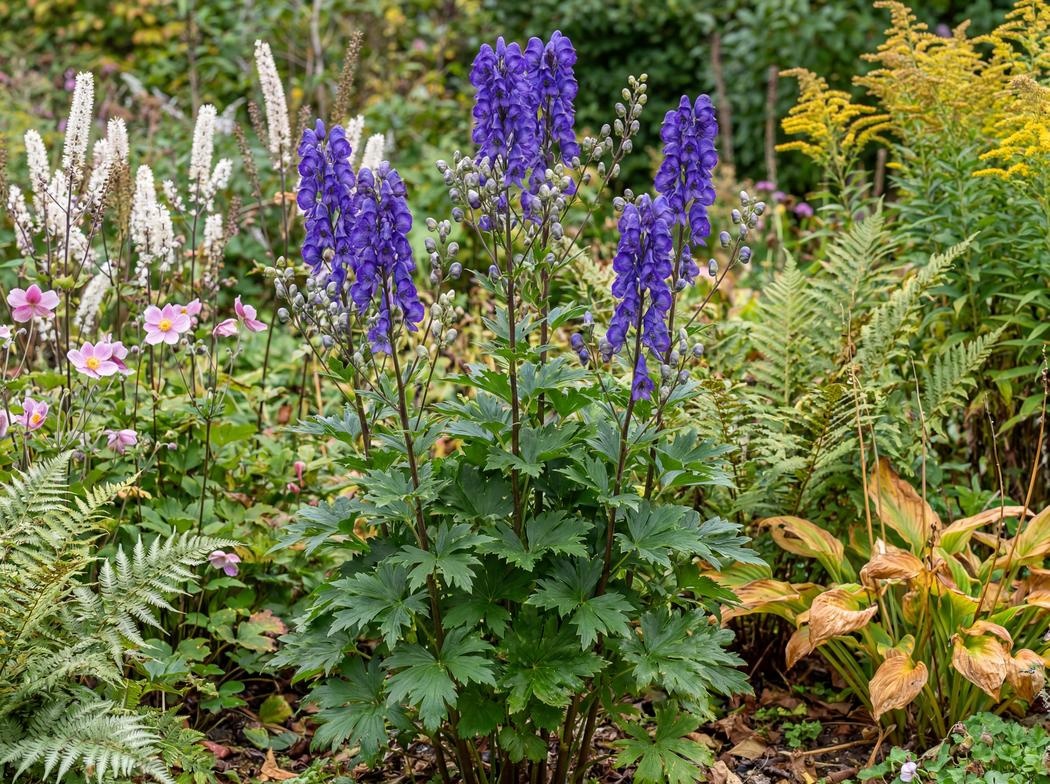
Aconitum carmichaelii Arendsii Group Arendsii raises lavender-blue autumn panicles above dark green foliage for cool, moist borders.
- Description
- Additional information
Description
Rich lavender-blue panicles give Aconitum carmichaelii Arendsii Group Arendsii a clear early-to-mid-fall display above dark green, deeply lobed foliage. Its upright clumps suit moist cottage, woodland, and flower borders.
Grow it in deep, humus-rich, moist but well-drained soil in partial shade or full sun. Mulch to hold moisture and shelter the stems from wind. Divide in fall or late winter when needed, and cut dead stems to the base.
All parts are toxic if eaten, and sap may irritate skin; wear gloves when handling.
Additional information
| Height | 3 ft – 5 ft |
|---|---|
| Spread | 5 in – 2 ft |
| Flowering months | September, October |
| Synonyms | Aconitum arendsii, Aconitum carmichaelii 'Arendsii', Aconitum carmichaelii (Arendsii Group) Arendsii, Aconitum carmichaelii Arendsii |
| Family | Ranunculaceae |
| Hazardous | yes |
| Variegated | unknown |
| Color flower autumn | Purple, Blue |
| Aspect | East, West, North |
| Foliage | Deciduous |
| Habit | Clump-former |
| Moisture | Moist but Well Drained |
| Ph | Acid, Alkaline, Neutral |
| Position | Full sun, Partial shade |
| Shape | Upright |
| Suggest planting location | Woodland Garden, Flowering borders, Cut flower use, Cottage and informal gardens, Wildlife friendly gardens |
| Type | Perennial |
| Use for | Architectural, Deer resistant, Cutting Garden |
| Years to max height | 2 |
| Soil | Clay, Loam, Chalk, Sand |
| Local names | Arends Monkshood, Arendsii Azure Monkshood |
| Blomidon Item No | MO23014799, 7937656029235, ZACOCAA0004PT, 201924111, 201810452, 201920908 |
| Usps | Lavender-blue flower panicles rise on sturdy stems in early fall., Late blooms bring color to cottage and woodland borders., Grow in full sun or partial shade with moist, well-drained soil. |
| Propagation | Propagate by division in fall or late winter. |
| Pests | Aphids may occur. |
| Diseases | Fungal stem rot and Verticillium wilt may occur. |
| Pruning | Cut dead stems to the base in late fall or spring. |
| Hazardous information | All parts are toxic if eaten, and sap may irritate skin; wear gloves when handling. |
| Watering instructions | Keep soil moist through the growing season without waterlogging. |
| Sunlight instructions | Grow in full sun or partial shade in a sheltered position. |
| Common Name | Autumn Monkshood |