
Paeonia ‘Duchesse de Nemours’
$24.99
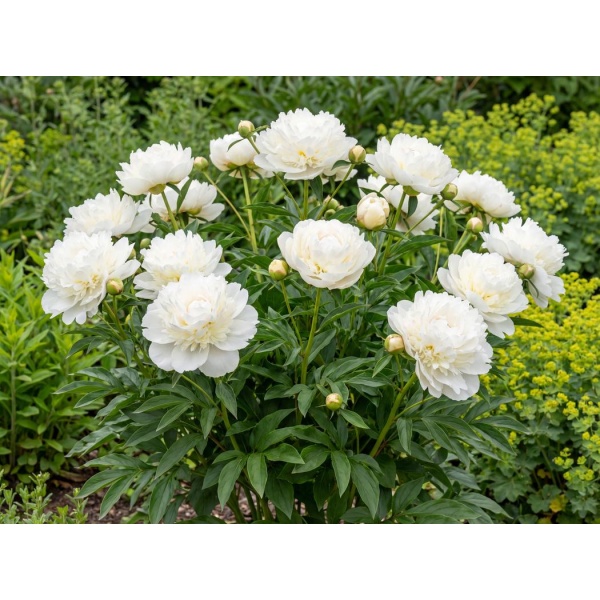
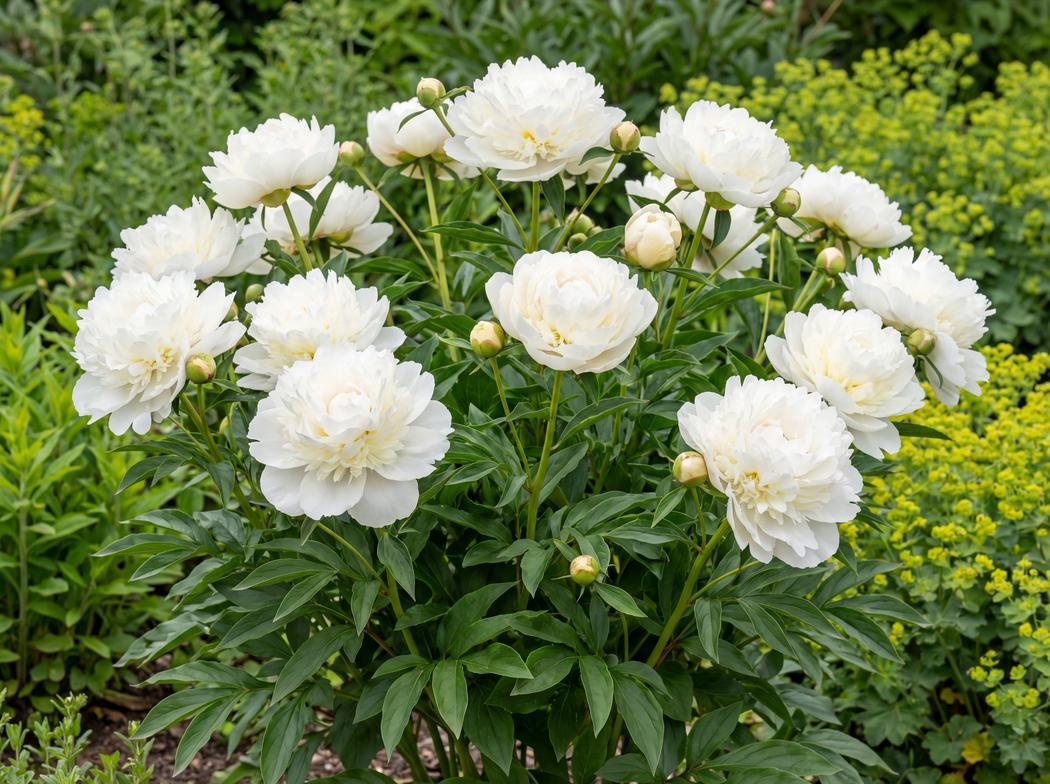
Duchesse de Nemours peony forms upright clumps with fragrant, fully double white flowers above dark green divided foliage.
- Description
- Additional information
Description
Paeonia lactiflora Duchesse de Nemours is a clump-forming herbaceous perennial with fragrant, fully double white flowers. Creamy centers and dark green divided foliage give this historic cultivar a fresh early-summer display.
Grow it in full sun or partial shade in fertile, moist but well-drained soil. The long-lived clumps suit perennial borders, cut-flower gardens, and underplanting. Remove faded flowers and cut the stems down after the foliage dies back.
Additional information
| Height | 2 ft – 3 ft |
|---|---|
| Spread | 2 ft – 3 ft |
| Flowering months | May, June |
| Synonyms | Paeonia 'Duchesse de Nemours', Paeonia Duchess De Nemours, Paeonia Duchesse de Nemours, Paeonia lact. Duchess de Nemou |
| Family | Paeoniaceae |
| Hazardous | yes |
| Variegated | unknown |
| Color flower spring | White, Cream |
| Color flower summer | White, Cream |
| Aspect | East, South, West |
| Foliage | Deciduous |
| Habit | Clump-former |
| Moisture | Moist but Well Drained |
| Ph | Acid, Alkaline, Neutral |
| Position | Full sun, Partial shade |
| Scent | Fragrant |
| Shape | Upright |
| Suggest planting location | Flowering borders, Cut flower use, Cottage and informal gardens, Underplanting for roses and shrubs |
| Type | Perennial |
| Use for | Cutting Garden, Underplanting, Pollinator-Friendly |
| Years to max height | 2 |
| Soil | Chalk, Clay, Loam, Sand |
| Local names | Duchesse de Nemours Peony |
| Blomidon Item No | 7937673691187, ZPAELADDN0001G, ZPAELADDN0002G, 201921148, 201814988, 178626, 201924335 |
| Cultivation | Plant in fertile, moist but well-drained soil in full sun or partial shade. Set the crown shallowly, water during dry spells in the first year, and cut dead stems down in autumn. |
| Propagation | Divide established clumps in autumn or early spring. |
| Pests | Leaf and bud eelworms and soil-dwelling swift moth larvae may occur. |
| Diseases | Peony wilt, peony leaf blotch, honey fungus, Verticillium wilt, and viruses may occur. |
| Pruning | Remove faded flowers, then cut stems to ground level after the foliage dies back in autumn. |
| Hazardous information | May irritate the skin of dogs and cats. |
| Watering instructions | Water regularly during dry spells in the first year; established plants usually need no routine watering. |
| Sunlight instructions | Grow in full sun or partial shade in a sheltered position. |