
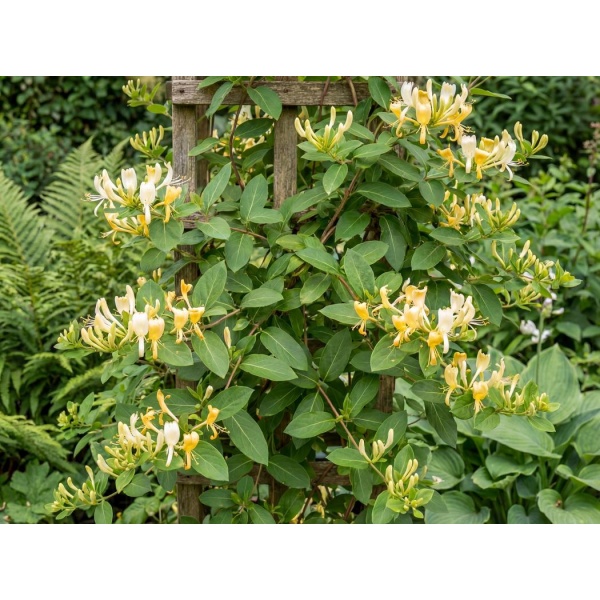
Lonicera japonica ‘Halliana’
$37.99
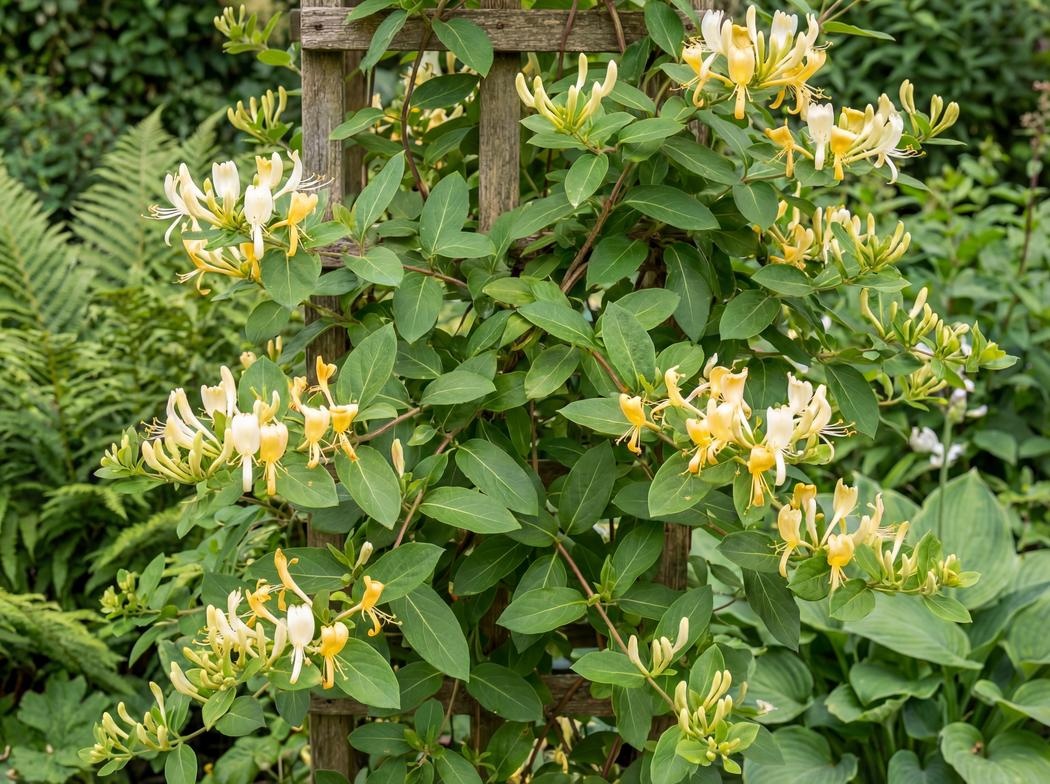
A vigorous twining honeysuckle with fragrant white flowers that turn buff-yellow and dark green leaves. It needs a sturdy support and regular pruning.
- Description
- Additional information
Description
Hall’s Japanese honeysuckle can cover a sturdy arch, pergola, or boundary wall with twining stems and dark green, ovate leaves. Its highly fragrant, tubular flowers open white and age to buff-yellow, creating a two-tone summer display. Many leaves persist in mild winters, but cold winters can strip the vine. Glossy black berries are ornamental and should not be eaten. Give it moist but well-drained soil in partial shade or full sun, and guide new growth onto its support. In some U.S. regions it spreads aggressively, so check local invasive-plant guidance before planting.
Additional information
| Height | 13 ft – 26 ft |
|---|---|
| Spread | 3 ft – 5 ft |
| Family | Caprifoliaceae |
| Hazardous | yes |
| Variegated | unknown |
| Color flower spring | White, Yellow |
| Color flower summer | White, Yellow |
| Aspect | East, South, West, North |
| Foliage | Semi-evergreen |
| Habit | Climber |
| Moisture | Moist but Well Drained |
| Ph | Acid, Alkaline, Neutral |
| Position | Full sun, Partial shade |
| Scent | Fragrant |
| Shape | Spreading |
| Suggest planting location | Banks and slopes, Wall and boundary borders, Climbers and wall shrubs |
| Type | Climber |
| Use for | Ground cover, Wall cover, Screen |
| Years to max height | 5 |
| Cultivation | Train on a sturdy support in moist but well-drained soil. It may lose all leaves in cold winters and can spread aggressively in some U.S. regions; check local guidance before planting. |
| Soil | Chalk, Clay, Loam, Sand |
| Local names | Hall's Japanese honeysuckle |
| Blomidon Item No | C323, MO23005416, LONJAHA0001G, 42244, 202025198, 201814240, 201993475, 56413 |
| Usps | Highly fragrant white flowers age to buff-yellow for a two-tone display., Twining stems can cover a sturdy arch, pergola, or wall., Fragrant white flowers turn buff-yellow as they age. |
| Synonyms | Lonicera Halliana, Lonicera japonica Halliana |
| Propagation | Layer in spring: bend a flexible stem to the ground, peg part of it into moist soil, and leave it attached until roots form. |
| Pests | Honeysuckle aphids, thrips, and glasshouse whitefly may occur. |
| Diseases | Powdery mildew, fungal leaf spot, silver leaf, and, rarely, honey fungus may occur. |
| Pruning | Thin congested or wayward stems in early spring, then lightly trim untidy shoots after flowering. |
| Hazardous information | The ornamental berries should not be eaten; keep them out of reach. |
| Watering instructions | Water regularly through the first spring and summer while roots establish. Afterward, check soil during hot, dry spells, especially beside a wall, and soak if dry. |
| Sunlight instructions | Plant in partial shade or full sun; avoid deep shade, which reduces flowering. |
| Common Name | Hall's Japanese Honeysuckle |