
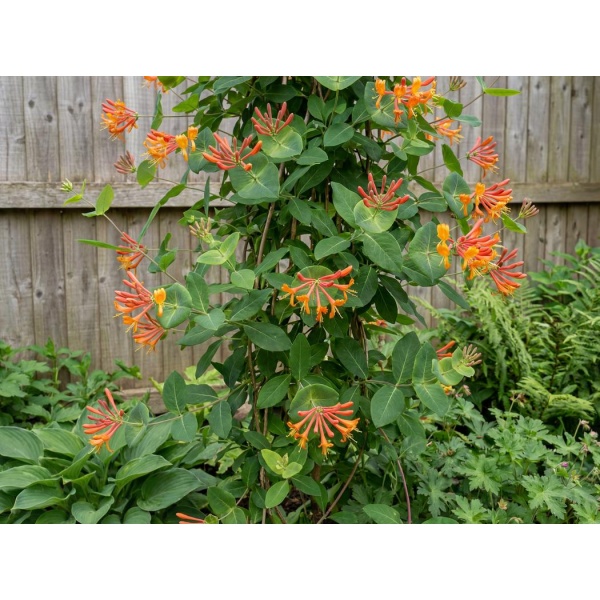
Lonicera x brownii ‘Dropmore Scarlet’
$24.99
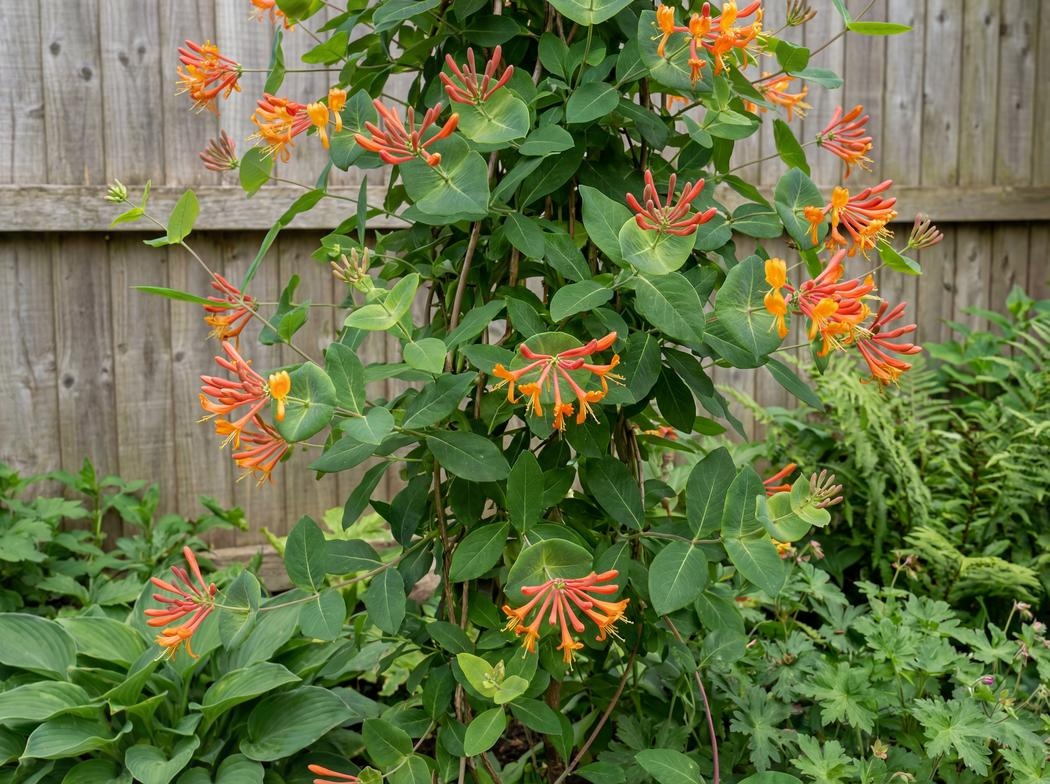
Lonicera brownii Dropmore Scarlet is a vigorous twining climber with long-lasting scarlet-orange trumpet flowers for walls and trellises.
- Description
- Additional information
Description
Lonicera brownii Dropmore Scarlet is a vigorous semi-evergreen climber with rounded blue-green leaves and terminal clusters of narrow scarlet-orange trumpet flowers. Its long summer display suits trellises, wall borders, and pollinator gardens.
Grow it in sun or partial shade in fertile, humus-rich, moist but well-drained soil. Give the twining shoots sturdy support, and reduce flowered growth by about one-third in early spring only when size control is needed.
Additional information
| Height | 8 ft – 13 ft |
|---|---|
| Spread | 2 ft – 3 ft |
| Flowering months | June, July, August |
| Family | Caprifoliaceae |
| Hazardous | yes |
| Variegated | no |
| Color flower autumn | Red, Orange |
| Color flower summer | Red, Orange |
| Aspect | East, South, West, North |
| Foliage | Semi-evergreen |
| Habit | Climber |
| Moisture | Moist but Well Drained |
| Ph | Acid, Alkaline, Neutral |
| Position | Full sun, Partial shade |
| Shape | Upright, Spreading, Arching |
| Suggest planting location | Urban and courtyard gardens, Wall and boundary borders, Flowering borders, Cottage and informal gardens |
| Type | Climber |
| Use for | Wall cover, Bee-Friendly, Pollinator-Friendly |
| Years to max height | 5 |
| Drought resistance | no |
| Soil | Chalk, Clay, Loam, Sand |
| Local names | Dropmore Scarlet Honeysuckle, Scarlet Trumpet Honeysuckle, Brown's Honeysuckle |
| Blomidon Item No | 120252, 120253, 104891, 111482, 104368, 113710, 106517, 121161, 121162, 111677, 118536, MO23005375, LONBRDS0001G, 44874, 202030307, 56411, 201819347 |
| Propagation | Propagate by softwood, semi-ripe, or leaf-bud cuttings from late spring to late summer. |
| Pests | Honeysuckle aphids, thrips, and glasshouse whitefly may occur. |
| Diseases | Powdery mildew, fungal leaf spot, silver leaf, and honey fungus may occur. |
| Pruning | Reduce flowered shoots by about one-third in early spring when size control is required. |
| Hazardous information | Ornamental berries are not to be eaten; wear gloves when handling the plant. |
| Watering instructions | Keep fertile soil evenly moist but well drained during active growth. |
| Sunlight instructions | Give full sun or partial shade, with the root area lightly mulched. |
| Common Name | Dropmore Scarlet Trumpet Honeysuckle |