
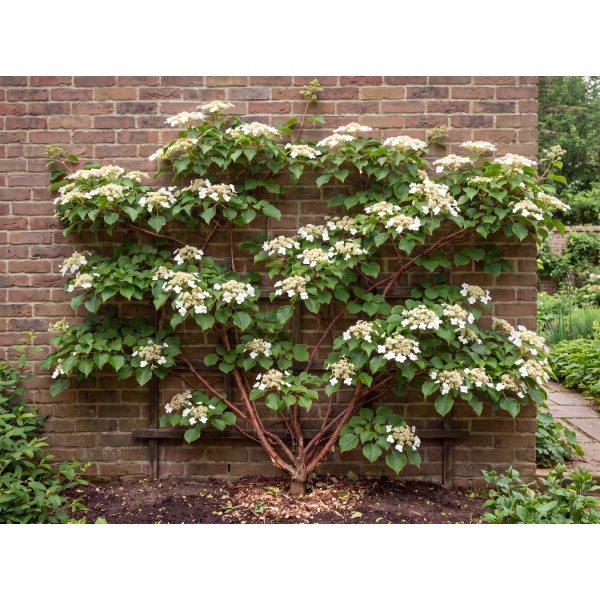
Hydrangea anomala ‘var. petiolaris’
$87.99
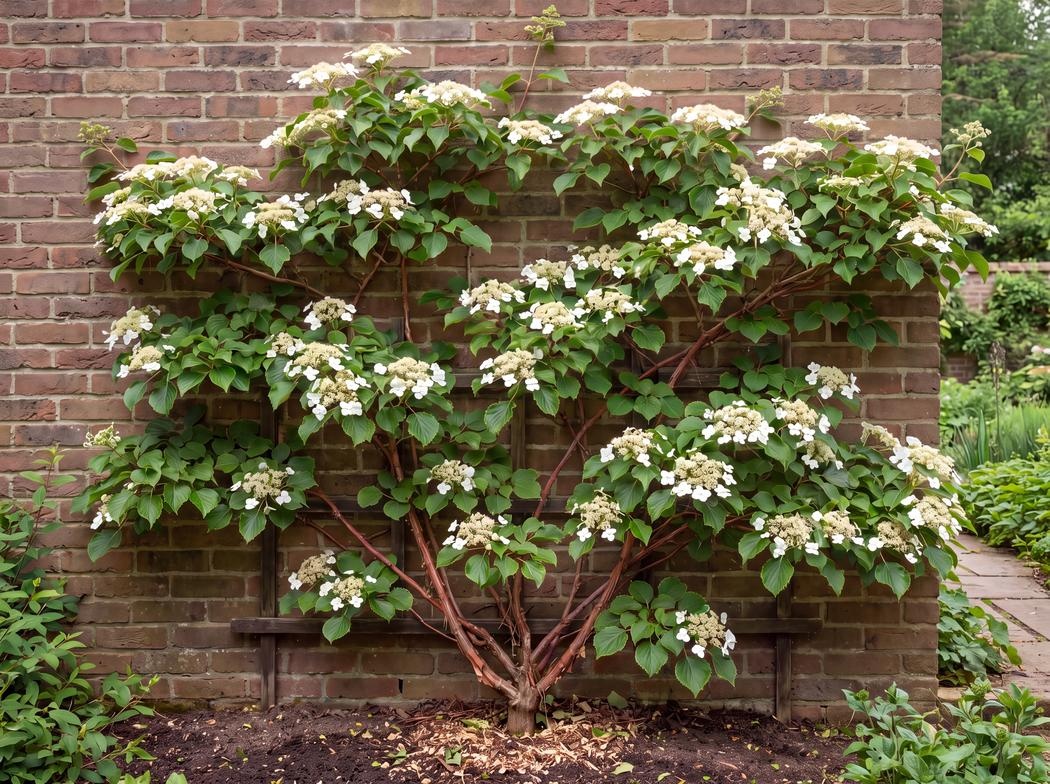
Hydrangea petiolaris is a self-clinging deciduous vine with fragrant white lacecap flowers, yellow fall leaves, and peeling winter bark.
- Description
- Additional information
Description
Broad green leaves cover walls and sturdy structures before large, flat white lacecap flower clusters open in early to midsummer. The foliage turns yellow in autumn, then falls to reveal textured reddish-brown peeling stems for winter interest.
Grow Hydrangea petiolaris in rich, moist but well-drained soil in partial shade, or in sun where moisture remains reliable. Help young stems onto a sturdy support while they establish, then shorten over-long shoots just after flowering. Wear gloves when handling the plant.
Additional information
| Height | 1800 cm – 2400 cm |
|---|---|
| Spread | 400 cm – 800 cm |
| Flowering months | June, July |
| Synonyms | Hydrangea anomala 'var. petiolaris', Hydrangea anomala petiolaris, Hydrangea anomala subsp. petiolaris, Hydrangea anomala var. petiolaris, Hydrangea petiolaris var. cordifolia, Hydrangea scandens |
| Family | Hydrangeaceae |
| Propagation | Take softwood cuttings in early summer, or layer a flexible stem in spring or autumn and keep the buried section moist until roots develop. |
| Pests | May be affected by aphids, capsid bugs, hydrangea scale, and vine weevil. |
| Diseases | Leaf spot, powdery mildew, gray mold, and rare honey fungus may occur. |
| Pruning | Immediately after flowering, shorten only over-long shoots and retain the upper framework where most flowers form; stagger any major renovation over several years. |
| Hazardous information | The plant can irritate skin, so wear gloves when handling it; keep it away from dogs and cats because it is harmful if eaten. |
| Hazardous | yes |
| Variegated | no |
| Watering instructions | Water regularly while the vine establishes and during dry spells, keeping the root zone evenly moist but never waterlogged. |
| Sunlight instructions | Use partial shade for dependable growth, or full sun only where the soil stays reliably moist; east- and north-facing walls are well suited. |
| Color flower spring | White, Cream |
| Color flower summer | White, Cream |
| Aspect | East, South, West, North |
| Foliage | Deciduous |
| Habit | Climber |
| Moisture | Moist but Well Drained |
| Ph | Acid, Neutral |
| Position | Full sun, Partial shade |
| Scent | Fragrant |
| Shape | Spreading |
| Suggest planting location | Woodland Garden, Shade Garden, Urban and courtyard gardens, Wall and boundary borders, Cottage and informal gardens, Wildlife friendly gardens, Climbers and wall shrubs |
| Type | Climber |
| Use for | Wall cover, Cutting Garden, Shade Garden |
| Years to max height | 10 |
| Cultivation | Grow against a sturdy wall, arbor, or freestanding support in rich, moist but well-drained soil. Partial shade is ideal; full sun is suitable where the root zone remains reliably moist. |
| Soil | Clay, Loam, Sand |
| Local names | Climbing hydrangea, Japanese climbing hydrangea |
| Blomidon Item No | C204, C2019, MO23082544, HYDANP0003G, HYDP0001G, HYDP0002G, HYDP0003G |
| Usps | Large fragrant white lacecap clusters brighten shaded walls in early summer., Yellow fall foliage gives way to peeling reddish-brown winter stems. |
| Common Name | Climbing Hydrangea |