
Clematis ‘Jackmanii’
$37.99
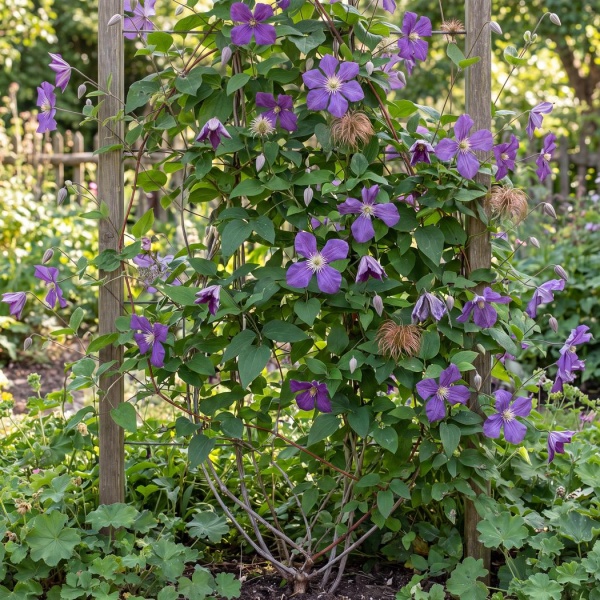
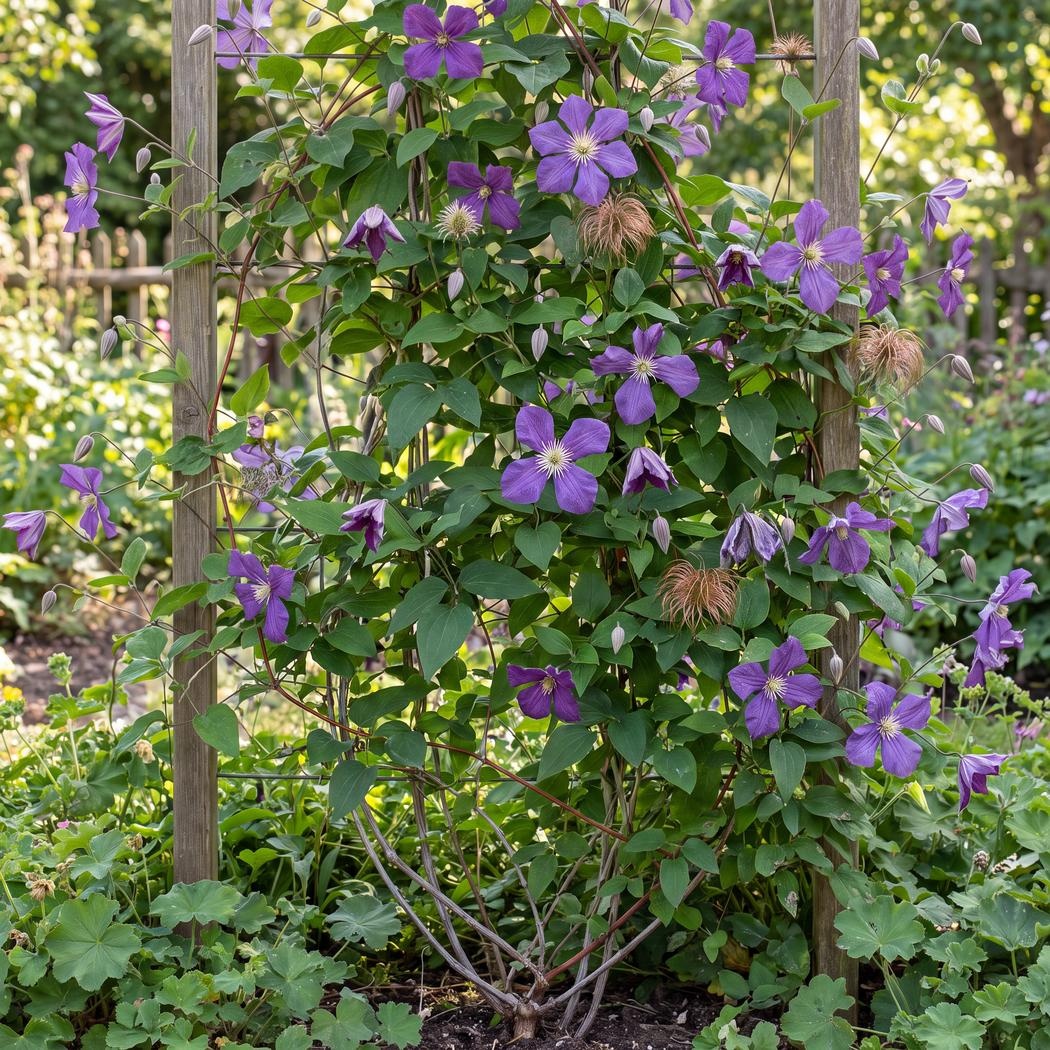
A vigorous deciduous clematis with abundant large violet-purple summer flowers and decorative copper-brown plumed seedheads.
- Description
- Additional information
Description
Clematis × jackmanii is a classic woody, deciduous, twining climber introduced in the nineteenth century. Slender reddish- to gray-brown stems reach about 3–4.6 m and use leaf stalks to hold a trellis, arch or neighboring shrub. Opposite deep-green compound leaves frame abundant, open violet-purple flowers, usually with four broad colored sepals, from summer into early autumn. Copper-brown plumed seedheads follow. Plant with the crown in moist, well-drained neutral soil, give the top full sun to partial shade, and keep the roots cool with mulch or low companion plants. Prune before new spring growth. All parts are poisonous and the sap may cause contact dermatitis.
Additional information
| Height | 10 ft – 15 ft |
|---|---|
| Spread | 3 ft – 6 ft |
| Flowering months | June, July, August, September |
| Synonyms | Clematis 'Jackmanii', Clematis Jackmanii, Clematis Jackmanii Jackmanii |
| Family | Ranunculaceae |
| Hazardous | yes |
| Variegated | unknown |
| Color flower autumn | Purple |
| Color flower summer | Purple |
| Aspect | East, South, West |
| Foliage | Deciduous |
| Habit | Climber |
| Moisture | Moist but Well Drained |
| Ph | Neutral |
| Position | Full sun |
| Suggest planting location | Pollinator Garden, Wall and boundary borders, Patio and container use, Cottage and informal gardens, Climbers and wall shrubs |
| Type | Climber |
| Use for | Wall cover, Screen, Container Planting |
| Years to max height | 2 |
| Drought resistance | no |
| Soil | Clay, Loam, Sand |
| Local names | Jackman's Clematis |
| Blomidon Item No | MO23002262, CLEJA0001G, 1004652, 201819364, 44805, 56298 |
| Propagation | Propagate by stem cuttings; named plants are best maintained vegetatively. |
| Pests | Aphids, slugs, snails and earwigs may occur. |
| Diseases | Clematis wilt, powdery mildew and root rot may occur, particularly under stressed or poorly drained conditions. |
| Pruning | Prune in late winter or early spring before new growth, cutting to a strong framework and removing weak or dead stems. |
| Watering instructions | Keep soil consistently moist but well drained, watering deeply during dry weather without saturating the crown. |
| Sunlight instructions | Give the vine full sun to partial shade while shading the crown and roots with mulch or companion plants. |