
Clematis ‘Duchess of Edinburgh’

$37.99
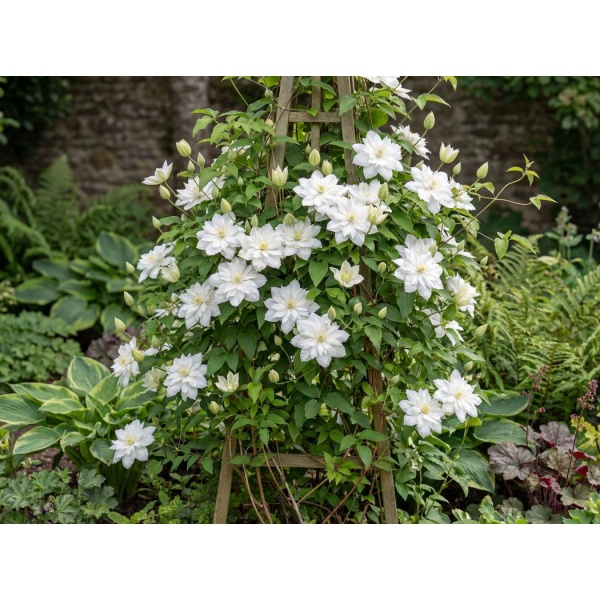
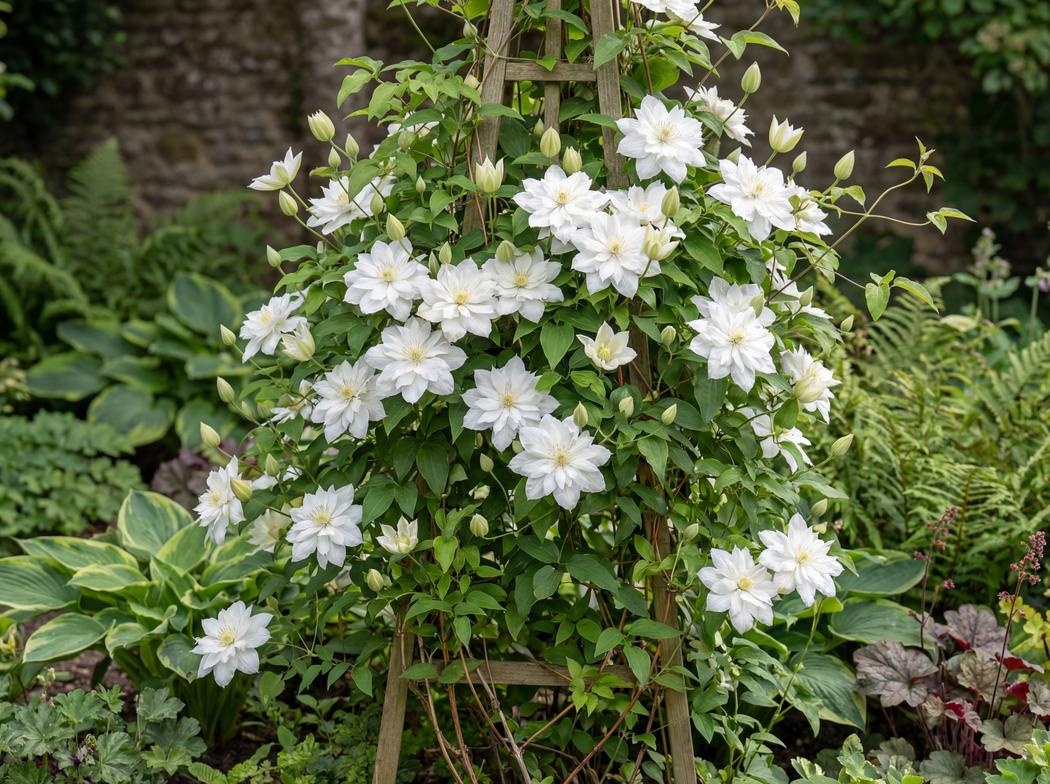
Clematis Duchess of Edinburgh covers a wall or trellis with large double white flowers, often green-tinged, and returns with a later flush.
- Description
- Additional information
Description
Clematis Duchess of Edinburgh climbs a wall, trellis, or other support with large double white flowers, some carrying green outer tepals. A second flush follows later in the season, extending the display.
Grow it in full sun or partial shade in moist but well-drained soil. Keep the roots and base cool with low planting or mulch, and prune lightly to strong buds before growth begins in early spring. The plant can irritate skin and is harmful to rabbits if eaten.
Additional information
| Height | 8 ft – 13 ft |
|---|---|
| Spread | 2 ft – 3 ft |
| Flowering months | May, June, September |
| Synonyms | Clematis 'Duchess of Edinburgh', Clematis Dutchess Of Edinbugh |
| Family | Ranunculaceae |
| Hazardous | yes |
| Variegated | unknown |
| Color flower autumn | White |
| Color flower summer | Green, White |
| Aspect | East, South, West |
| Foliage | Deciduous |
| Habit | Climber |
| Moisture | Moist but Well Drained |
| Ph | Acid, Alkaline, Neutral |
| Position | Full sun, Partial shade |
| Scent | Fragrant Light |
| Shape | Upright |
| Suggest planting location | Urban and courtyard gardens, Wall and boundary borders, Patio and container use, Cottage and informal gardens, Climbers and wall shrubs |
| Type | Climber |
| Use for | Wall cover, Cutting Garden, Container Planting |
| Years to max height | 2 |
| Drought resistance | no |
| Cultivation | Plant in moisture-retentive, well-drained soil and keep the roots and base cool and shaded. Provide a trellis or other support for the leaf stalks to climb. |
| Soil | Chalk, Clay, Loam, Sand |
| Local names | Duchess of Edinburgh Clematis |
| Blomidon Item No | MO23002207, CLEMDE00001G |
| Usps | Large double white flowers may carry fresh green outer tepals., The vine covers a wall or trellis and can flower again later., Give the vine sun or partial shade and keep its roots evenly moist. |
| Propagation | Propagate by softwood cuttings in spring, semi-ripe cuttings in summer, or layering in late winter or early spring. |
| Pests | Aphids may occur, while cutworms and voles may damage young stems. |
| Diseases | Clematis wilt, clematis slime flux, and, rarely, honey fungus may occur. |
| Pruning | Before growth begins in early spring, remove dead or damaged stems and cut the remaining stems back to strong buds. |
| Hazardous information | The plant is a skin irritant, and it is harmful to rabbits if eaten. |
| Watering instructions | Keep the root zone evenly moist in well-drained soil. |
| Sunlight instructions | Grow in full sun or partial shade, with the root zone shaded. |