
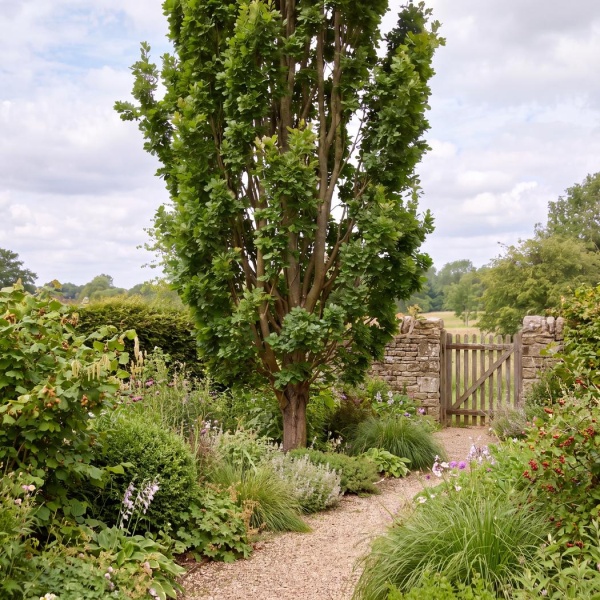
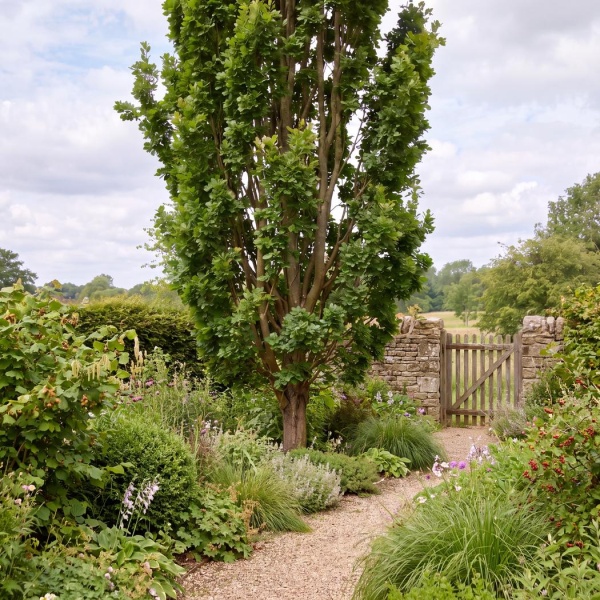
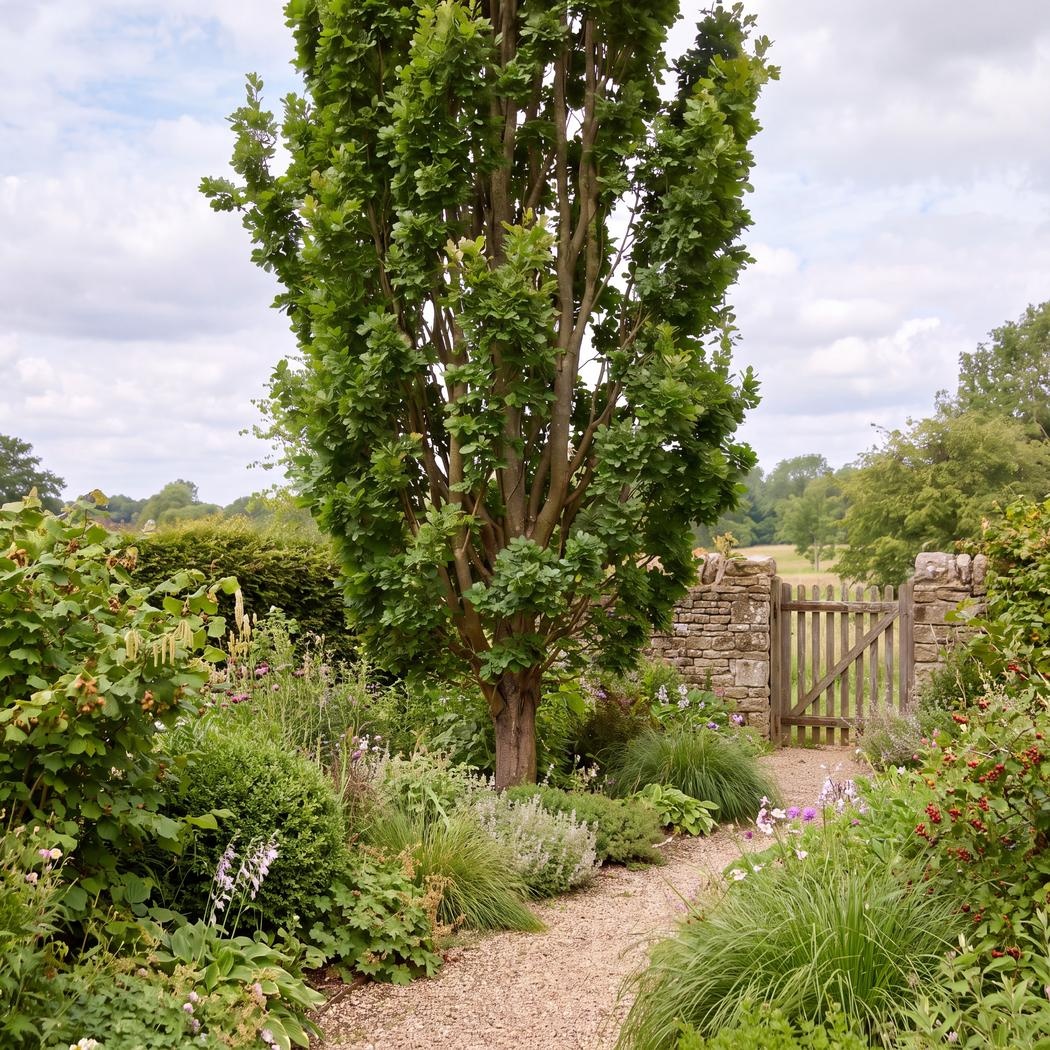
Quercus robur Fastigiata
$439.99
A large growing and stately tree, much cherished in its native Europe, with an artistic spreading habit of growth, typically low-branched, best for larger landscapes; extremely tough and adaptable, faster growing than other oaks
- Description
- Additional information
Description
A large growing and stately tree, much cherished in its native Europe, with an artistic spreading habit of growth, typically low-branched, best for larger landscapes; extremely tough and adaptable, faster growing than other oaks
English Oak is a dense deciduous tree with a more or less rounded form. Its average texture blends into the landscape, but can be balanced by one or two finer or coarser trees or shrubs for an effective composition.
This tree will require occasional maintenance and upkeep, and is best pruned in late winter once the threat of extreme cold has passed. It is a good choice for attracting squirrels to your yard. Gardeners should be aware of the following characteristic(s) that may warrant special consideration;
English Oak has dark green deciduous foliage on a tree with a round habit of growth. The lobed leaves do not develop any appreciable fall colour. However, the fruit can be messy in the landscape and may require occasional clean-up.
English Oak will grow to be about 60 feet tall at maturity, with a spread of 60 feet. It has a high canopy with a typical clearance of 6 feet from the ground, and should not be planted underneath power lines. As it matures, the lower branches of this tree can be strategically removed to create a high enough canopy to support unobstructed human traffic underneath. It grows at a slow rate, and under ideal conditions can be expected to live to a ripe old age of 300 years or more; think of this as a heritage tree for future generations!
This tree should only be grown in full sunlight. It is very adaptable to both dry and moist locations, and should do just fine under average home landscape conditions. It is not particular as to soil type or pH. It is highly tolerant of urban pollution and will even thrive in inner city environments. This species is not originally from North America.
Additional information
| Height | 49 ft – 66 ft |
|---|---|
| Spread | 5 ft – 8 ft |
| Flowering months | May |
| Family | Fagaceae |
| Hazardous | yes |
| Variegated | unknown |
| Color flower spring | Green, Yellow |
| Aspect | East, South, West, North |
| Foliage | Deciduous |
| Habit | Columnar upright |
| Moisture | Moist but Well Drained, Well Drained Soil |
| Ph | Acid, Alkaline, Neutral |
| Position | Full sun, Partial shade |
| Shape | Column |
| Suggest planting location | Low maintenance planting, Hedges and screening plants, Cottage and informal gardens |
| Type | Tree |
| Use for | Bird-Friendly, Windbreak, Low maintenance |
| Years to max height | more than 50 |
| Cultivation | Plant in deep, fertile soil with good drainage. Clay, loam, and sandy soils are suitable, and the tree tolerates lime. Water generously after planting and give extra water during warm, dry periods. |
| Soil | Clay, Loam, Sand |
| Local names | Common Oak, English Oak, European Oak, French Oak, Pedunculate Oak, Polish Oak, Truffle Oak |
| Blomidon Item No | MO23082720, 202017250, 201816234, 201831561, 201816232, 201990006, 202025669 |
| Usps | The crown grows in an upright column., Plant as a windbreak., Grow in full sun or partial shade with well-drained soil. |