
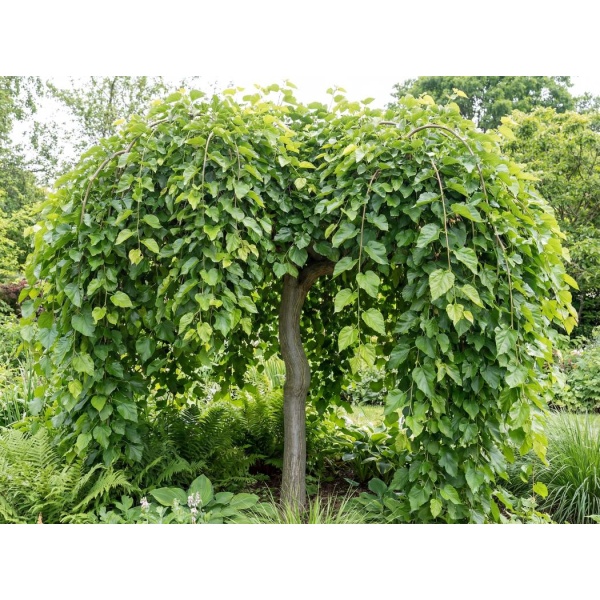
Morus alba ‘Pendula’
$239.99
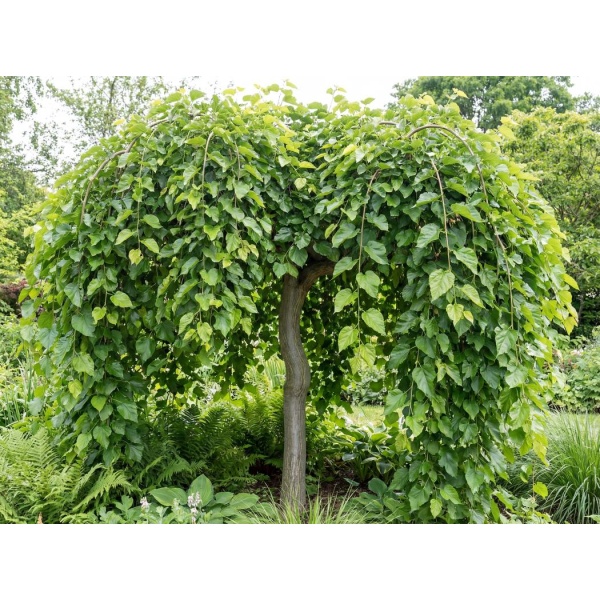
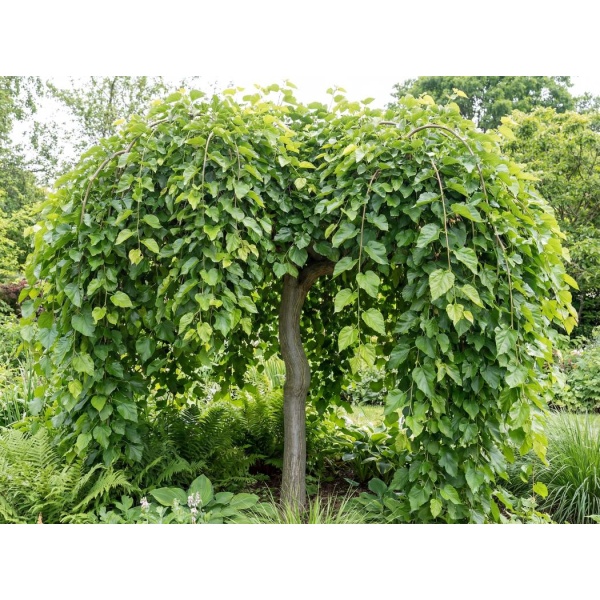
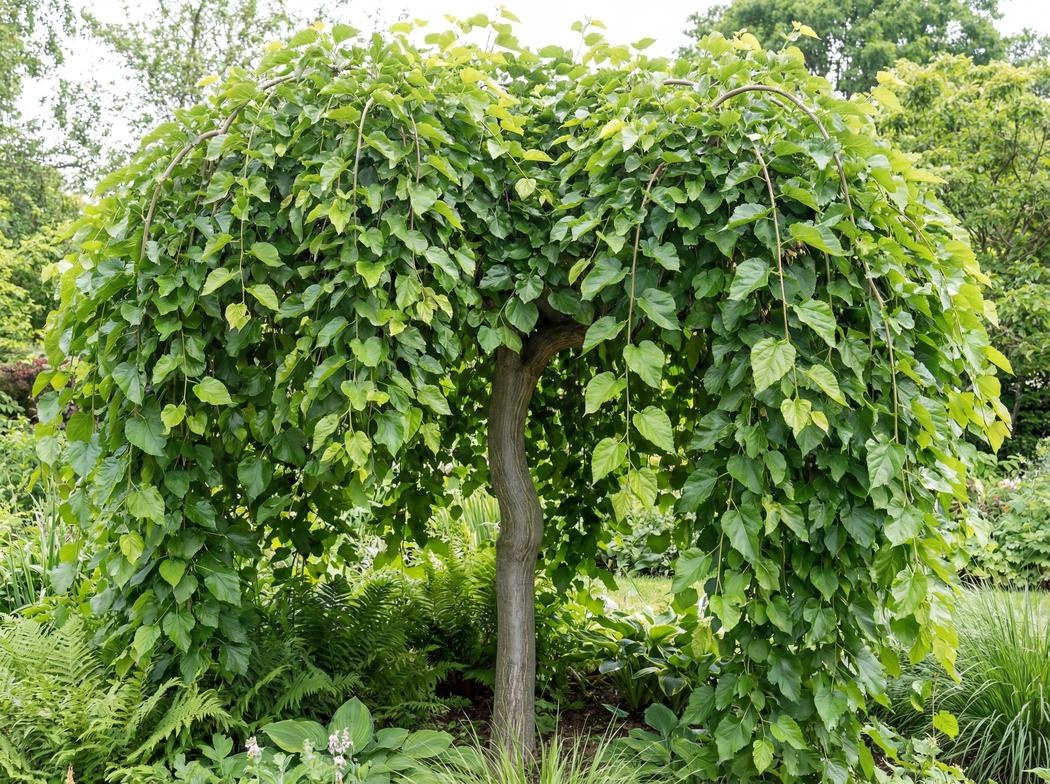
Morus alba Pendula forms a small weeping tree whose curtainlike branches, edible summer fruit, and yellow fall foliage create a distinctive garden focal point.
- Description
- Additional information
Description
A curtain of strongly weeping branches gives Morus alba Pendula a broad, low crown that anchors a lawn or sunny courtyard. Heart-shaped and sometimes lobed green leaves fill the canopy through summer, then turn yellow in fall.
Small greenish-white flowers appear in spring, followed by edible fruits that ripen from white through pink, red, purple, and near-black in summer. Birds also visit the fruit. Give the tree full sun or partial shade, fertile moist but well-drained soil, and shelter from cold, drying winds. Keep it away from paving that falling fruit could stain, and avoid contact with the milky sap when pruning.
Additional information
| Height | 8 ft – 13 ft |
|---|---|
| Spread | 13 ft – 26 ft |
| Flowering months | March, April |
| Synonyms | Morus alba 'Pendula' |
| Family | Moraceae |
| Hazardous | yes |
| Variegated | unknown |
| Color flower spring | Green, White |
| Aspect | East, South, West |
| Foliage | Deciduous |
| Habit | Pendulous |
| Moisture | Moist but Well Drained, Well Drained Soil |
| Ph | Acid, Alkaline, Neutral |
| Position | Full sun, Partial shade |
| Shape | Weeping |
| Suggest planting location | Urban and courtyard gardens, Architectural planting, Edible fruit plants |
| Type | Tree |
| Use for | Architectural, Bird-Friendly, Edible |
| Years to max height | 10 |
| Drought resistance | yes |
| Soil | Chalk, Clay, Loam, Sand |
| Harvest in | 6, 7 |
| Local names | Weeping white mulberry, White mulberry, Weeping mulberry |
| Blomidon Item No | MO23005934, MORALP00015G, MORALP00017G, MORALP0007G, 201814770, 201914899, 201973968, 201823988, 201880450, 201973975, 201906652 |
| Cultivation | Plant in full sun or partial shade in fertile, moist, well-drained soil. Shelter the crown from cold, drying winds. Prune only while dormant to reduce sap bleeding. |
| Usps | Long, weeping branches create a curtainlike crown., Edible summer fruit ripens through white, pink, red, and purple tones., Full sun and moist, well-drained soil support the strongest growth. |
| Propagation | Take semi-hardwood cuttings in midsummer. |
| Pests | Usually pest-free, though borers, whiteflies, scale, mites, or mealybugs may occur. |
| Diseases | Watch for mulberry leaf spot, mulberry canker, coral spot, powdery mildew, and rarely honey fungus. |
| Pruning | Remove dead, damaged, congested, or crossing shoots in late fall or winter to limit sap loss. |
| Hazardous information | The milky sap is toxic if eaten and may irritate skin; avoid contact with sap when pruning. |
| Watering instructions | Water regularly until established, keeping the soil moist and well drained. |
| Sunlight instructions | Grow in full sun to partial shade, sheltered from cold, drying winds. |
| Common Name | Weeping Mulberry |