
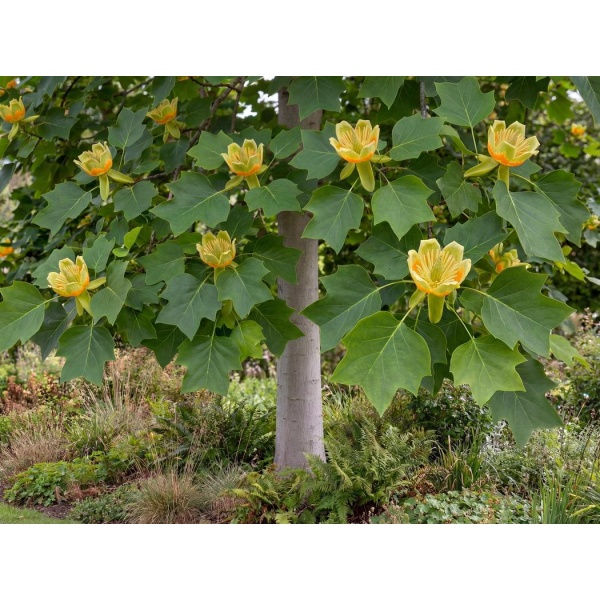
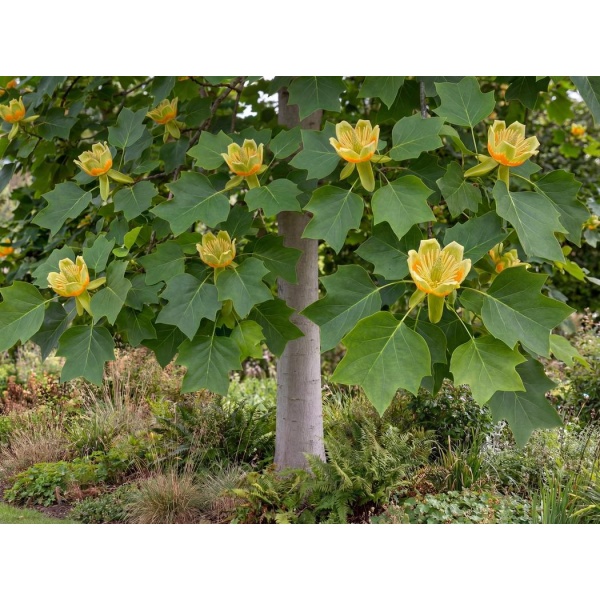
Liriodendron tulipifera
$239.99
One of the tallest native trees of eastern North America, features uniquely shaped leaves and large yellow tulip-shaped flowers which are hard to see because of the height of the tree; needs lots of moisture and room to grow, not for small properties
- Description
- Additional information
Description
One of the tallest native trees of eastern North America, features uniquely shaped leaves and large yellow tulip-shaped flowers which are hard to see because of the height of the tree; needs lots of moisture and room to grow, not for small properties
Tuliptree is a dense deciduous tree with a strong central leader and a distinctive and refined pyramidal form. Its average texture blends into the landscape, but can be balanced by one or two finer or coarser trees or shrubs for an effective composition.
This is a high maintenance tree that will require regular care and upkeep, and is best pruned in late winter once the threat of extreme cold has passed. Deer don’t particularly care for this plant and will usually leave it alone in favor of tastier treats. Gardeners should be aware of the following characteristic(s) that may warrant special consideration;
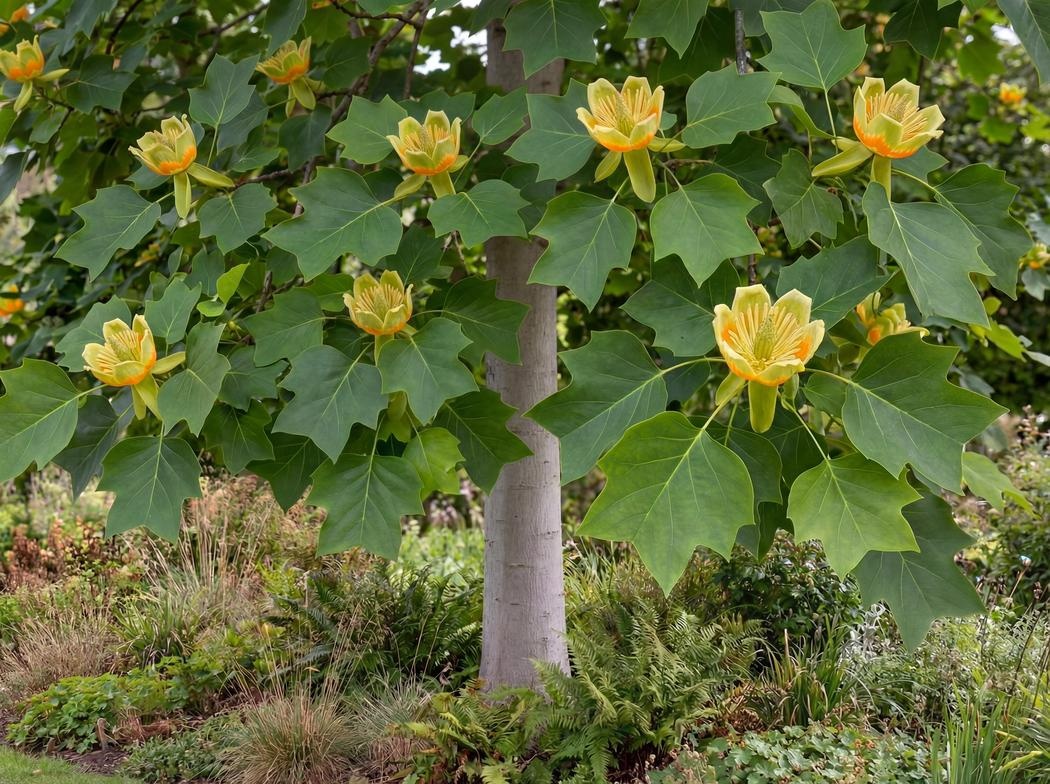
Tuliptree has buttery yellow cup-shaped flowers with yellow eyes and orange centers held atop the branches from mid to late spring. It has emerald green deciduous foliage. The square leaves turn an outstanding gold in the fall. The furrowed gray bark is extremely showy and adds significant winter interest.
Tuliptree will grow to be about 90 feet tall at maturity, with a spread of 50 feet. It has a high canopy of foliage that sits well above the ground, and should not be planted underneath power lines. As it matures, the lower branches of this tree can be strategically removed to create a high enough canopy to support unobstructed human traffic underneath. It grows at a fast rate, and under ideal conditions can be expected to live to a ripe old age of 120 years or more; think of this as a heritage tree for future generations!
This tree should only be grown in full sunlight. It prefers to grow in average to moist conditions, and shouldn’t be allowed to dry out. It is not particular as to soil pH, but grows best in rich soils. It is quite intolerant of urban pollution, therefore inner city or urban streetside plantings are best avoided. This species is native to parts of North America.
Additional information
| Common Name | Tuliptree |
|---|---|
| Height | 60 ft – 90 ft |
| Spread | 30 ft – 50 ft |
| Flowering months | May, June |
| Synonyms | Liriodendron procerum, Tulipifera liriodendrum |
| Family | Magnoliaceae |
| Hazardous | unknown |
| Variegated | unknown |
| Color flower spring | Green, Yellow, Orange |
| Color flower summer | Green, Yellow, Orange |
| Aspect | East, South, West |
| Foliage | Deciduous |
| Habit | Columnar upright |
| Moisture | Moist but Well Drained |
| Ph | Acid, Alkaline, Neutral |
| Position | Full sun, Partial shade |
| Scent | Fragrant |
| Shape | Oval, Round, Pyramidal |
| Suggest planting location | Pollinator Garden, Architectural planting, Wildlife friendly gardens, Rain Garden |
| Type | Tree |
| Use for | Bird-Friendly, Low maintenance, Pollinator-Friendly |
| Years to max height | 20 |
| Drought resistance | no |
| Soil | Loam |
| Local names | Tulip Tree, Tulip Poplar, Yellow Poplar, Whitewood, North American Whitewood, Canoewood, Canary Wood, Western Poplar |
| Usps | Distinctive four-lobed leaves turn clear golden yellow in fall., Fragrant tulip-shaped flowers support bees and hummingbirds., Full sun or partial shade and moist, well-drained soil support growth. |