
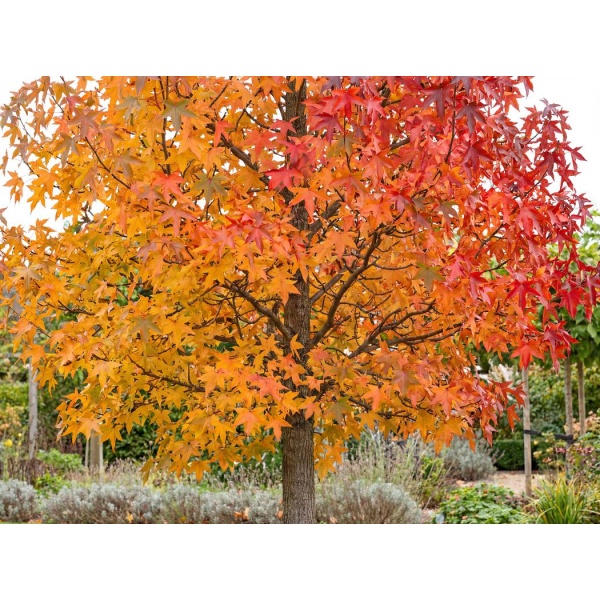

Liquidambar styraciflua
$579.99
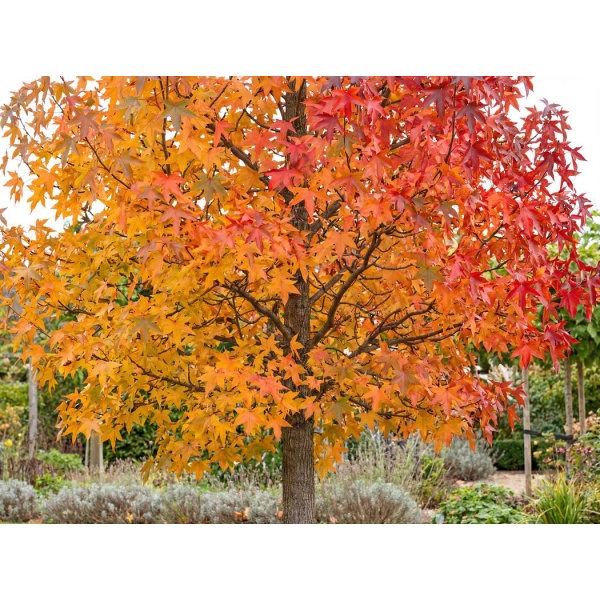
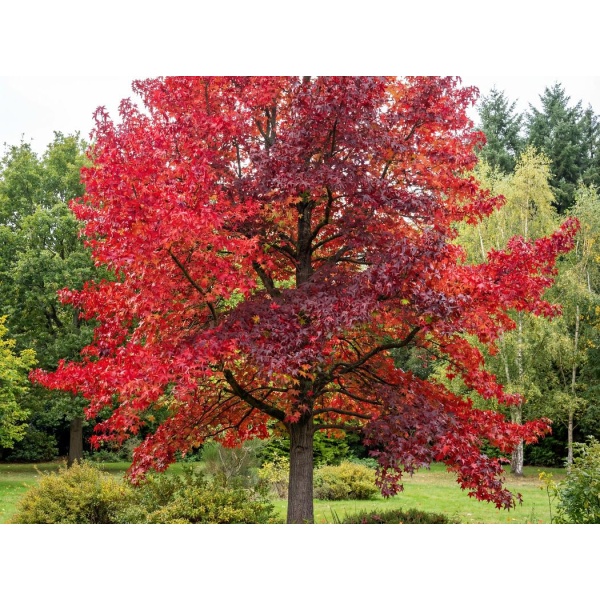
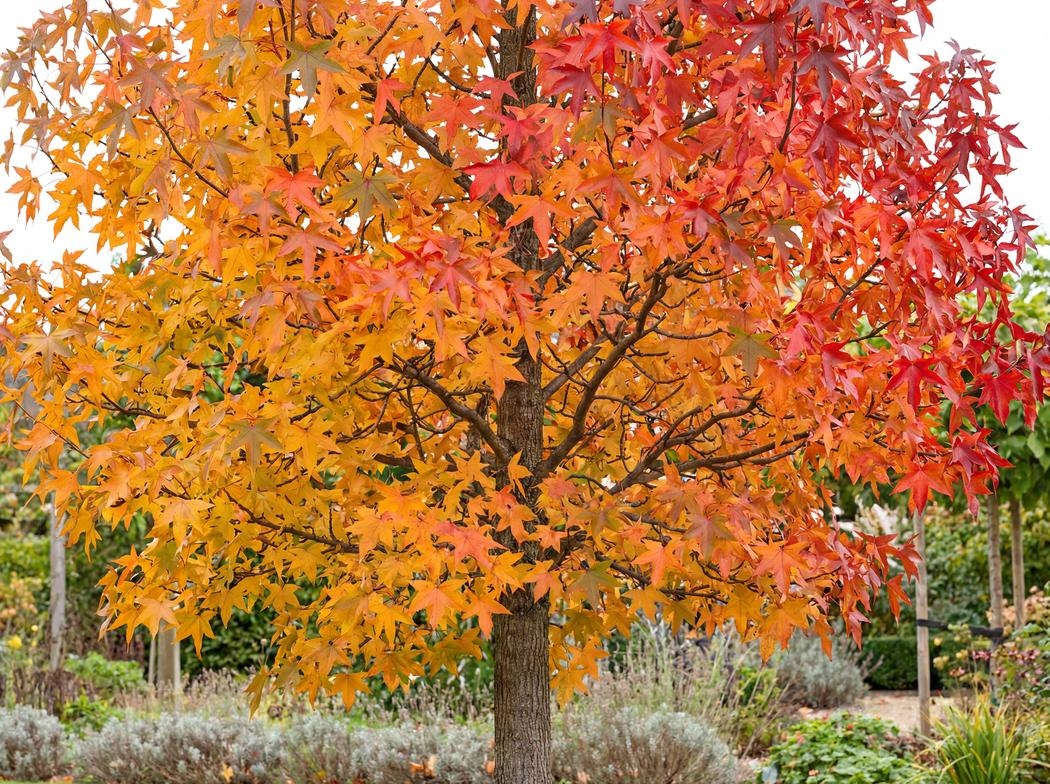
Liquidambar styraciflua is a large pyramidal shade tree with fragrant star-shaped leaves, multicolored fall foliage, and persistent brown gumballs.
- Description
- Additional information
Description
Liquidambar styraciflua is a large deciduous shade tree with a straight trunk and a pyramidal crown that becomes more rounded with age. It commonly grows 60 to 80 feet tall and 40 to 60 feet wide. Glossy deep-green leaves have five to seven pointed star-shaped lobes and turn yellow, orange, red, and purple in fall.
Small yellow-green flowers appear in spherical clusters in April and May. Female flowers develop into hard, round, spiny fruiting heads composed of tiny capsules. These gumballs become dark brown, remain into winter, feed birds, and can litter the ground from December through April. Some branches develop corky ridges, while mature bark becomes deeply furrowed.
Grow American sweetgum in full sun in deep, fertile, moist but well-drained acidic or neutral clay, loam, or sand. Partial shade is tolerated, but full sun supports the best fall color. Water regularly while the tree establishes and deeply during dry spells. Remove dead, damaged, or crossing branches in late winter and avoid topping. Keep fallen gumballs away from walkways because they can cause tripping injuries.
Additional information
| Height | 60 ft – 80 ft |
|---|---|
| Spread | 40 ft – 60 ft |
| Flowering months | April, May |
| Family | Altingiaceae |
| Hazardous | yes |
| Variegated | no |
| Color flower spring | Green, Yellow |
| Aspect | East, South, West |
| Foliage | Deciduous |
| Habit | Bushy |
| Moisture | Moist but Well Drained, Well Drained Soil |
| Ph | Acid, Neutral |
| Position | Full sun, Partial shade |
| Shape | Pyramidal |
| Suggest planting location | Pollinator Garden, Woodland Garden, Urban and courtyard gardens, Architectural planting, Wildlife friendly gardens |
| Type | Tree |
| Use for | Deer resistant, Bird-Friendly, Low maintenance |
| Years to max height | more than 50 |
| Drought resistance | moderate |
| Soil | Clay, Loam, Sand |
| Local names | American Sweetgum |
| Propagation | Propagate by seed or semi-hardwood cuttings. |
| Pests | Webworms, caterpillars, borers, and scale may cause problems. |
| Diseases | Leaf spots, wood rot, bleeding necrosis, honey fungus, and iron chlorosis in alkaline soil may occur. |
| Pruning | Remove dead, damaged, or crossing branches in late winter, and do not top the tree. |
| Hazardous information | Fallen spiny fruiting heads can create a tripping hazard and may cause injury if stepped on. |
| Watering instructions | Water regularly during establishment and provide occasional deep watering during dry spells. |
| Sunlight instructions | Grow in full sun; partial shade is tolerated, but full sun supports the best fall color. |
| Common Name | Sweet Gum |