
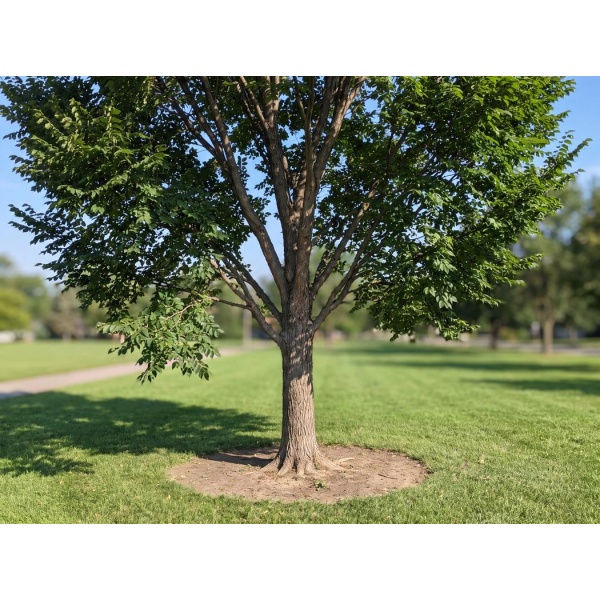
Ulmus Jap “New Horizon”
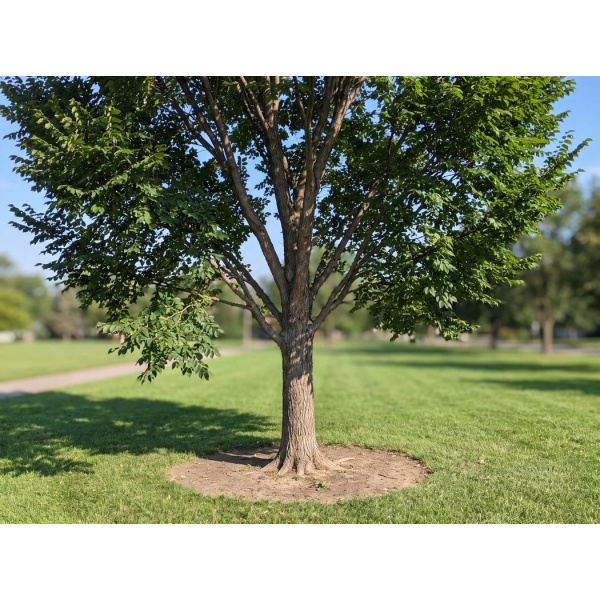
$419.99
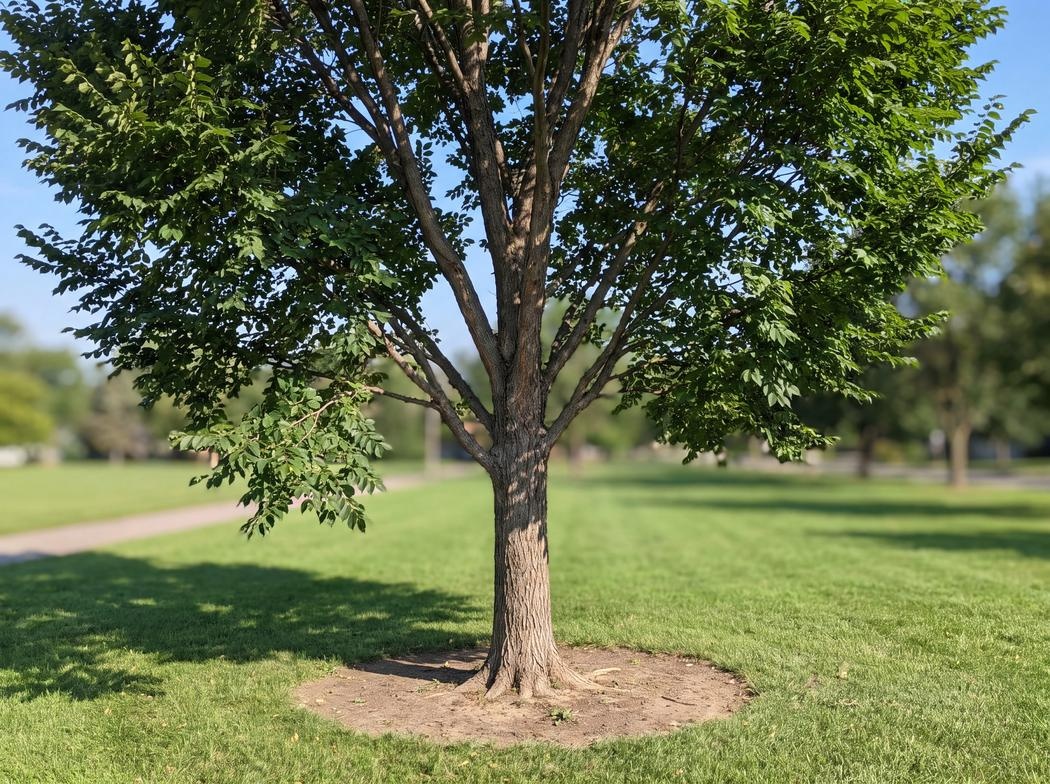
Ulmus New Horizon is a fast-growing hybrid elm with a compact upright crown, dark-green double-serrate leaves, and strong Dutch elm disease resistance.
- Description
- Additional information
Description
Ulmus New Horizon develops into a fast-growing shade tree with a compact upright to oval crown and slightly arching branches. Its gray-brown bark becomes ridged with age, while dark-green ovate leaves have pointed tips, uneven bases, and neatly double-serrate margins.
Small pale-green flowers appear before the leaves in early spring and are followed by sparse oval winged samaras in late spring. Summer foliage stays dense and dark green before taking on yellow to rusty-red tones in autumn.
Grow this elm in full sun or light partial shade in moist but well-drained soil. It adapts to clay, alkaline ground, dry sites, and road salt, making it useful for parks, wide streets, and larger residential landscapes. Its resistance to Dutch elm disease, elm leaf miner, and Verticillium wilt is a defining strength.
Additional information
| Height | 30 ft – 39 ft |
|---|---|
| Spread | 15 ft – 25 ft |
| Flowering months | March, April |
| Synonyms | Ulmus americana "New Horizon", Ulmus davidiana var. japonica × Ulmus pumila 'New Horizon', Ulmus Jap "New Horizon", Ulmus New Horizon |
| Family | Ulmaceae |
| Hazardous | unknown |
| Variegated | unknown |
| Color flower spring | Green |
| Aspect | East, South, West |
| Foliage | Deciduous |
| Habit | Columnar upright |
| Moisture | Moist but Well Drained, Well Drained Soil |
| Ph | Acid, Alkaline, Neutral |
| Position | Full sun, Partial shade |
| Shape | Oval |
| Suggest planting location | Four-Season Garden, Urban and courtyard gardens, Cottage and informal gardens, Formal Garden |
| Type | Tree |
| Use for | Architectural, Structural, Bird-Friendly |
| Years to max height | more than 50 |
| Drought resistance | moderate |
| Soil | Clay, Loam, Sand |
| Local names | New Horizon elm |
| Blomidon Item No | ULMNH060WB, ULMJNH060WB, ULMANH060WB |
| Propagation | Root greenwood cuttings in summer under intermittent mist in a free-draining propagation medium after applying rooting hormone. |
| Pests | Aphids, bark beetles, elm gall mites, scale, and elm leaf beetles may occur, although elm leaf miner resistance is strong. |
| Diseases | Highly resistant to Dutch elm disease and Verticillium wilt; wetwood, coral spot, honey fungus, and Phytophthora may still occur. |
| Pruning | Remove damaged or crossing branches while dormant, and avoid pruning from mid-April through mid-October when elm bark beetles are active. |
| Watering instructions | Water deeply through establishment; irrigate during prolonged drought. |
| Sunlight instructions | Give full sun for the densest, most symmetrical upright crown. |
| Common Name | New Horizon Elm |