
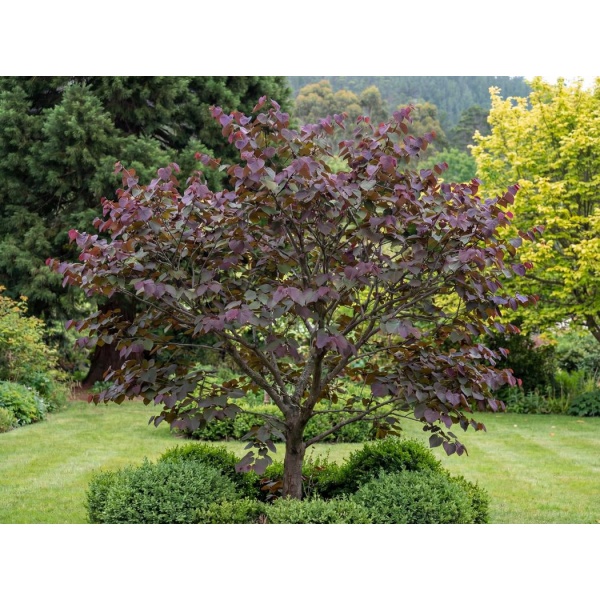
Cercis canadensis ‘Forest Pansy’
$329.99
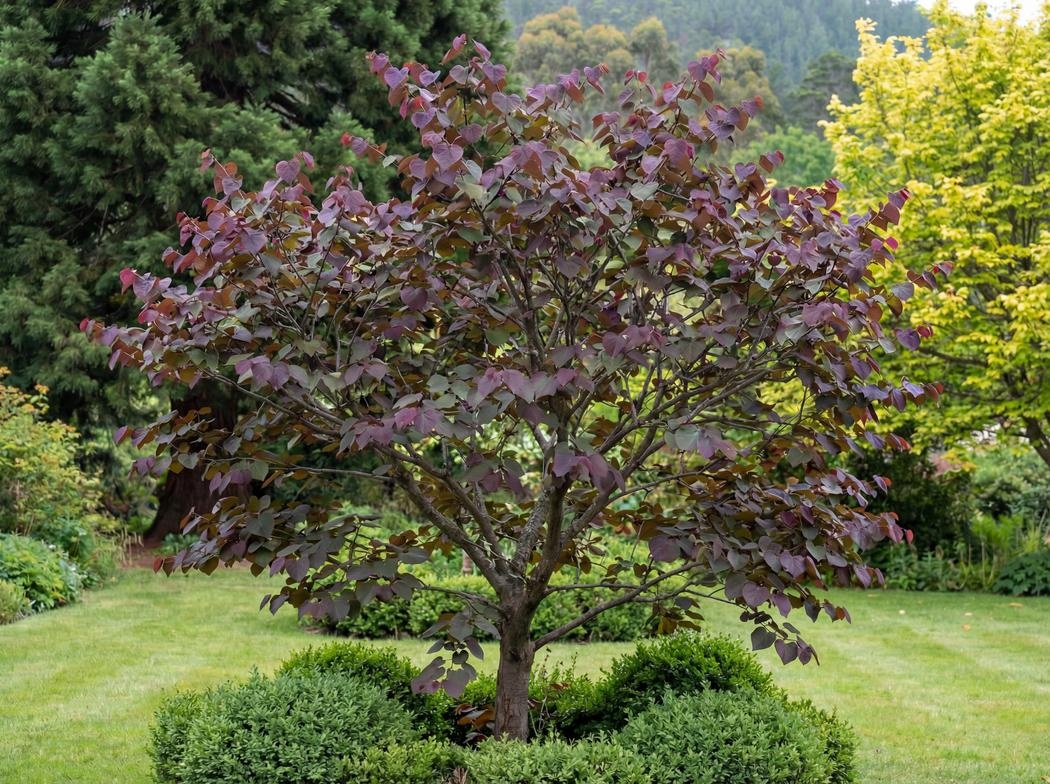
Cercis canadensis Forest Pansy pairs rosy-pink spring flowers with purple-red leaves that mature toward maroon, forming a rounded small tree for patios, lawns, and mixed borders.
- Description
- Additional information
Description
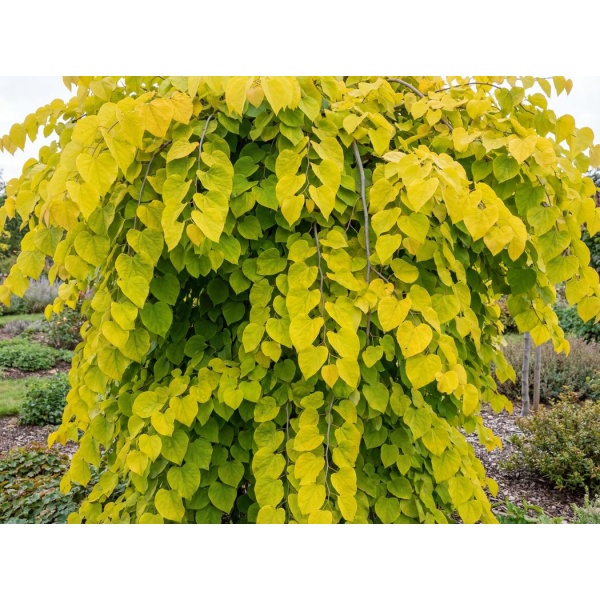
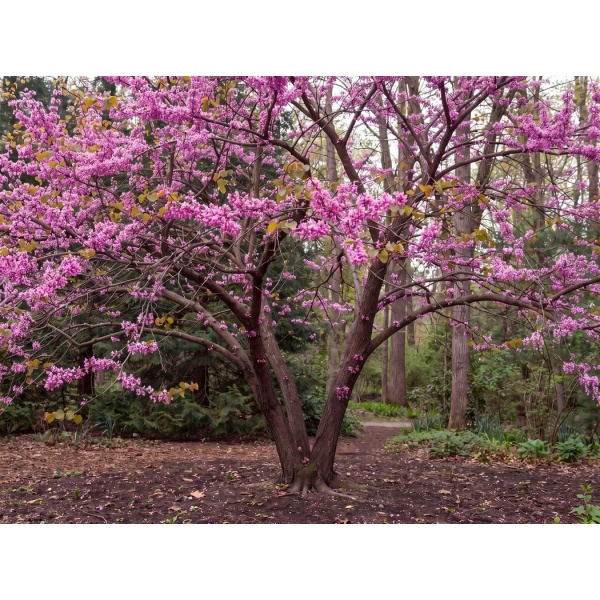
Purple-red leaves carry the display well beyond the spring bloom on Cercis canadensis Forest Pansy. Rosy-pink to purple pea-like flowers cluster along bare branches in early spring, followed by broad heart-shaped leaves that deepen toward maroon and may become purple-green in summer.
The rounded, often multistemmed crown fits lawns, patios, mixed borders, woodland edges, and small urban gardens. Plant it while young in full sun or partial shade and moist, well-drained soil, then water regularly during establishment. Afternoon shade helps in hot summers.
Additional information
| Height | 20 ft – 30 ft |
|---|---|
| Spread | 25 ft – 35 ft |
| Flowering months | April |
| Synonyms | Cercis canadensis 'Forest Pansy', Cercis canadensis Purple Leaf |
| Family | Fabaceae |
| Hazardous | unknown |
| Variegated | unknown |
| Color flower spring | Purple, Pink |
| Aspect | East, South, West, North |
| Foliage | Deciduous |
| Habit | Bushy |
| Moisture | Moist but Well Drained |
| Ph | Acid, Alkaline, Neutral |
| Position | Full sun, Partial shade |
| Shape | Round |
| Suggest planting location | Pollinator Garden, Urban and courtyard gardens, Flowering borders, Cottage and informal gardens, Wildlife friendly gardens |
| Type | Tree |
| Use for | Architectural, Low maintenance, Pollinator-Friendly |
| Years to max height | 10 |
| Soil | Chalk, Clay, Loam, Sand |
| Local names | Eastern Redbud, Forest Pansy, Forest Pansy Redbud |
| Blomidon Item No | MO23001965, CERCAFP0007G, CERCAFP0015G, 201811607, 105314, 201637396, 201960969, 201661567, 202017256, 202017478, 201909280, 202065965, 77281, 201666246, 202049732 |
| Cultivation | Grow in average to fertile, well-drained soil with regular moisture. Full sun or partial shade suits this tree. Place it while young and avoid later transplanting. |
| Propagation | Propagate this cultivar by summer cuttings or budding onto seedling rootstock. |
| Pests | Watch for leafhoppers, scale insects, Japanese beetles, caterpillars, borers, and webworms. |
| Diseases | Canker, verticillium wilt, dieback, leaf spots, mildew, blights, coral spot, and honey fungus may occur. |
| Pruning | Remove dead branches and trim drooping growth as needed in dry weather in late spring or early summer. |
| Watering instructions | Water regularly in well-drained soil, especially during establishment. |
| Sunlight instructions | Grow in full sun or partial shade, with afternoon shade in hot summers. |