
Betula pendula ‘Youngii’
$299.99
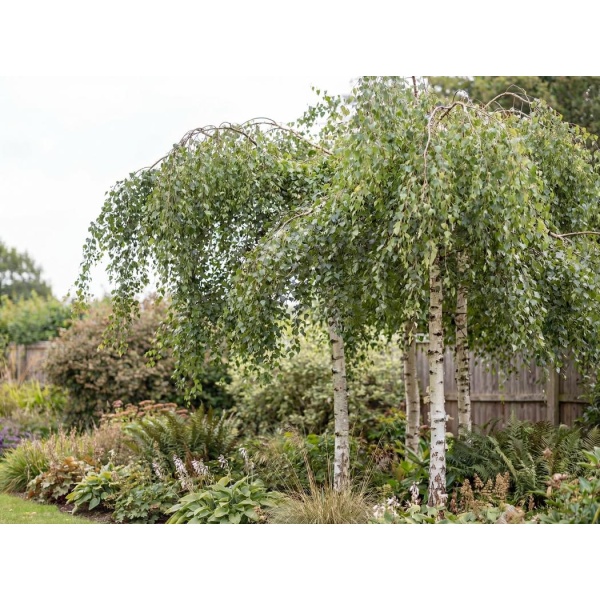
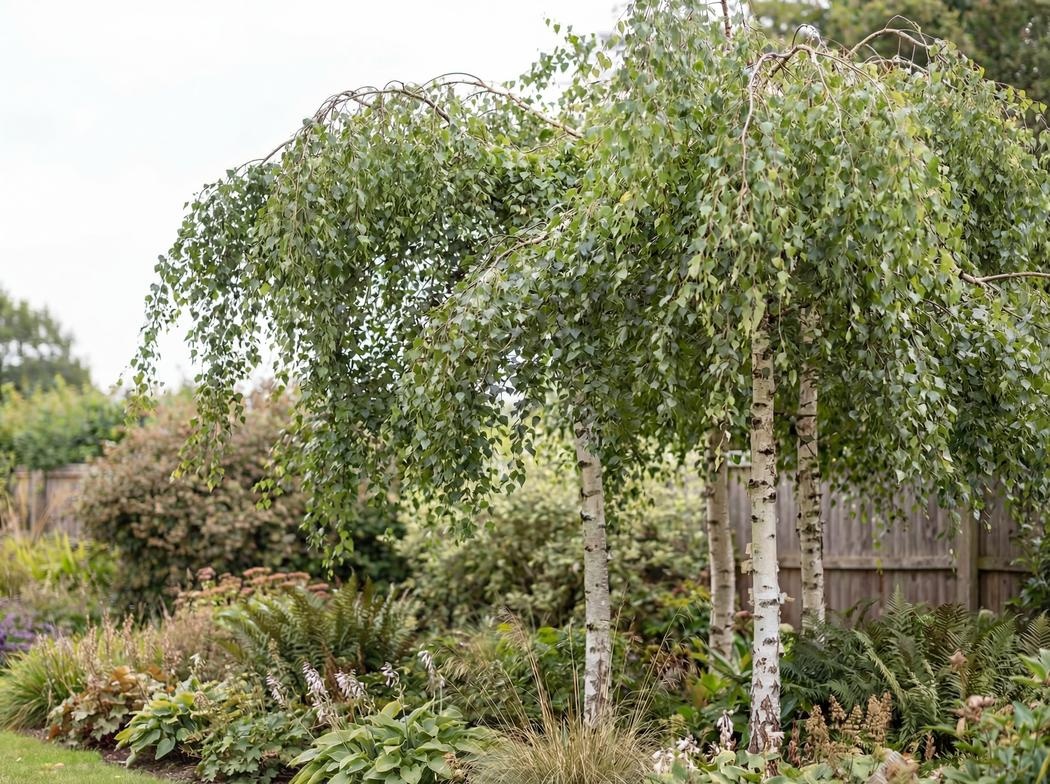
Betula pendula subsp. pendula Youngii is a small domed tree with white peeling bark, green toothed leaves, yellow fall color, and strongly weeping branches.
- Description
- Additional information
Description
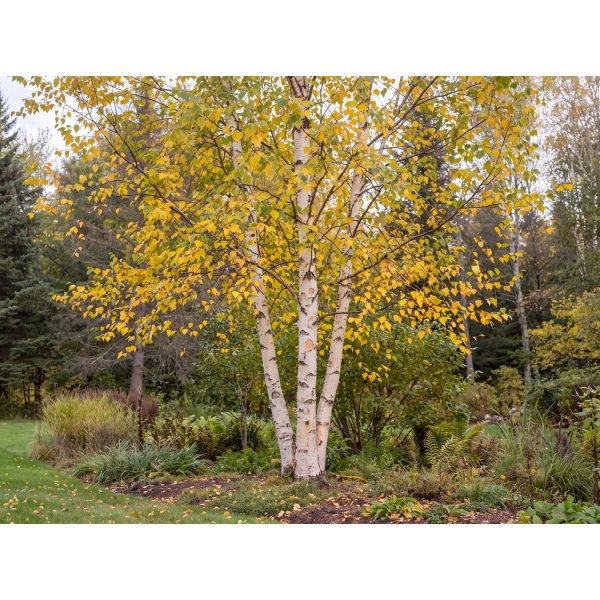
Betula pendula subsp. pendula Youngii forms a broad dome of arching branches that can weep to the ground. Its white, slightly peeling trunk supports red-brown twigs and green triangular to diamond-shaped leaves that turn yellow in fall. Yellow-green catkins may appear in spring.
Grow this grafted tree in full sun or partial shade in moist but well-drained soil. Keep its shallow root zone cool and evenly moist, avoid road salt and sea wind, and prune sparingly outside the spring sap-flow period. The plant is usually not toxic, but its windborne pollen is highly allergenic.
Additional information
| Height | 13 ft – 26 ft |
|---|---|
| Spread | 13 ft – 26 ft |
| Flowering months | April, May |
| Synonyms | Betula alba pendula-youngii, Betula pendula 'Youngii', Betula Pendula Pendula Youngii, Betula pendula subsp. pendula 'Youngii', Betula pendula Youngii |
| Family | Betulaceae |
| Hazardous | yes |
| Variegated | no |
| Color flower spring | Green, Yellow |
| Aspect | East, South, West, North |
| Foliage | Deciduous |
| Habit | Pendulous |
| Moisture | Moist but Well Drained, Well Drained Soil |
| Ph | Acid, Alkaline, Neutral |
| Position | Full sun, Partial shade |
| Shape | Weeping |
| Suggest planting location | Architectural planting, Cottage and informal gardens, Wildlife friendly gardens |
| Type | Tree |
| Use for | Architectural, Butterfly-Friendly, Bird-Friendly |
| Years to max height | 20 |
| Drought resistance | moderate |
| Soil | Chalk, Clay, Loam, Sand |
| Local names | Young's Weeping Birch, Youngii Weeping Birch |
| Cultivation | Plant in moist but well-drained soil in full sun or partial shade. Mulch the shallow root zone, water during dry weather, and prune only from late summer through midwinter. |
| Usps | A broad weeping dome creates a living garden sculpture., White peeling bark and yellow fall foliage extend seasonal interest., Give full sun or partial shade and moist but well-drained soil. |
| Propagation | Propagate by softwood cuttings or grafting onto suitable Betula rootstock. |
| Pests | Birch borers, leaf-mining sawflies, aphids, leaf miners, and birch skeletonizers may occur. |
| Diseases | Honey fungus, tree rust, powdery mildew, and leaf spots may occur. |
| Pruning | Prune only when needed, removing diseased or crossing branches from late summer through midwinter to limit sap bleeding. |
| Hazardous information | Usually not toxic to people or animals, but birch pollen is highly allergenic and can worsen hay fever or asthma in susceptible people. |
| Watering instructions | Keep soil evenly moist, especially in dry weather, without waterlogging. |
| Sunlight instructions | Grow in full sun or partial shade with a cool, mulched root zone. |
| Common Name | Young's Weeping Birch |