Betula papyrifera ‘(clump)’

$499.99
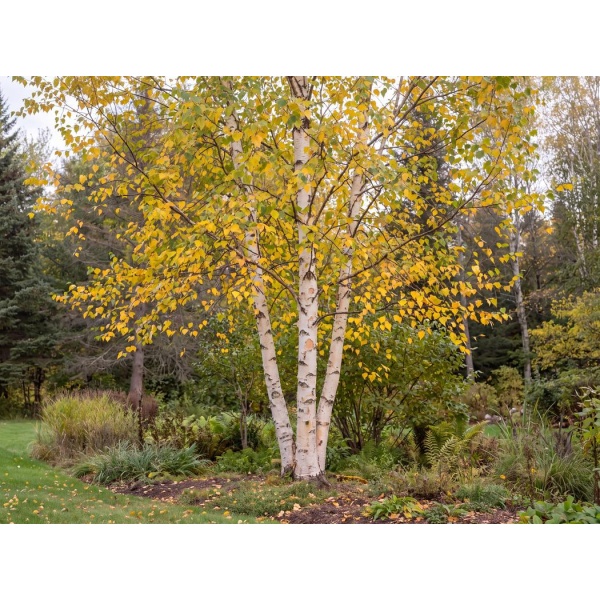
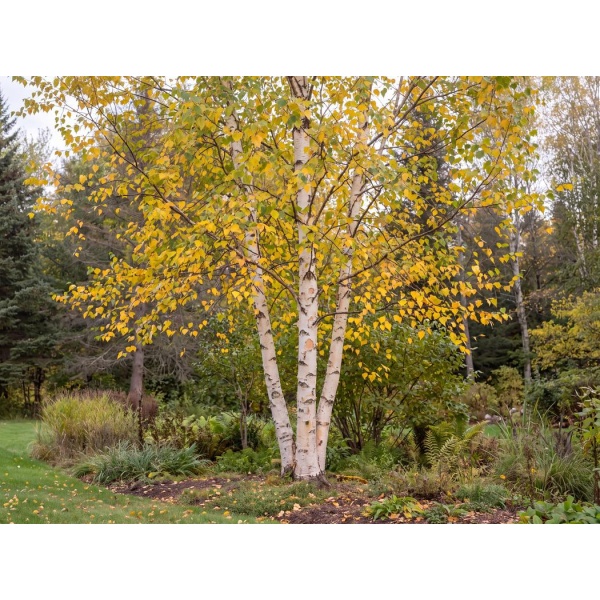
Betula papyrifera is a cold-hardy paper birch with white peeling bark, spring catkins, green leaves, and clear yellow autumn color.
- Description
- Additional information
Description
White bark that curls away in papery strips gives Betula papyrifera a clear architectural presence in every season, with pale orange underbark and black markings becoming visible as the trunk matures. Its dark green leaves turn yellow in autumn, while yellow-brown and green catkins appear in spring.
This upright deciduous tree develops a conical outline and needs generous space. It grows in full sun or partial shade across acid, neutral, or alkaline chalk, clay, loam, and sand when moisture is steady and drainage remains good.
Keep its shallow root zone cool and evenly moist, particularly during establishment and dry periods. Apply organic mulch clear of the trunk and fertilize only when a soil test identifies a deficiency. Remove unwanted branches while dormant, avoiding spring sap flow.
The tree works as an architectural specimen and supports birds and small mammals with buds, catkins, and seeds. Paper birch pollen can trigger allergic reactions in sensitized people.
Additional information
| Height | 1525 cm – 2135 cm |
|---|---|
| Spread | 760 cm – 1525 cm |
| Flowering months | March, April |
| Synonyms | Betula lyalliana, Betula papyracea, Betula papyrifera var. commutata, Betula papyrifera var. papyrifera, Betula papyrifera var. subcordata, Betula platyphylla var. subcordata |
| Family | Betulaceae |
| Propagation | Propagate by seed, softwood cuttings, or grafting. |
| Pests | Birch borers, leaf-mining sawflies, and aphids may occur. |
| Diseases | Honey fungus, tree rust, and powdery mildews may occur. |
| Pruning | Remove unwanted branches while dormant, avoiding spring sap flow. |
| Hazardous information | Paper birch pollen can trigger allergic reactions in sensitized people. |
| Hazardous | yes |
| Variegated | unknown |
| Watering instructions | Keep the shallow root zone cool, evenly moist, and well drained. |
| Sunlight instructions | Grow in full sun or partial shade. |
| Color flower spring | Green, Brown, Yellow |
| Aspect | East, South, West, North |
| Foliage | Deciduous |
| Habit | Columnar upright |
| Moisture | Moist but Well Drained, Well Drained Soil |
| Ph | Acid, Alkaline, Neutral |
| Position | Full sun, Partial shade |
| Shape | Cone |
| Suggest planting location | Low maintenance planting, Architectural planting, Wildlife friendly gardens |
| Type | Tree |
| Use for | Architectural, Bird-Friendly, Low maintenance |
| Years to max height | 20 |
| Drought resistance | no |
| Cultivation | |
| Soil | Chalk, Clay, Loam, Sand |
| Local names | Paper Birch, Canoe Birch, White Birch, Paperbark Birch |
| Blomidon Item No | BETPA0060WB, BETPA01507G, BETPA050WB, BETPA070WB |
| Usps | White papery bark peels to reveal pale orange underbark., Yellow catkins and golden autumn leaves extend seasonal interest. |