
Hydrangea paniculata ‘Quick Fire Fab
$59.99
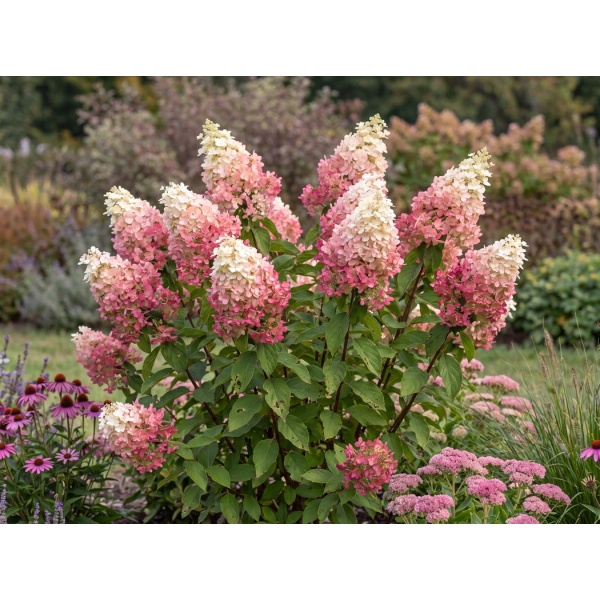
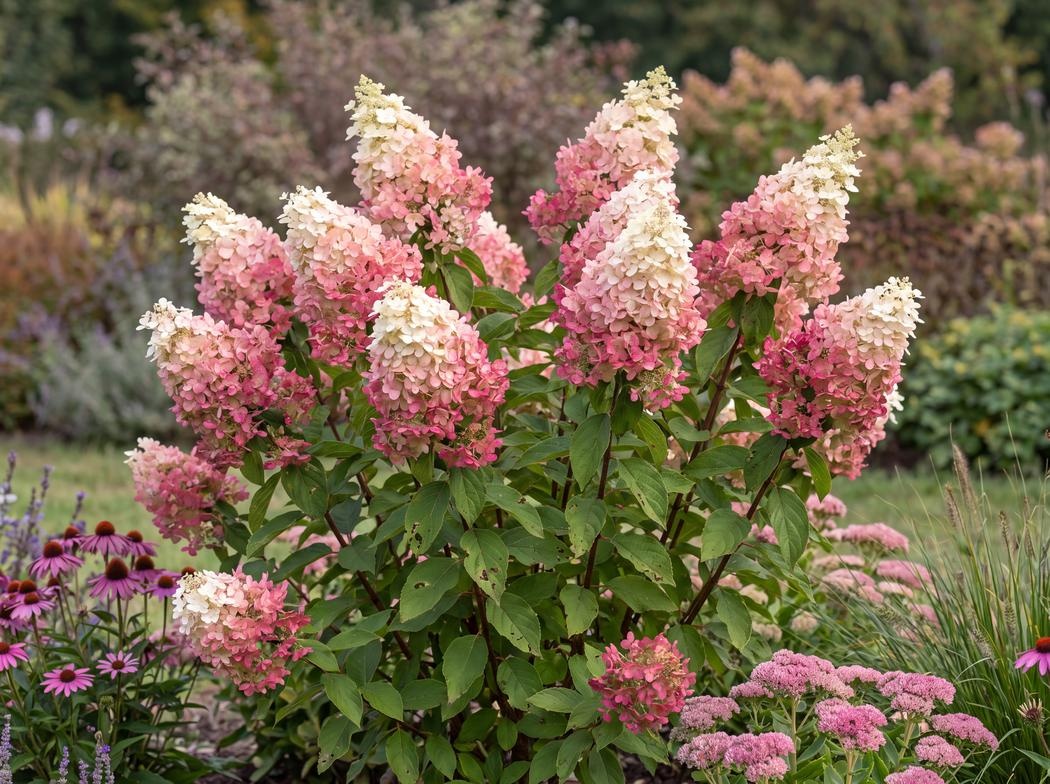
Hydrangea paniculata SMNHPM opens dense white mophead panicles early, then turns pink and red for a long summer-to-fall display.
- Description
- Additional information
Description
Hydrangea paniculata SMNHPM is an upright, deciduous panicle hydrangea with exceptionally large, full mophead panicles held on strong stems. Its early flowers open creamy green to white, then color from the base upward through blush pink, bright pink, and red, often showing several tones at once.
Use this bushy shrub as a flowering hedge, border specimen, garden backdrop, or large container feature, and cut the blooms fresh or dry them. Grow it in sun or partial shade in evenly moist, well-drained soil; in warm conditions, favor morning sun and shade during the hottest part of the day. The species is a skin allergen, and its plant material is harmful if eaten by dogs or cats.
Additional information
| Height | 6 ft – 8 ft |
|---|---|
| Spread | 5 ft – 6 ft |
| Flowering months | June, July, August |
| Synonyms | Hydrangea pan Quick Fire Fab, Hydrangea paniculata 'Quick Fire Fab, Hydrangea paniculata Quick Fire Fab, Hydrangea paniculata SMNHPM (Quick Fire Fab) |
| Family | Hydrangeaceae |
| Hazardous | yes |
| Variegated | no |
| Color flower autumn | Red, Pink |
| Color flower summer | Green, Red, White, Pink |
| Aspect | East, South, West |
| Foliage | Deciduous |
| Habit | Bushy |
| Moisture | Moist but Well Drained |
| Ph | Acid, Alkaline, Neutral |
| Position | Full sun, Partial shade |
| Shape | Upright |
| Suggest planting location | Flowering borders, Cut flower use, Hedges and screening plants |
| Type | Shrub |
| Use for | Hedge, Cutting Garden, Container Planting |
| Soil | All types |
| Local names | Quick Fire Fab Panicle Hydrangea, Quick Fire Fab Hydrangea |
| Blomidon Item No | HYDPAQFF0002G, 202016537 |
| Propagation | Propagate by softwood cuttings in early summer. |
| Pests | Beetles may nibble leaves, and slugs may mark young or shaded plants. |
| Diseases | Leaf spot may occur, especially where fallen leaves remain or foliage is repeatedly wetted. |
| Pruning | Cut the main branches back by one-third in late winter or early spring. |
| Hazardous information | Hydrangea paniculata is a skin allergen, and its plant material is harmful if eaten by dogs and cats. |
| Watering instructions | Keep soil evenly moist but well drained; avoid prolonged drought. |
| Sunlight instructions | Use full sun or partial shade, with morning sun in warm areas. |
| Scent | No |
| Years to max height | 2 |
| Drought resistance | moderate |