
Diervilla lonicera
$64.99
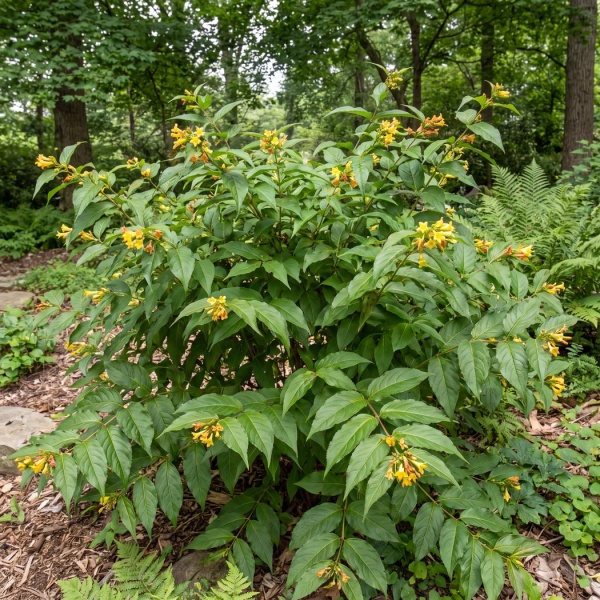
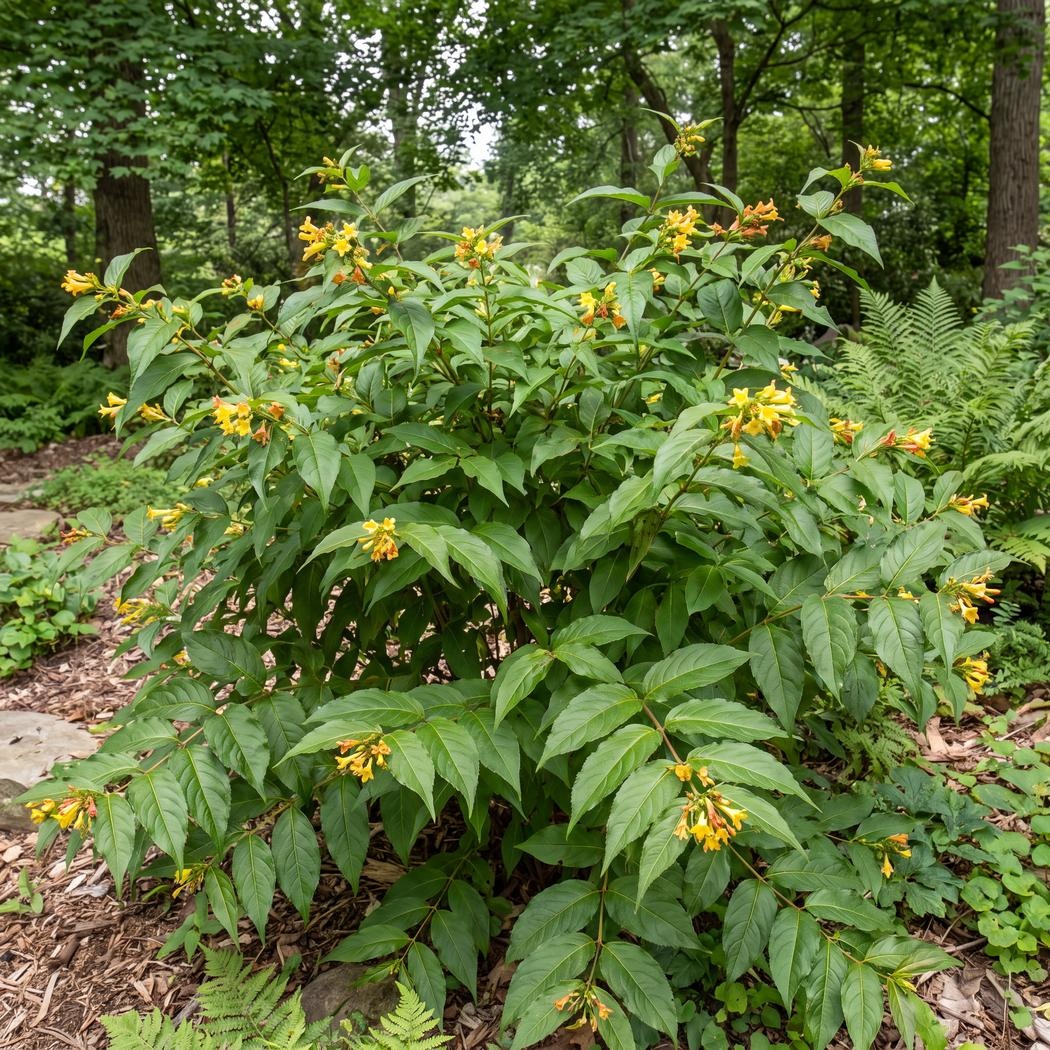
Diervilla lonicera spreads into a low, dependable shrub with yellow summer flowers and vivid orange-red fall foliage.
- Description
- Additional information
Description
Spreading growth allows Diervilla lonicera to cover open ground with a durable leafy colony. Yellow tubular flowers appear in summer, bringing pollinators close to the green foliage. As the season changes, the serrated leaves turn yellow, orange, and red. The rounded shrub remains low enough for woodland edges, flat naturalized beds, and low-maintenance planting.
Full sun or partial shade is suitable, with brighter sites supporting more flowers. Keep soil lightly moist during establishment, then allow brief drying. A thin spring compost mulch is enough. Remove weak or crowded stems in late winter, and thin older wood at the base when the colony becomes congested. Aphids, thrips, and whiteflies may attack new growth. Open growth and suitable drainage help reduce mildew and leaf spots.
Additional information
| Height | 3 ft – 5 ft |
|---|---|
| Spread | 3 ft – 5 ft |
| Flowering months | June, July, August |
| Synonyms | Diervilla canadensis |
| Family | Caprifoliaceae |
| Hazardous | unknown |
| Variegated | no |
| Color flower summer | Yellow, Orange |
| Aspect | East, South, West, North |
| Foliage | Deciduous |
| Habit | Bushy, Suckering |
| Moisture | Moist but Well Drained, Well Drained Soil |
| Ph | Acid, Alkaline, Neutral |
| Position | Full sun, Partial shade |
| Shape | Mound-forming, Spreading |
| Suggest planting location | Banks and slopes, Pollinator Garden, Woodland Garden, Low maintenance planting, Ground cover planting |
| Type | Shrub |
| Use for | Ground cover, Pollinator-Friendly, Erosion Control |
| Years to max height | 5 |
| Drought resistance | moderate |
| Soil | Chalk, Clay, Loam, Sand |
| Local names | Northern Bush Honeysuckle, Dwarf Bush Honeysuckle, Low Bush Honeysuckle |
| Blomidon Item No | MO23003108, DIELO0403G, 100-8443 |
| Usps | Serrated foliage shifts from green to vivid orange-red in fall., Suckering growth covers slopes and supports summer pollinators., Sun or partial shade and drained soil support spreading summer growth. |
| Propagation | Root softwood cuttings during active summer growth. Separate rooted suckers in late winter while the shrub is dormant. |
| Pests | Honeysuckle aphids, thrips, and glasshouse whiteflies may attack the shrub. Inspect new growth and leaf undersides when damage appears. |
| Diseases | Powdery mildew, fungal leaf spot, silver leaf, and honey fungus may occur. Open growth and suitable drainage help reduce disease pressure. |
| Pruning | Remove weak or crowded stems in late winter. Thin older wood at the base when the spreading colony becomes congested. |
| Watering instructions | Keep soil lightly moist while establishing, then allow brief drying. |
| Sunlight instructions | Handles full sun and partial shade, with best bloom in brighter sites. |
| Common Name | Bush Honeysuckle |