
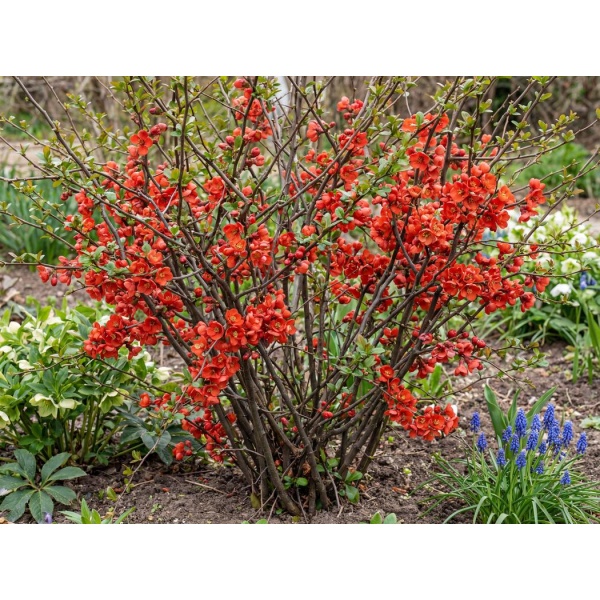
Chaenomeles japonica
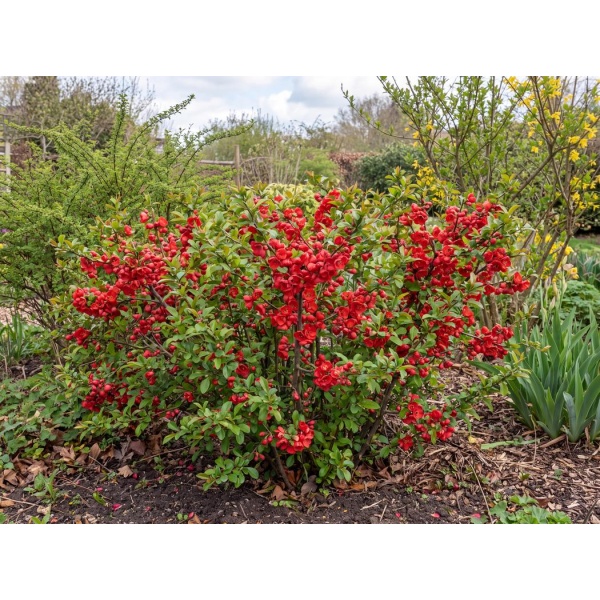
$64.99
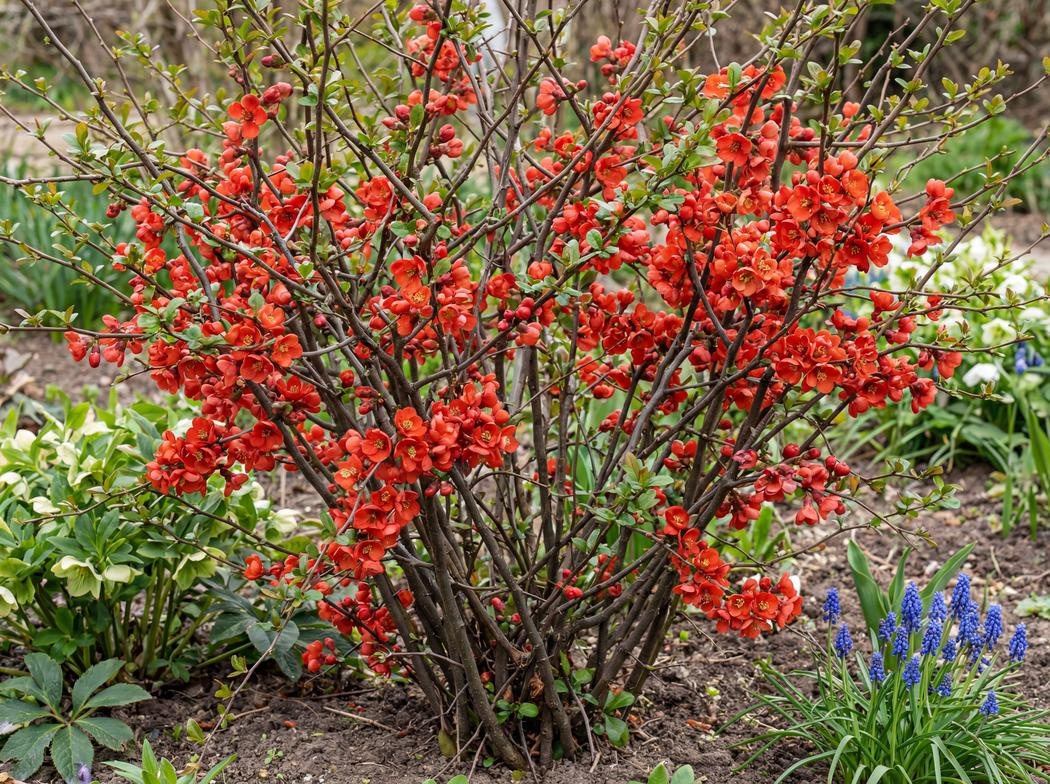
Chaenomeles japonica forms a wide, thorny low hedge with red-orange spring flowers and aromatic yellow fruit for preserves.
- Description
- Additional information
Description
Chaenomeles japonica is a low, spreading deciduous shrub with tangled thorny branches and clusters of red-orange cup-shaped flowers in spring. It grows wider than tall, making a colorful informal hedge or flowering border plant.
Aromatic yellow fruit ripens in autumn and can be cooked into preserves. Grow it in full sun for the strongest flower display or partial shade, in moist but well-drained soil. Spiny branches can scratch skin, and the seeds contain toxins if eaten; wear gloves when pruning and do not eat the seeds.
Additional information
| Height | 2 ft – 3 ft |
|---|---|
| Spread | 5 ft – 8 ft |
| Flowering months | March, April |
| Synonyms | Chaenomeles japonica Rasa, Chaenomeles maulei, Cydonia japonica, Cydonia maulei, Pyrus japonica |
| Family | Rosaceae |
| Hazardous | yes |
| Variegated | unknown |
| Color flower spring | Red, Orange |
| Aspect | East, South, West, North |
| Foliage | Deciduous |
| Habit | Bushy |
| Moisture | Moist but Well Drained, Well Drained Soil |
| Ph | Acid, Alkaline, Neutral |
| Position | Full sun, Partial shade |
| Scent | Fragrant |
| Shape | Spreading |
| Suggest planting location | Flowering borders, Hedges and screening plants, Edible fruit plants, Cottage and informal gardens, Wildlife friendly gardens |
| Type | Shrub |
| Use for | Hedge, Bee-Friendly, Edible |
| Years to max height | 5 |
| Drought resistance | yes |
| Cultivation | Plant in full sun for the strongest flowering or in partial shade. Keep the soil moist but well drained. Prune lightly after flowering and remove unwanted suckers. |
| Soil | Chalk, Clay, Loam, Sand |
| Harvest in | 10 |
| Local names | Flowering Quince, Japanese Flowering Quince |
| Blomidon Item No | MO23001992, CHASJAP0403G, 201811628 |
| Usps | Red-orange cup-shaped flowers cluster along bare spring stems., The wide shrub forms a low hedge and yields fruit for preserves., Flowers best in full sun and accepts well-drained soil. |
| Propagation | Propagate from semi-ripe cuttings in summer or by layering in autumn. |
| Pests | Watch for scale insects, aphids, and brown scale. |
| Diseases | Fireblight, blossom wilt, brown rot, and honey fungus may occur. |
| Pruning | Prune lightly after flowering in spring, avoid severe cuts, and remove unwanted suckers. |
| Hazardous information | Spiny branches can scratch skin, and the seeds contain toxins if eaten. Wear gloves when pruning and do not eat the seeds. |
| Watering instructions | Keep the soil moist but well drained. |
| Sunlight instructions | Grow in full sun for best flowering or partial shade. |
| Common Name | Japanese Flowering Quince |