
Rosa Coral Dawn

$64.99
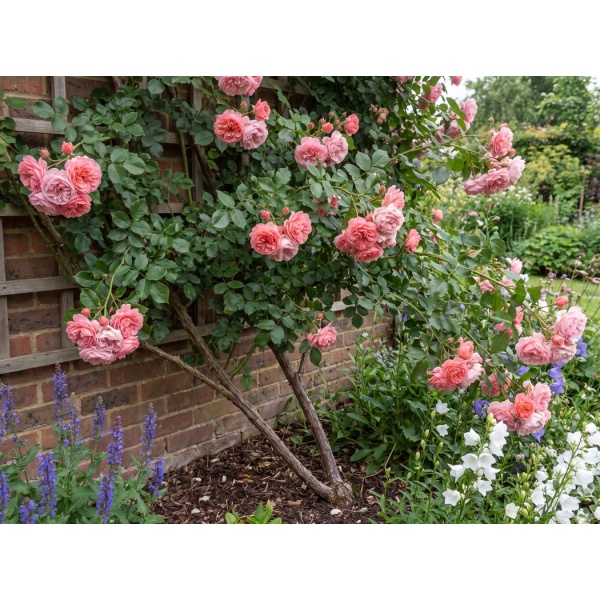
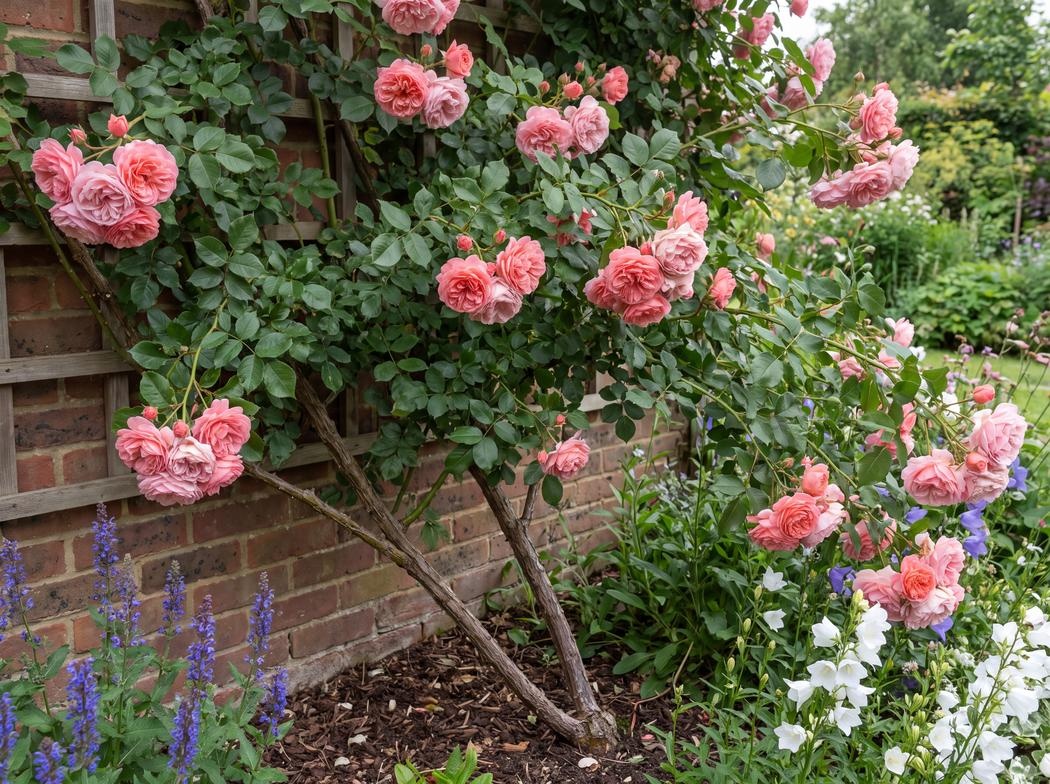
Rosa Coral Dawn brings large, fragrant coral-pink double blooms to pergolas, pillars, trellises, and sunny walls from summer into autumn.
- Description
- Additional information
Description
Large coral-pink double flowers turn a pergola, pillar, trellis, or wall into a fragrant summer-to-autumn display with Rosa Coral Dawn. Its vigorous arching canes carry plump blooms among glossy dark-green foliage and can also supply flowers for cutting.
Train the canes across sturdy supports in full sun or partial shade and give the roots fertile, humus-rich soil that stays moist without waterlogging. Regular deadheading encourages further flowers. Stems bear prickles that can scratch skin; wear gloves when training or pruning.
Additional information
| Height | 8 ft – 13 ft |
|---|---|
| Spread | 5 ft – 8 ft |
| Flowering months | June, July, September, October |
| Family | Rosaceae |
| Hazardous | yes |
| Variegated | unknown |
| Color flower autumn | Pink |
| Color flower summer | Pink |
| Aspect | East, South, West, North |
| Foliage | Deciduous |
| Habit | Climber |
| Moisture | Moist but Well Drained |
| Ph | Acid, Alkaline, Neutral |
| Position | Full sun, Partial shade |
| Scent | Fragrant |
| Shape | Arching |
| Suggest planting location | Urban and courtyard gardens, Wall and boundary borders, Cut flower use, Cottage and informal gardens, Climbers and wall shrubs |
| Type | Climber |
| Use for | Structural, Wall cover, Cutting Garden |
| Years to max height | 2 |
| Soil | Chalk, Clay, Loam, Sand |
| Local names | Coral Dawn Rose |
| Blomidon Item No | ROSCLCD003G |
| Usps | Very large coral-pink double blooms fade gently toward rose pink., Vigorous canes cover pillars, arches, trellises, and walls., Full sun or partial shade and moist, well-drained soil support growth. |
| Propagation | Propagate by hardwood cuttings in autumn, softwood cuttings in spring or summer, or chip budding in summer. |
| Pests | Aphids, leafhoppers, mites, scale insects, caterpillars, and rose sawflies may occur. |
| Diseases | Black spot, rust, powdery mildew, dieback, rose replant disease, and honey fungus may occur. |
| Pruning | In late autumn or winter, remove dead, diseased, dying, or spindly growth and tie new shoots to supports. Cut flowered side shoots back by two-thirds and deadhead during flowering. |
| Hazardous information | Stems bear prickles that can scratch skin; wear gloves when training or pruning. |
| Watering instructions | Keep soil moist but well drained, and water at the base during dry weather. |
| Sunlight instructions | Grow in full sun or partial shade on any aspect with sheltered exposure. |