
Sedum Frosted Fire
$15.99
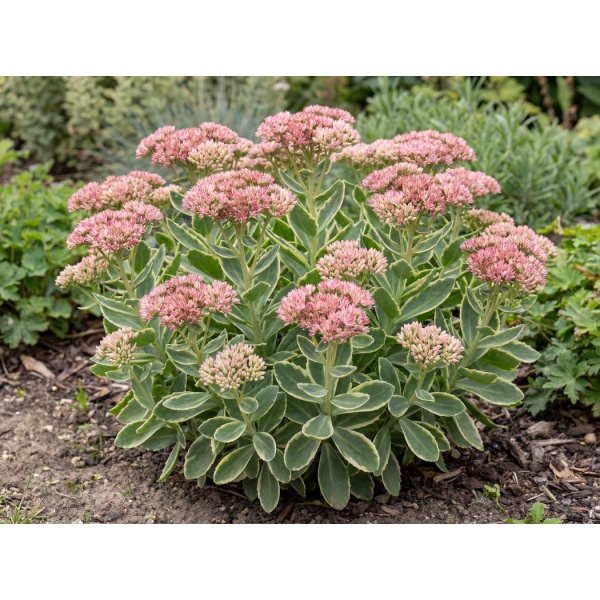
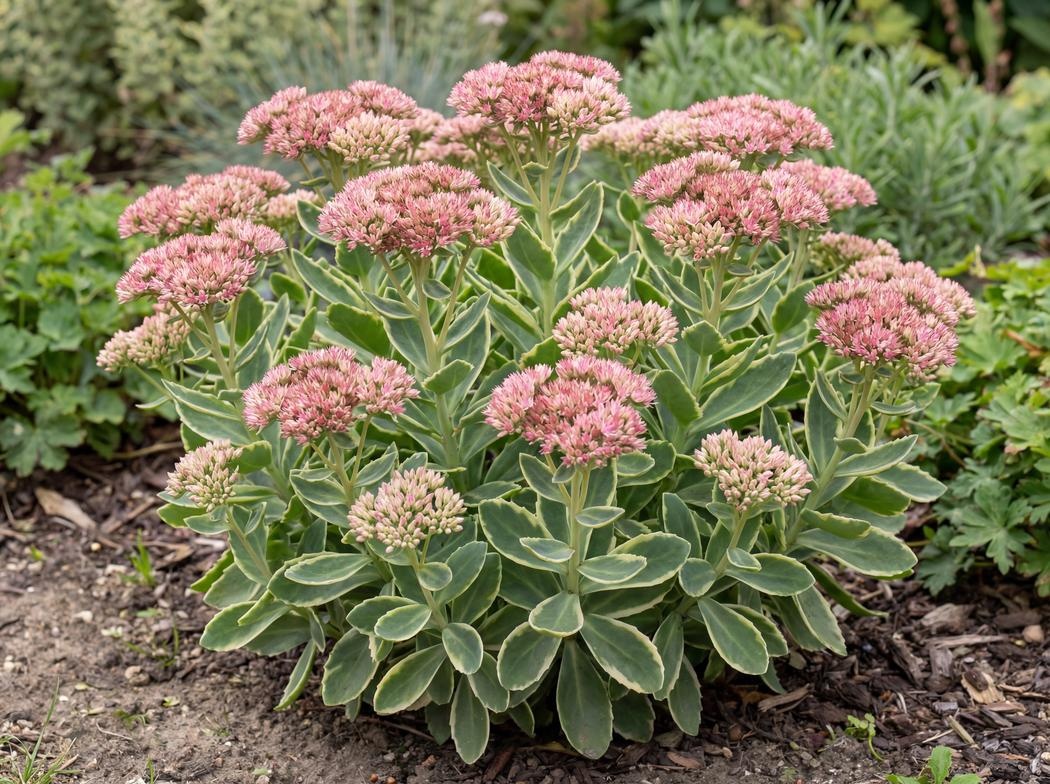
Hylotelephium Frosted Fire forms a dense mound of cream-edged green leaves topped by rosy pink flower clusters that feed bees and butterflies from late summer into fall.
- Description
- Additional information
Description
Cream-edged green leaves give Hylotelephium Frosted Fire a clean, variegated look before rosy pink flower heads rise over the dense, upright clump in late summer and early fall. The blooms draw bees and butterflies, while the dried seedheads can remain for winter interest.
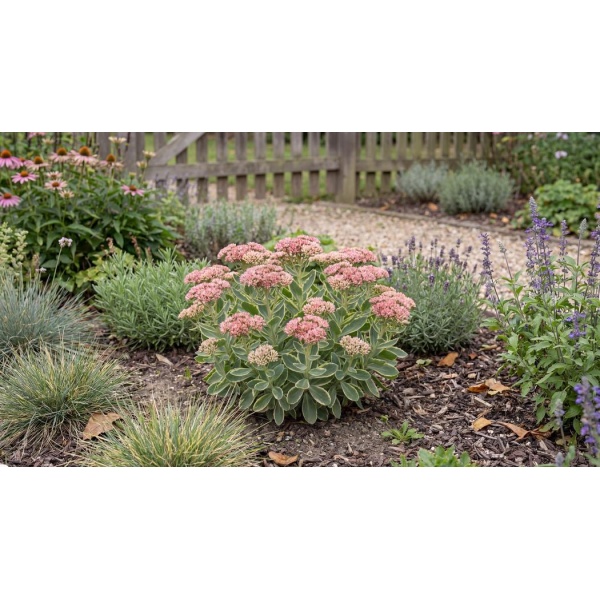
Use this hardy perennial in sunny borders, gravel gardens, or containers. It grows best in moderately fertile, well-drained soil and needs little water once established. Cut stems back after flowering, or leave them standing through winter and remove them as new growth appears in spring.
Additional information
| Height | 5 in – 2 ft |
|---|---|
| Spread | 5 in – 2 ft |
| Flowering months | August, September |
| Synonyms | Sedum Frosted Fire |
| Family | Crassulaceae |
| Hazardous | unknown |
| Variegated | yes |
| Color flower autumn | Brown, Pink |
| Color flower summer | Pink |
| Aspect | East, South, West |
| Foliage | Deciduous |
| Habit | Clump-former |
| Moisture | Well Drained Soil |
| Ph | Alkaline, Neutral |
| Position | Full sun |
| Shape | Mound-forming |
| Suggest planting location | Urban and courtyard gardens, Flowering borders, Patio and container use, Cottage and informal gardens, Gravel and stone gardens |
| Type | Perennial |
| Use for | Low maintenance, Pollinator-Friendly, Container Planting |
| Years to max height | 2 |
| Drought resistance | yes |
| Soil | Chalk, Loam, Sand |
| Local names | Frosted Fire stonecrop |
| Blomidon Item No | ZSEDFF0001G |
| Usps | Cream-edged green leaves brighten the clump before rosy blooms open., Late-season flowers bring bees and butterflies to sunny borders., Full sun and well-drained soil keep the clump sturdy. |
| Propagation | Divide plants in spring, or take softwood cuttings from nonflowering shoots in early summer. |
| Pests | Watch for slugs, snails, vine weevils, and aphids. |
| Diseases | Avoid poorly drained soil to reduce root and crown rots; mildew may also occur. |
| Pruning | Cut stems back after flowering to maintain shape, or leave seedheads through winter and remove them when new growth begins in spring. |
| Watering instructions | Water well after planting, then water lightly and avoid soggy soil. |
| Sunlight instructions | Plant in full sun with an east, south, or west exposure. |