
Sanguinaria canadensis
$27.99
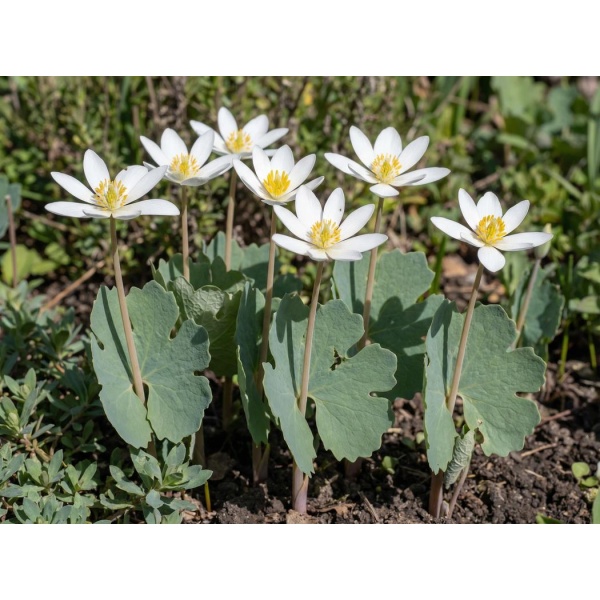
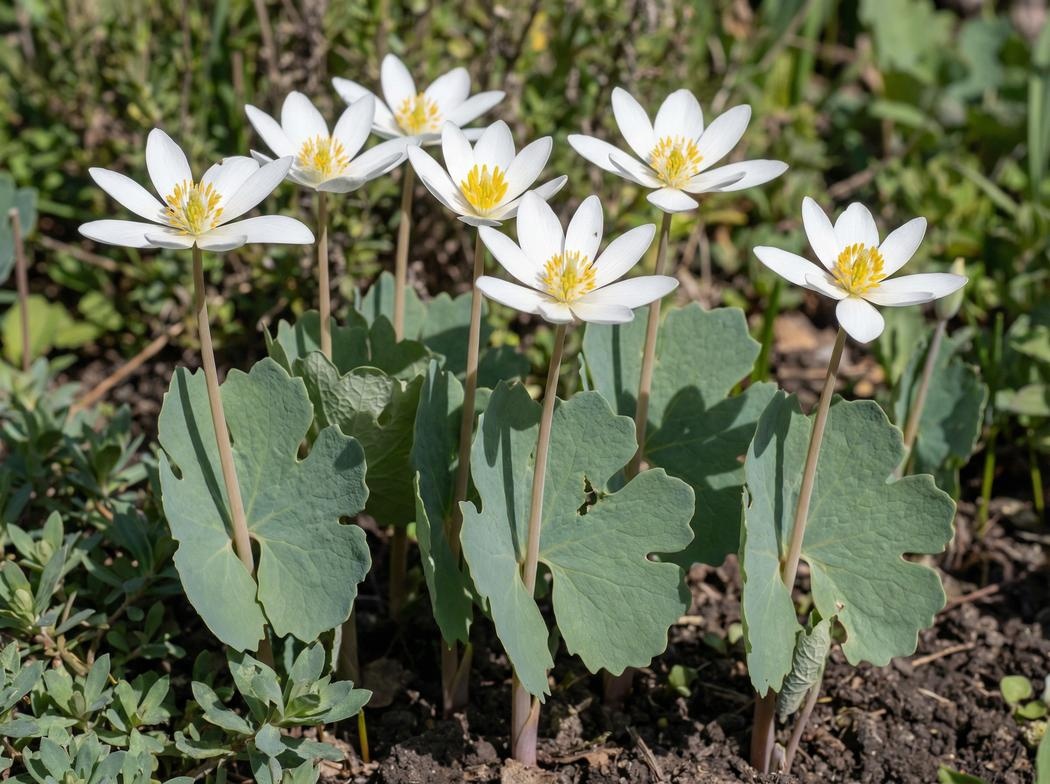
Sanguinaria canadensis is a native spring ephemeral with white flowers, golden stamens, gray-green lobed leaves, and colonies suited to rich deciduous woodland soil.
- Description
- Additional information
Description
Sanguinaria canadensis is a low rhizomatous woodland perennial reaching about 15 to 30 cm high and gradually forming irregular colonies. Each early flower stalk emerges wrapped by one rounded gray-green basal leaf. The leaf unfurls into five to nine broad scalloped lobes while a solitary white flower with golden-yellow stamens opens above it. Elongated green capsules may follow before the foliage disappears in summer.
Grow bloodroot outdoors in partial to full shade in humus-rich soil that stays moderately moist while draining freely. Allow deciduous leaf litter to remain, water during dry establishment periods, and leave the foliage until natural dormancy. Propagate with fresh seed or divide dormant rhizomes, always using responsibly nursery-grown material. It suits woodland, native, shade, wildflower, rock, naturalized, pollinator, and seasonal-groundcover planting. Established colonies tolerate some seasonal dryness, but it is not a houseplant.
Additional information
| Height | 5 in – 10 in |
|---|---|
| Spread | 5 in – 10 in |
| Flowering months | March, April |
| Family | Papaveraceae |
| Hazardous | yes |
| Variegated | no |
| Color flower spring | White, Yellow, Pink |
| Aspect | East, West, North |
| Moisture | Moist but Well Drained |
| Ph | Acid, Neutral |
| Position | Partial shade, Full shade |
| Shape | Spreading |
| Suggest planting location | Pollinator Garden, Woodland Garden, Rock and alpine gardens, Wildlife friendly gardens, Wildflower meadows |
| Type | Perennial |
| Use for | Ground cover, Naturalizing, Shade Garden, Pollinator-Friendly |
| Years to max height | 2 |
| Drought resistance | moderate |
| Soil | Clay, Loam, Sand |
| Local names | Bloodroot, Red Puccoon |
| Blomidon Item No | ZSANCA000QT |
| Propagation | Propagate by sowing fresh seed promptly in a shaded prepared bed or by carefully dividing established rhizomes while dormant. Source plants from responsible nurseries rather than wild populations. |
| Pests | No serious pests are typical, though slugs and snails may occasionally mark emerging leaves. |
| Diseases | No serious diseases are typical. Rhizome rot may occur where soil remains waterlogged or poorly aerated. |
| Pruning | Little pruning is required. Allow foliage to remain until it yellows and disappears naturally, and remove only damaged debris after dormancy if needed. |
| Hazardous information | All parts are poisonous if eaten, with the rhizomes presenting the greatest risk. Orange-red sap may irritate tissue; wear gloves and keep plants away from children and pets. |
| Watering instructions | Keep soil moderately moist and freely drained during spring growth and establishment. Reduce supplemental watering after the foliage enters natural summer dormancy. |
| Sunlight instructions | Grow in partial shade to full shade beneath deciduous trees. Bright dappled spring light supports flowering before the overhead canopy becomes dense. |