
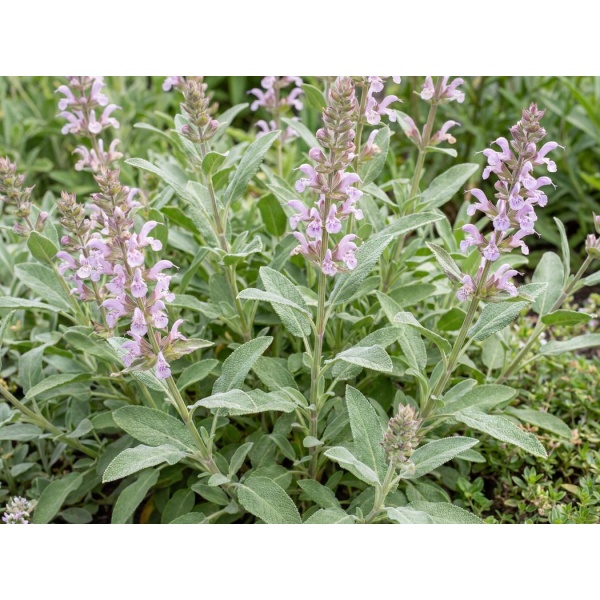
Salvia officianalis
$16.99
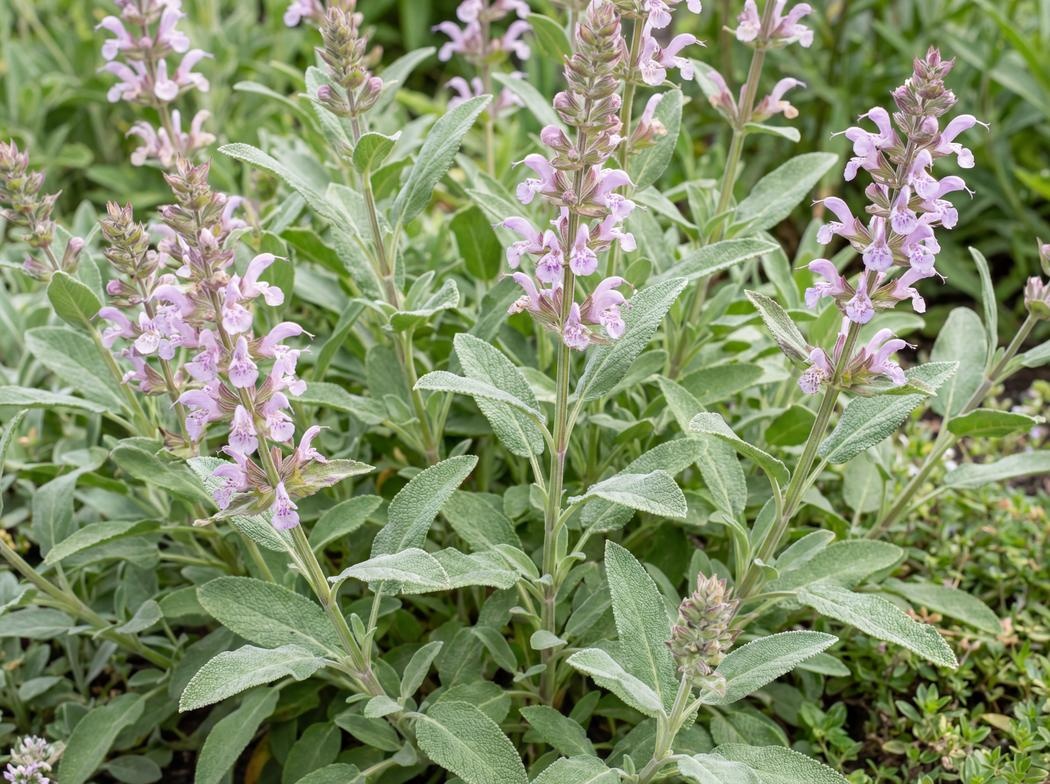
Salvia officinalis pairs soft gray-green aromatic leaves with pale blue flowers, providing culinary harvests and pollinator value in sunny, well-drained gardens.
- Description
- Additional information
Description
Soft gray-green foliage gives Salvia officinalis a calm evergreen presence in herb beds, containers, and sunny borders. Its bushy, spreading stems carry pale blue flowers from late spring into summer, drawing bees and butterflies.
The aromatic leaves can be used fresh or dried for savory cooking and harvested through the year. Grow this sage in full sun and free-draining soil, protect its roots from winter wet, and trim lightly in spring to keep the plant compact.
Common food amounts are considered safe, but high doses or prolonged use may be unsafe. Avoid concentrated use.
Additional information
| Height | 2 ft – 3 ft |
|---|---|
| Spread | 2 ft – 3 ft |
| Flowering months | May, June, July |
| Synonyms | SAGE 'Common', Salvia officianalis |
| Family | Lamiaceae |
| Hazardous | yes |
| Variegated | unknown |
| Color flower spring | Blue |
| Color flower summer | Blue |
| Aspect | South, West |
| Foliage | Evergreen |
| Habit | Bushy |
| Moisture | Moist but Well Drained, Well Drained Soil |
| Ph | Acid, Alkaline, Neutral |
| Position | Full sun |
| Scent | Other |
| Shape | Spreading |
| Suggest planting location | Urban and courtyard gardens, Patio and container use, Cottage and informal gardens, Gravel and stone gardens, Mediterranean gardening |
| Type | Herb |
| Use for | Pollinator-Friendly, Container Planting, Edible |
| Years to max height | 2 |
| Drought resistance | yes |
| Soil | Chalk, Loam, Sand |
| Harvest in | 1, 2, 3, 4, 5, 6, 7, 8, 9, 10, 11, 12 |
| Local names | Common Sage, Culinary Sage, Garden Sage, Sage |
| Blomidon Item No | C351, MO23022596, ZSALOF0001G, 201816859, 201816860, 201929275, 201910218 |
| Usps | Soft gray-green leaves form a bushy, fragrant evergreen mound., Fresh or dried leaves season savory dishes throughout the year., Full sun and well-drained soil keep common sage healthy. |
| Propagation | Sow seed in spring or take softwood cuttings in early summer. Established branches can also be layered in spring or fall. |
| Pests | Possible pests include rosemary beetle, sage leafhopper, capsid bugs, slugs, spider mites, and spittlebugs. |
| Diseases | Possible diseases include powdery mildew, Verticillium wilt, root rot, foot rot, and rarely honey fungus. |
| Pruning | Lightly prune established plants in mid- to late spring without cutting into bare old wood. Remove faded flower stems in late summer. |
| Hazardous information | Common food amounts are considered safe, but high doses or prolonged use may be unsafe. Avoid concentrated use. |
| Watering instructions | Water during dry spells in year one; established plants need little. |
| Sunlight instructions | Grow in full sun, ideally with south- or west-facing exposure. |