
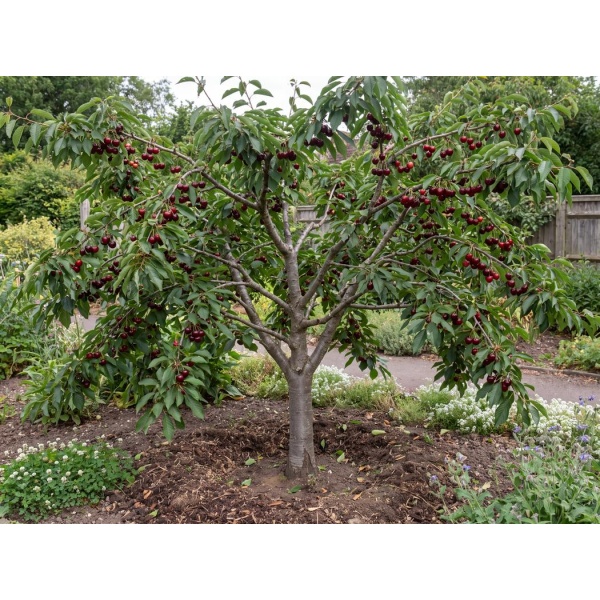
Prunus avium ‘Lapins’
$174.99
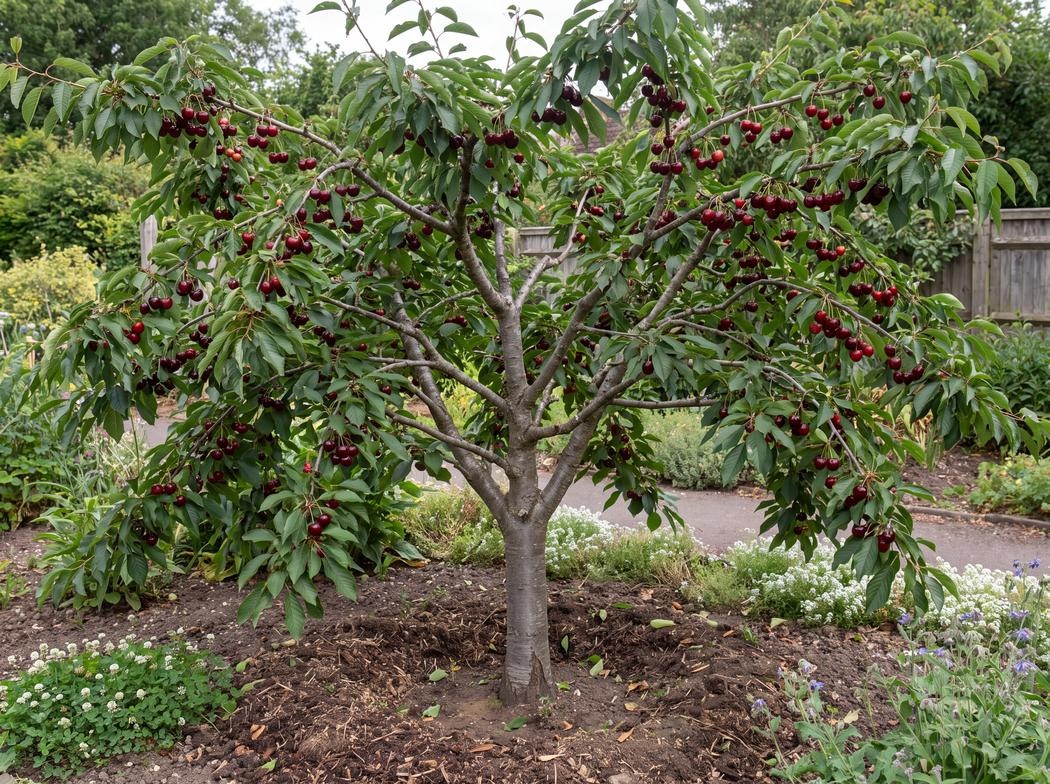
Prunus avium Lapins is a self-fertile deciduous fruit tree with fragrant white spring flowers and heavy crops of large, firm, dark red cherries in summer.
- Description
- Additional information
Description
Prunus avium Lapins forms a bushy, upright tree with a broad, spreading crown. Fragrant white flowers open in spring before the foliage, followed in July and August by generous crops of large, heart-shaped cherries that mature to dark red or mahogany. Their firm, juicy, sweet flesh is suited to fresh eating, baking, preserves, and canning.
Plant it in a sheltered, sunny position in moderately fertile soil that stays moist but drains freely. It is self-fertile, so one tree can crop on its own, and its blossom supplies pollen and nectar for pollinators. Water young trees during dry spells, mulch with well-rotted organic matter, and carry out routine pruning in dry summer weather around harvest.
Additional information
| Height | 8 ft – 13 ft |
|---|---|
| Spread | 8 ft – 13 ft |
| Flowering months | April, May |
| Synonyms | Prunus avium 'Lapins', Prunus avium 2D-28-26, Prunus avium 2S-28-26, Prunus avium Cherokee |
| Family | Rosaceae |
| Hazardous | yes |
| Variegated | unknown |
| Color flower spring | White |
| Aspect | South, West |
| Foliage | Deciduous |
| Habit | Bushy |
| Moisture | Moist but Well Drained, Well Drained Soil |
| Ph | Acid, Alkaline, Neutral |
| Position | Full sun |
| Scent | Fragrant |
| Shape | Upright, Spreading |
| Suggest planting location | Pollinator Garden, Urban and courtyard gardens, Edible fruit plants, Cottage and informal gardens, Wildlife friendly gardens |
| Type | Fruit |
| Use for | Bee-Friendly, Bird-Friendly, Edible |
| Years to max height | 5 |
| Soil | Chalk, Clay, Loam, Sand |
| Harvest in | 7, 8 |
| Local names | Lapins sweet cherry |
| Blomidon Item No | MO23014062, PRUAVL0007G, 13907, 13908, 13909, 13910 |
| Propagation | Propagate by chip budding or grafting onto a clonal fruit-tree rootstock. |
| Pests | May be affected by birds, cherry blackfly and other aphids, caterpillars, leaf-mining moths, and winter moth caterpillars. |
| Diseases | May be affected by peach leaf curl, silver leaf, bacterial canker, blossom wilt, and honey fungus. |
| Pruning | Train fan-shaped trees in spring; prune established trees during the summer harvest, removing dead, weak, or unnecessary growth in dry weather. |
| Hazardous information | The seeds and other non-fruit parts contain cyanogenic compounds and should not be eaten; remove the pits before eating or processing the cherries. |
| Watering instructions | Water young trees in dry spells and keep fruiting soil evenly moist. |
| Sunlight instructions | Plant in sheltered full sun for the sweetest fruit and strongest crops. |