
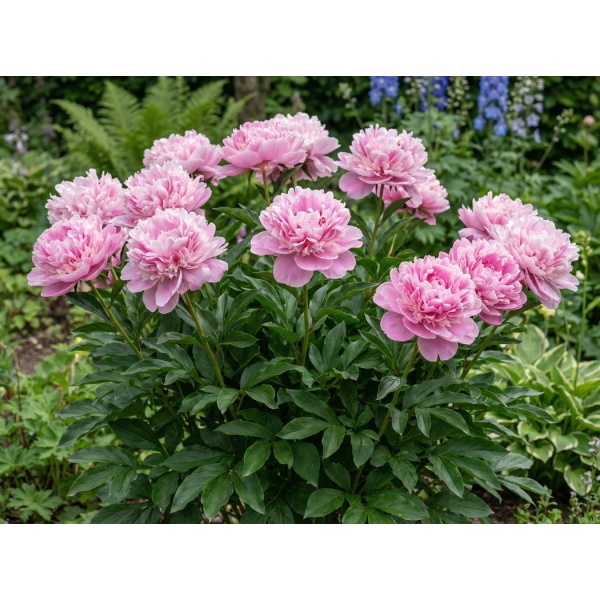

Paeonia ‘Sarah Bernhardt’

$24.99
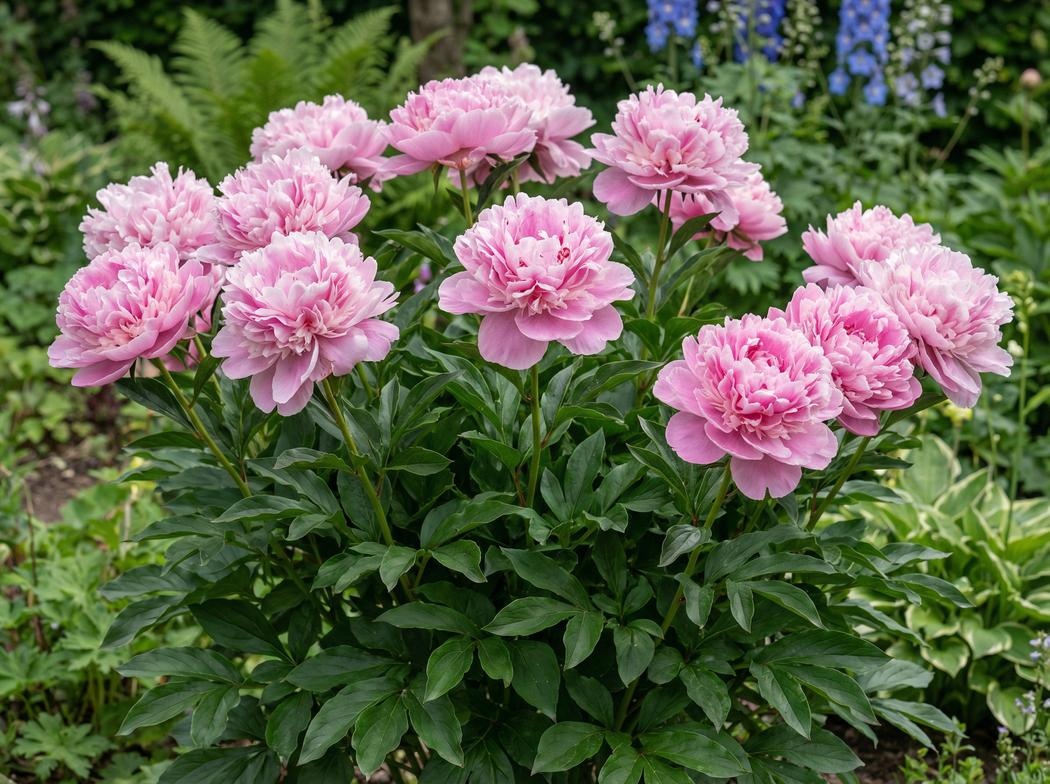
Paeonia lactiflora Sarah Bernhardt bears very large fragrant double rose-pink flowers above a broad mound of divided green foliage.
- Description
- Additional information
Description
Paeonia lactiflora Sarah Bernhardt produces very large, fragrant, double rose-pink flowers with ruffled inner petals on erect herbaceous stems. The broad clump carries divided green foliage and typically flowers in May and June.
Grow it in deep, fertile, humus-rich soil that stays moist but drains well, in sun or partial shade. Support the heavy blooms, remove faded flowers, and leave the long-lived crown undisturbed whenever possible.
Additional information
| Height | 2 ft – 3 ft |
|---|---|
| Spread | 2 ft – 3 ft |
| Flowering months | May, June |
| Synonyms | Paeonia 'Sarah Bernhardt', Paeonia lactiflora Umbellata Rosea, Paeonia Sarah Bernhardt |
| Family | Paeoniaceae |
| Hazardous | yes |
| Variegated | no |
| Color flower spring | Pink |
| Color flower summer | Pink |
| Aspect | East, South, West |
| Foliage | Deciduous |
| Habit | Clump-former |
| Moisture | Moist but Well Drained |
| Ph | Acid, Alkaline, Neutral |
| Position | Full sun, Partial shade |
| Scent | Fragrant |
| Shape | Mound-forming, Upright |
| Suggest planting location | Flowering borders, Cut flower use, Cottage and informal gardens, Underplanting for roses and shrubs |
| Type | Perennial |
| Use for | Deer resistant, Rabbit resistant, Cutting Garden |
| Years to max height | 2 |
| Drought resistance | no |
| Soil | Chalk, Clay, Loam, Sand |
| Local names | Sarah Bernhardt Peony, Chinese Peony, Common Garden Peony |
| Blomidon Item No | 7937676673075, ZPAELASB0001G, ZPAELASB0002G, 201921150, 201815007, 201706819, 201924366 |
| Cultivation | Grow in deep, fertile, humus-rich, moist but well-drained soil in a sheltered position. Support the heavy flowers and avoid disturbing the established crown. |
| Propagation | Propagate by division in autumn or early spring. |
| Pests | Leaf and bud eelworms, swift moth larvae, thrips, scale, mealybugs, bulb mites, and hoplia beetles may occur. |
| Diseases | Viruses, honey fungus, Verticillium wilt, peony leaf blotch, peony wilt, Botrytis blight, and Phytophthora blight may occur. |
| Pruning | Remove faded flowers, then cut the plant to ground level after the foliage dies down in autumn. |
| Hazardous information | The plant may irritate the skin of dogs and cats. |
| Watering instructions | Provide abundant moisture in spring, while keeping the soil well drained. |
| Sunlight instructions | Grow in full sun or partial shade in a sheltered position. |