
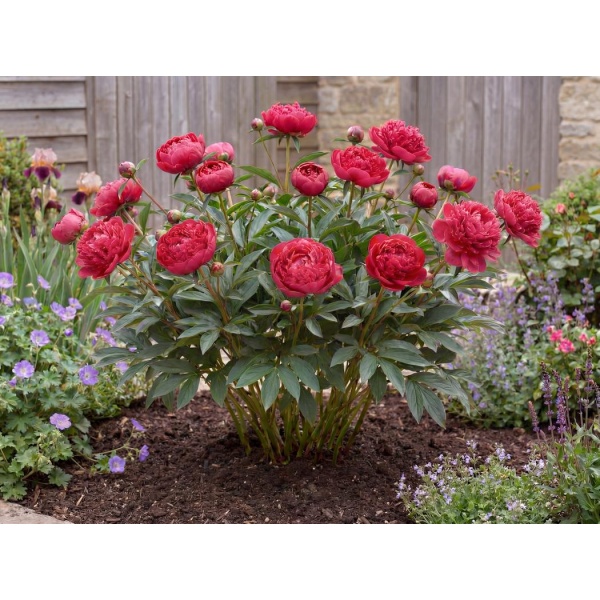
Paeonia ‘Kansas’
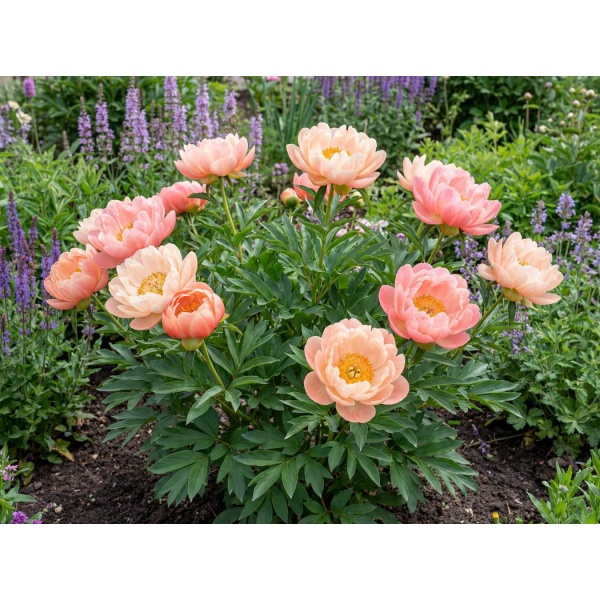
$36.99
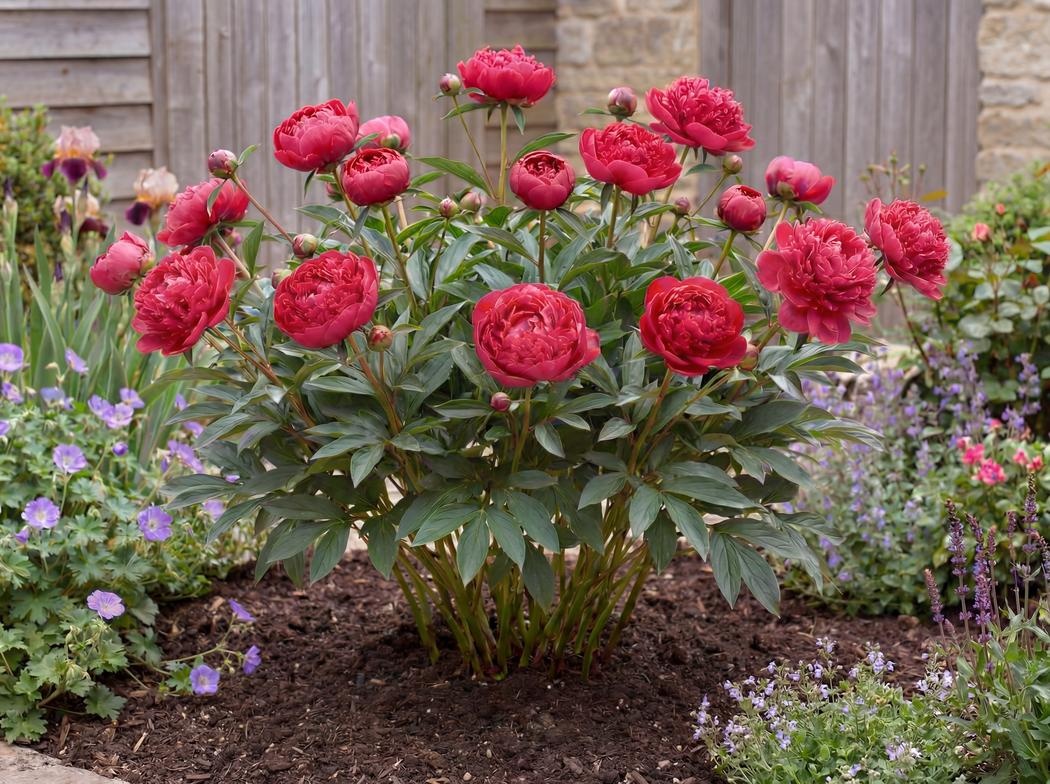
Paeonia lactiflora Kansas is an award-winning herbaceous peony with sturdy upright stems, dark divided foliage, and fragrant, fully double watermelon-red flowers for late-spring borders and cutting.
- Description
- Additional information
Description
Paeonia lactiflora Kansas forms a durable, upright clump of dark green divided foliage, typically reaching 80 to 90 centimeters in height and 60 to 90 centimeters in spread. Strong stems carry very large, fragrant, fully double flowers in late spring and early summer. Their densely layered watermelon-red to carmine-pink petals hold their intense color well and make an impressive garden or cut-flower display.
Grow it in full sun or partial shade in a sheltered border with deep, fertile, humus-rich soil that remains moist but drains freely. Avoid planting the crown too deeply, because the eyes must remain just below the soil surface for reliable flowering. Water during establishment and dry periods, but do not leave the roots waterlogged. Established clumps are long-lived and prefer not to be moved.
Deadhead after flowering and leave the foliage to feed the crown until it dies naturally in autumn, then cut all stems to the ground and remove the debris. Divide only when necessary in autumn or early spring. The plant may need discreet support in exposed sites or after heavy rain. All parts may cause stomach discomfort if eaten, and contact may irritate pets’ skin.
Additional information
| Height | 80 cm – 90 cm |
|---|---|
| Spread | 60 cm – 90 cm |
| Flowering months | May, June |
| Synonyms | Paeonia 'Kansas', Paeonia (LD) 'Kansas', Paeonia Kansas |
| Family | Paeoniaceae |
| Propagation | Divide established clumps in autumn or early spring, retaining healthy crown buds and roots on each division. |
| Pests | Leaf and bud eelworm, soil-dwelling swift moth larvae |
| Diseases | Peony wilt, peony leaf blotch, Verticillium wilt, honey fungus, viruses |
| Pruning | Remove faded flowers, then cut all stems to the ground after the foliage dies back in autumn. |
| Hazardous information | All parts may cause stomach discomfort if eaten, and contact may irritate the skin of dogs and cats; keep this plant away from pets that chew plants. |
| Hazardous | yes |
| Variegated | no |
| Watering instructions | Water deeply when the upper soil begins to dry, avoiding waterlogging. |
| Sunlight instructions | Grow in full sun or partial shade in a sheltered position. |
| Color flower spring | Red, Pink |
| Color flower summer | Red, Pink |
| Aspect | East, South, West |
| Foliage | Deciduous |
| Habit | Bushy, Clump-former |
| Moisture | Moist but Well Drained |
| Ph | Acid, Alkaline, Neutral |
| Position | Full sun, Partial shade |
| Scent | Fragrant |
| Shape | Upright |
| Suggest planting location | Urban and courtyard gardens, Flowering borders, Cut flower use, Cottage and informal gardens |
| Type | Perennial |
| Use for | Deer resistant, Cutting Garden, Low maintenance |
| Years to max height | 2 |
| Drought resistance | no |
| Cultivation | |
| Soil | Clay, Loam, Sand |
| Local names | Kansas peony, Garden peony, Chinese peony |
| Blomidon Item No | 3640, 36400103, 36400106, 14420101, MO23021181, ZPAELAK0001G |
| Usps | Award-winning blooms hold their vivid watermelon-red color., Strong stems carry large, fragrant double flowers for cutting. |