
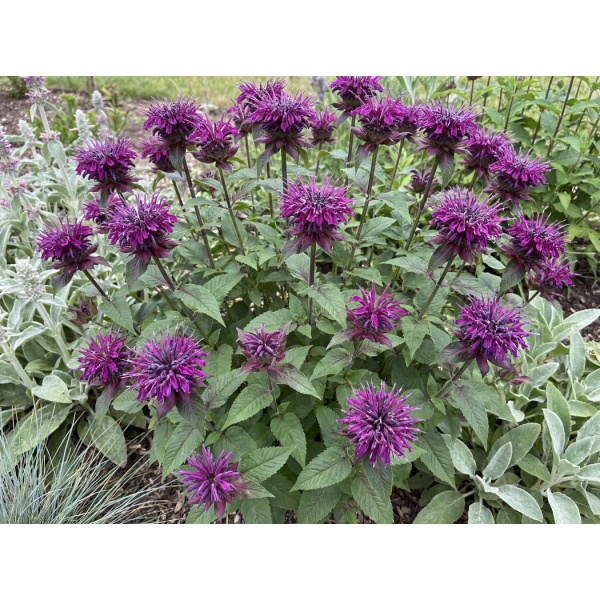
Monarda Balmy Purple
$21.99
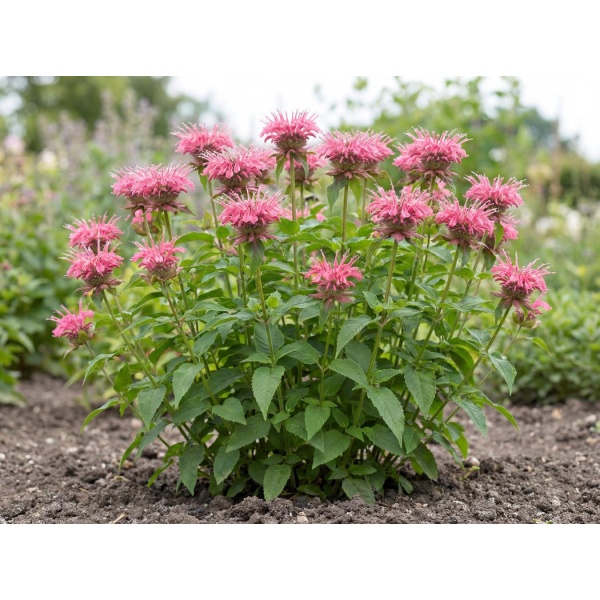
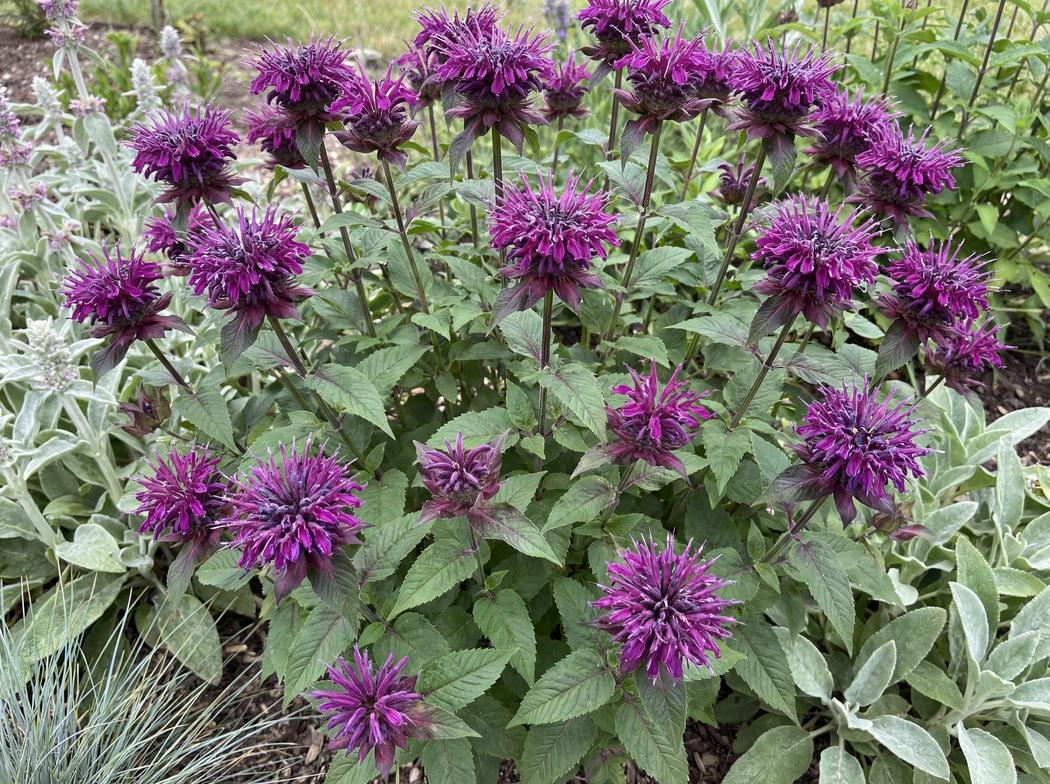
Balmy Purple bee balm is a compact deciduous perennial with aromatic dark green leaves and dense reddish-purple flower whorls on short upright stems.
- Description
- Additional information
Description
Balmy Purple bee balm forms a neat dwarf clump of aromatic dark green foliage topped by dense, shaggy heads of reddish-purple tubular flowers from late spring into summer and sometimes early autumn.
Grow it in full sun or partial shade in humus-rich, moist but well-drained soil. Its compact habit suits border fronts, wildlife gardens, prairie-style planting, and outdoor containers, while regular deadheading helps extend the flower display.
Additional information
| Height | 10 in – 10 in |
|---|---|
| Spread | 10 in – 10 in |
| Flowering months | May, June, July, August, September |
| Family | Lamiaceae |
| Hazardous | unknown |
| Variegated | no |
| Color flower autumn | Purple, Red |
| Color flower spring | Purple, Red |
| Color flower summer | Purple, Red |
| Aspect | East, South, West |
| Foliage | Deciduous |
| Habit | Clump-former, Compact |
| Moisture | Moist but Well Drained |
| Ph | Acid, Alkaline, Neutral |
| Position | Full sun, Partial shade |
| Scent | Spicy |
| Shape | Mound-forming, Upright |
| Suggest planting location | Urban and courtyard gardens, Flowering borders, Cottage and informal gardens, Wildlife friendly gardens, Prairie style planting |
| Type | Perennial |
| Use for | Bee-Friendly, Butterfly-Friendly, Container Planting |
| Years to max height | 1 |
| Soil | Chalk, Clay, Loam, Sand |
| Local names | Balmy Purple bee balm |
| Blomidon Item No | MO23056814, ZMONBAPU001G, 201863057, 201924314 |
| Usps | Compact dwarf growth brings vivid bee balm color to small spaces., Dark aromatic foliage supports dense reddish-purple flower heads., Good mildew resistance supports a cleaner-looking summer display. |
| Propagation | Divide established clumps in spring and replant the divisions promptly at their original depth. Alternatively, root basal softwood cuttings in spring in a moist, free-draining propagation mix. |
| Pests | Slugs may damage young growth, especially in spring. |
| Diseases | The cultivar has good powdery mildew resistance, but mildew can still develop if plants are crowded or allowed to dry out. |
| Pruning | Remove spent flower heads regularly to encourage a longer display. Cut the stems to ground level in autumn after growth dies back. |
| Watering instructions | Keep the soil consistently moist but not soggy, watering deeply whenever the upper surface begins to dry. Do not allow the root zone to dry out in summer. |
| Sunlight instructions | Plant in full sun for the strongest flowering, or in partial shade where summers are hot. Provide enough open space for good air circulation. |