

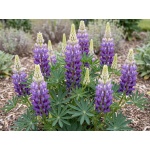
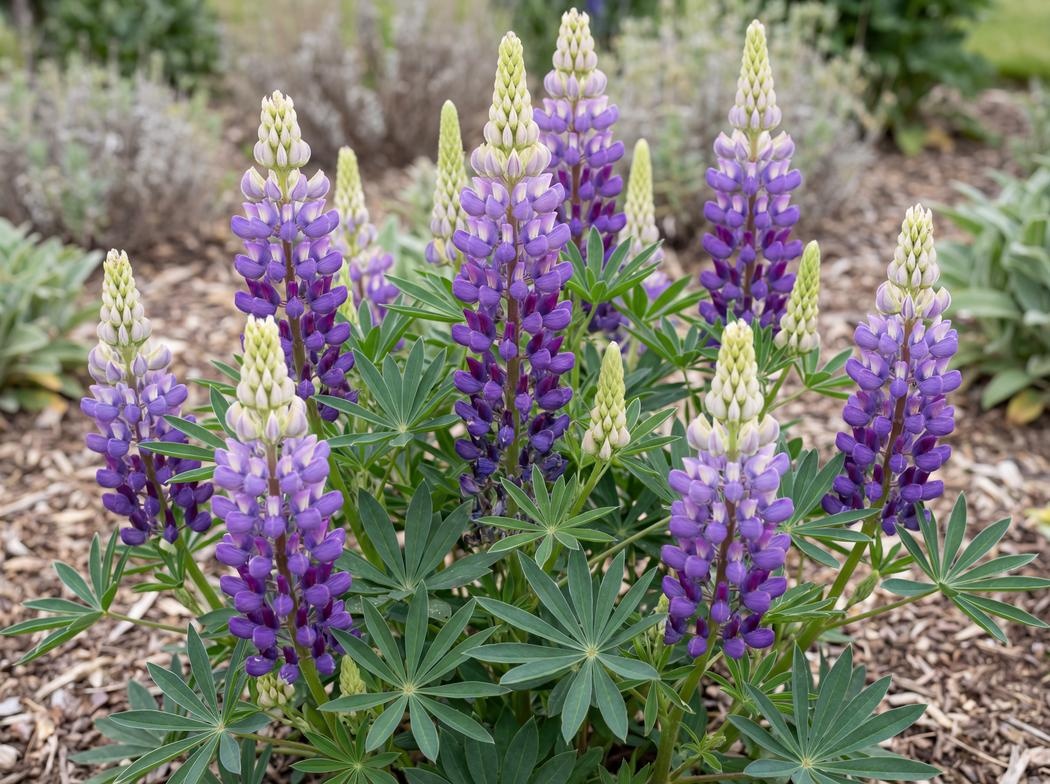
Lupinus Gallery Blue
$12.99
Lupinus ‘Gallery Blue’ delivers compact purple-blue flower spires above fresh palmate foliage for a strong late-spring border display.
- Description
- Additional information
Description
Lupinus ‘Gallery Blue’ is a compact, clump-forming perennial with palmately divided green leaves and upright racemes packed with purple-blue pea flowers, sometimes marked with white. Its vertical late-spring and early-summer display suits borders, cutting gardens, pollinator plantings, and roomy containers without the scale of taller lupines.
Plant it in full sun or light partial shade and light, moist but well-drained acid to neutral soil. Water consistently during establishment, budding, and flowering, but avoid waterlogged ground and heavy nitrogen feeding. Space plants about 45 centimeters apart, deadhead spent spikes for possible rebloom, and propagate by spring seed or basal cuttings.
Additional information
| Height | 1 ft – 2 ft |
|---|---|
| Spread | 10 in – 2 ft |
| Flowering months | May, June, July |
| Synonyms | Lupinus Gallery Blue, Lupinus Mini Gallery Blue, Lupinus nanus 'Russel Gallery Blue' |
| Family | Fabaceae |
| Hazardous | yes |
| Variegated | unknown |
| Color flower spring | Purple, White, Blue |
| Color flower summer | Purple, White, Blue |
| Aspect | East, South, West |
| Foliage | Deciduous |
| Habit | Clump-former |
| Moisture | Moist but Well Drained |
| Ph | Acid, Neutral |
| Position | Full sun, Partial shade |
| Shape | Upright |
| Suggest planting location | Urban and courtyard gardens, Patio and container use, Coastal conditions, Cottage and informal gardens |
| Type | Perennial |
| Use for | Cutting Garden, Pollinator-Friendly |
| Years to max height | 2 |
| Soil | Loam, Sand |
| Local names | Gallery Blue lupine |
| Blomidon Item No | MO23020494, ZLUPGB5RD |
| Cultivation | Plant in light, moist but well-drained acid to neutral soil with full sun or light shade. Water consistently through flowering and avoid heavy nitrogen fertilizer. |
| Propagation | Sow seed in early to mid-spring or take basal stem cuttings in mid to late spring. |
| Pests | Lupin aphids, slugs, and snails may occur. |
| Diseases | Lupin anthracnose, powdery mildew, and viral disease may occur. |
| Pruning | Remove faded flower spikes promptly to encourage a second flush. |
| Hazardous information | This plant is harmful if eaten and is toxic to pets if eaten. Wear gloves when handling. |
| Watering instructions | Keep soil evenly moist during establishment, bud formation, and flowering without waterlogging. |
| Sunlight instructions | Give full sun in cool climates or light afternoon shade in hotter gardens. |
| Common Name | Gallery™ Blue Lupine |