
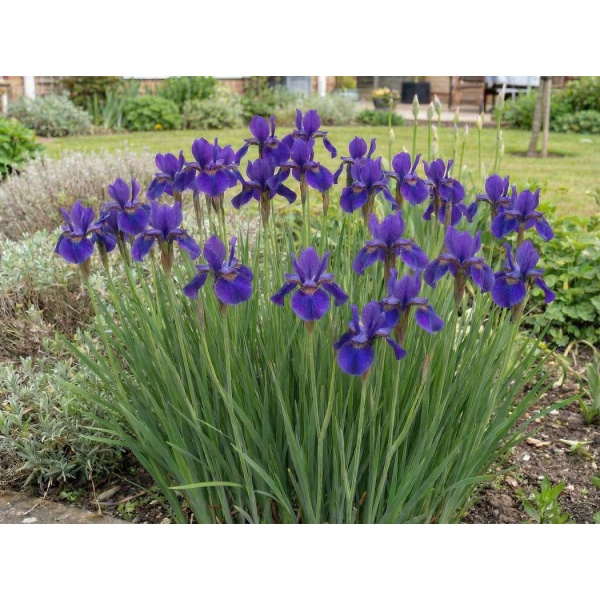
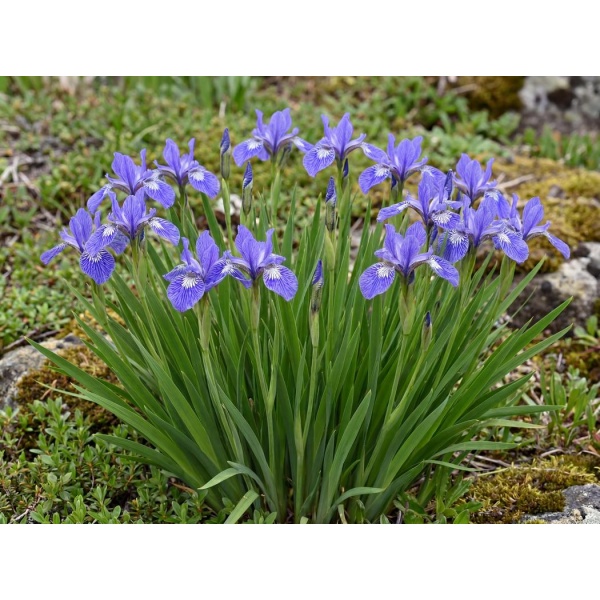
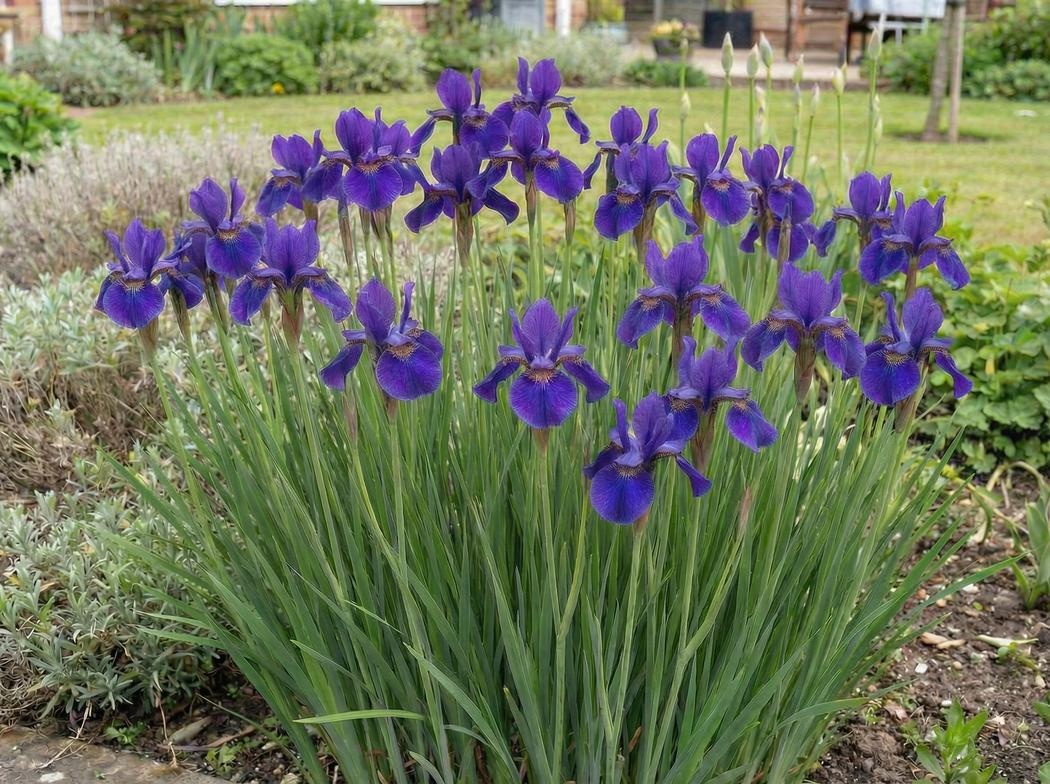
Iris siberica Caesar’s Brother
$21.99
Deep purple-blue flowers with striped throats rise above upright foliage on Iris Caesars Brother, a moisture-loving early-summer border perennial.
- Description
- Additional information
Description
Deep purple-blue flowers with speckled, striped throats rise on slender stems above the upright green foliage of Iris Caesars Brother. The clump flowers from late spring into early summer and keeps its narrow leaves attractive after bloom.
Grow it in full sun or partial shade in moist but well-drained soil, or place an established clump near a pond or stream. This plant is harmful if eaten by people or pets; wear gloves when handling it.
Additional information
| Height | 2 ft – 3 ft |
|---|---|
| Spread | 5 in – 2 ft |
| Flowering months | May, June |
| Synonyms | Iris siberica Caesar's Brother, Iris sibirica Caesars Brother |
| Family | Iridaceae |
| Hazardous | yes |
| Variegated | unknown |
| Color flower spring | Purple, White, Blue, Yellow, Black |
| Color flower summer | Purple, White, Blue, Yellow, Black |
| Aspect | East, South, West |
| Foliage | Deciduous |
| Habit | Clump-former |
| Moisture | Wet or Damp Soil, Moist but Well Drained |
| Ph | Acid, Alkaline, Neutral |
| Position | Full sun, Partial shade |
| Shape | Upright |
| Suggest planting location | Urban and courtyard gardens, Wall and boundary borders, Flowering borders, Coastal conditions, Cottage and informal gardens |
| Type | Perennial |
| Use for | Bee-Friendly, Butterfly-Friendly, Cutting Garden |
| Years to max height | 2 |
| Drought resistance | yes |
| Soil | Chalk, Clay, Loam, Sand |
| Local names | Caesar's Brother Siberian Iris, Siberian Iris, Siberian Flag |
| Blomidon Item No | 7937670250547, ZIRISICB0001G, 201813764 |
| Cultivation | Grow in moist but well-drained garden soil in full sun or partial shade. Established clumps can also tolerate wet pond and stream margins. |
| Propagation | Divide the rhizomes from midsummer to early autumn. |
| Pests | Watch for slugs, snails, and thrips. |
| Diseases | Watch for aphid-borne viruses, bacterial soft rot, and grey mould. |
| Pruning | Cut old flower stems down after flowering and remove dying foliage in autumn. |
| Hazardous information | This plant is harmful if eaten by people or pets; wear gloves when handling it. |
| Watering instructions | Keep soil consistently moist, especially during growth and flowering. |
| Sunlight instructions | Grow in full sun or partial shade on an east, south, or west aspect. |