
Echinacea purpurea
$27.99
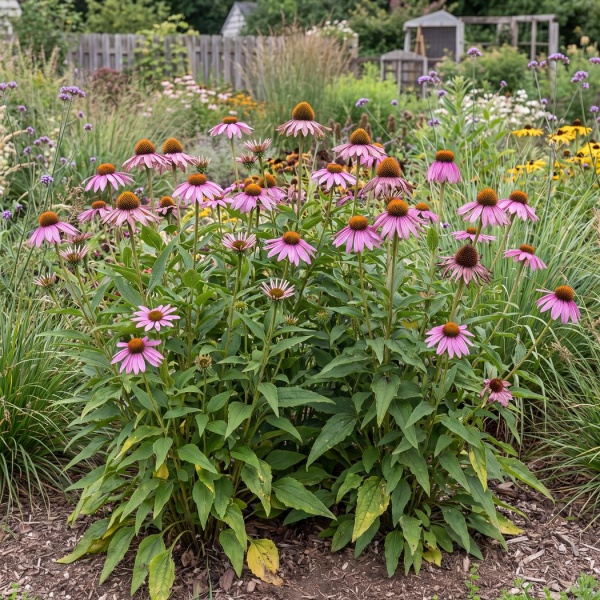
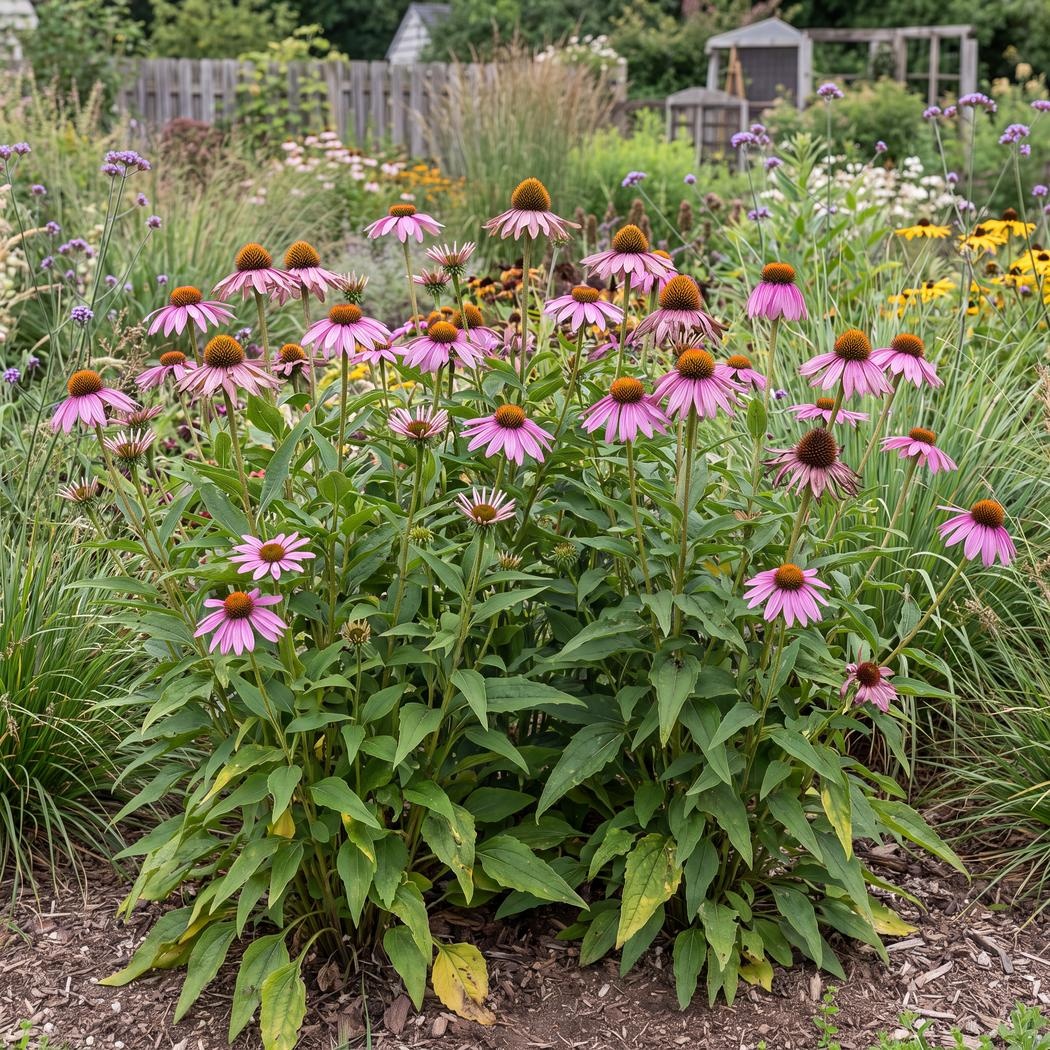
Echinacea purpurea raises large purple-pink daisies around bold cones, supporting pollinators, birds, and summer bouquets.
- Description
- Additional information
Description
Large purple-pink flowers make Echinacea purpurea a dependable perennial for pollinator gardens and cutting. Drooping rays frame bold golden-brown cones on sturdy stems that can reach 3 to 5 feet. The upright clump fits prairie-style planting, wildflower areas, and informal borders. Seedheads provide food for birds when left standing.
Full sun or partial shade is suitable. Water deeply during establishment, then allow the surface to dry slightly. Add a thin spring compost layer and avoid rich feeding. Remove fading stems for more flowers or leave selected heads for birds, then cut back in late winter. Japanese beetles, leaf spots, or crown rot may occasionally occur.
Additional information
| Height | 3 ft – 5 ft |
|---|---|
| Spread | 5 in – 2 ft |
| Flowering months | May, June, July, August, September, October |
| Synonyms | Rudbeckia echinacea purpurea, Rudbeckia purpurea |
| Family | Asteraceae |
| Hazardous | unknown |
| Variegated | no |
| Color flower autumn | Purple, Brown, Yellow, Pink |
| Color flower summer | Purple, Brown, Yellow, Pink |
| Aspect | East, South, West |
| Foliage | Deciduous |
| Habit | Columnar upright, Clump-former |
| Moisture | Moist but Well Drained, Well Drained Soil |
| Ph | Acid, Alkaline, Neutral |
| Position | Full sun, Partial shade |
| Shape | Mound-forming, Upright |
| Suggest planting location | Pollinator Garden, Cut flower use, Cottage and informal gardens, Wildflower meadows, Prairie style planting |
| Type | Perennial |
| Use for | Cutting Garden, Naturalizing, Pollinator-Friendly |
| Years to max height | 2 |
| Drought resistance | moderate |
| Soil | Chalk, Clay, Loam, Sand |
| Local names | Purple Coneflower, Eastern Purple Coneflower, Hedgehog Coneflower, Purple Daisy, Purple Rudbeckia |
| Blomidon Item No | MO23083435, ZECHPU0001G, 1004364, 201921032, 201812240, 201851868, 201925063, 201812260 |
| Propagation | Divide Echinacea purpurea in spring or fall, or take root cuttings from late fall into early winter. Seed can also be sown when natural variation is acceptable. |
| Pests | Echinacea purpurea is generally free of serious pest problems. Japanese beetles may occasionally feed on flowers and leaves. |
| Diseases | Echinacea purpurea is generally free of serious disease problems. Leaf spots, aster yellows, or crown rot may appear when plants are stressed or poorly drained. |
| Pruning | Cut fading Echinacea purpurea stems back during summer to encourage more flowers. Leave selected seed heads for birds, then remove old stems in late winter. |
| Watering instructions | Water deeply during establishment, then allow the surface to dry slightly. |
| Sunlight instructions | Grow in full sun or partial shade on an east-, south-, or west-facing site. |
| Common Name | Purple Coneflower |