
Echinacea purpurea ‘PowWow White’
$21.99
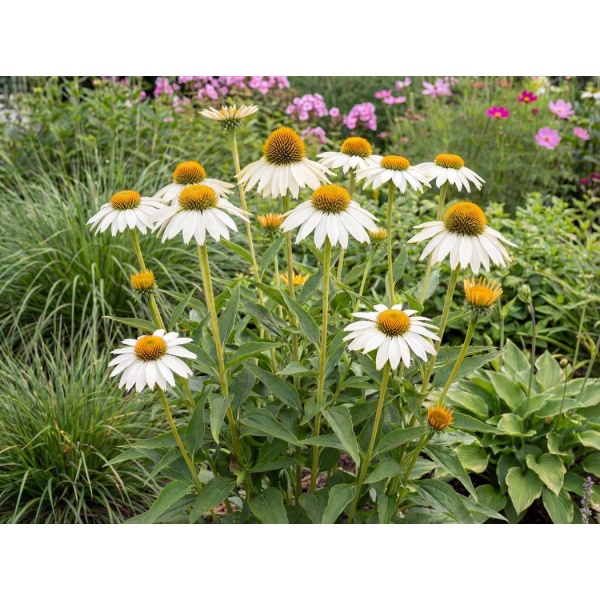
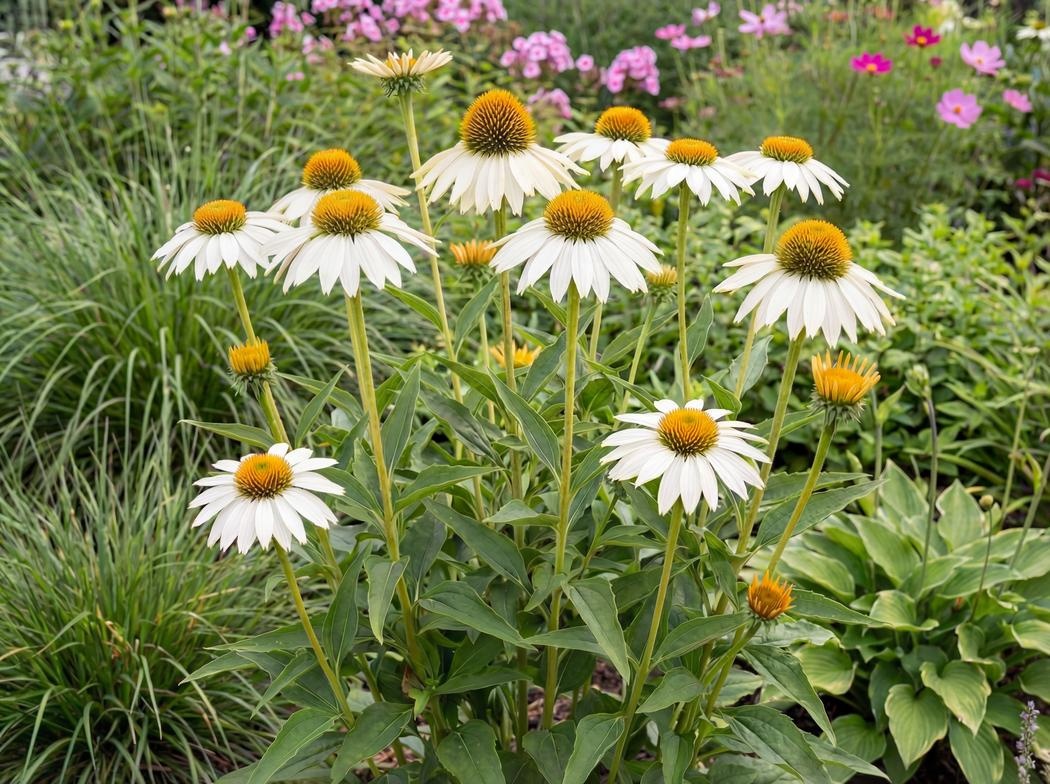
Echinacea PowWow White forms a compact upright clump with pure white single coneflowers around golden-yellow to yellow-brown cones.
- Description
- Additional information
Description
Echinacea purpurea PowWow White is a compact clump-forming perennial with sturdy branched stems, toothed medium-green leaves and pure white single flower heads. Broad overlapping rays reflex around prominent golden-yellow to yellow-brown cones from early summer into autumn.
Grow it in sun or light partial shade in average dry-to-moderately moist soil that drains freely. Established plants tolerate heat and drought; divide occasionally and leave some dry seed heads for birds.
Additional information
| Height | 2 ft – 3 ft |
|---|---|
| Spread | 5 in – 2 ft |
| Flowering months | June, July, August, September |
| Synonyms | Echinacea purpurea 'PowWow White', Echinacea purpurea PAS702918, Echinacea purpurea Pas709018, Echinacea purpurea PowWow White, Echinacea purpurea PowWow White (Pas709018), Echinacea purpurea White |
| Family | Asteraceae |
| Hazardous | unknown |
| Variegated | no |
| Color flower autumn | White, Brown, Yellow |
| Color flower spring | White, Yellow |
| Color flower summer | White, Brown, Yellow |
| Aspect | East, South, West |
| Foliage | Deciduous |
| Habit | Clump-former, Compact |
| Moisture | Well Drained Soil |
| Ph | Acid, Alkaline, Neutral |
| Position | Full sun, Partial shade |
| Scent | Fragrant |
| Shape | Mound-forming, Upright |
| Suggest planting location | Flowering borders, Patio and container use, Cottage and informal gardens, Wildlife friendly gardens, Prairie style planting |
| Type | Perennial |
| Use for | Bee-Friendly, Butterfly-Friendly, Cutting Garden |
| Years to max height | 2 |
| Drought resistance | yes |
| Soil | Chalk, Loam, Sand |
| Local names | PowWow White Coneflower, PowWow White Purple Coneflower |
| Blomidon Item No | MO23048731, ZECHPUPWH0001G, 201784550 |
| Propagation | Propagate by division in spring or autumn, or by root cuttings from late autumn to early winter. |
| Pests | May be susceptible to Japanese beetles and leaf-mining insects. |
| Diseases | May be susceptible to leaf spot and aster yellows, especially where air circulation is poor. |
| Pruning | Deadhead spent flowers to prolong bloom, or retain selected dry seed heads for birds; cut stems down after dormancy. |
| Watering instructions | Water while establishing, then allow the surface to dry between waterings; keep the crown well drained. |
| Sunlight instructions | Grow in Full sun or Partial shade on an East-, South- or West-facing site for sturdy stems and abundant flowers. |