
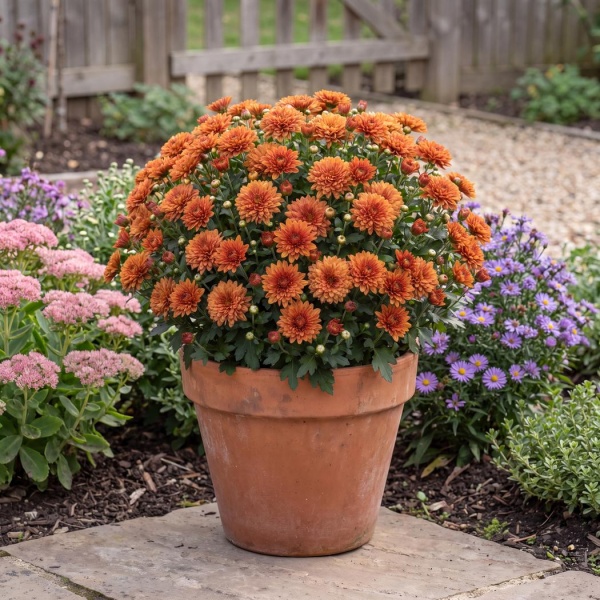

Chrysanthemum morifolium Bronze
$12.99
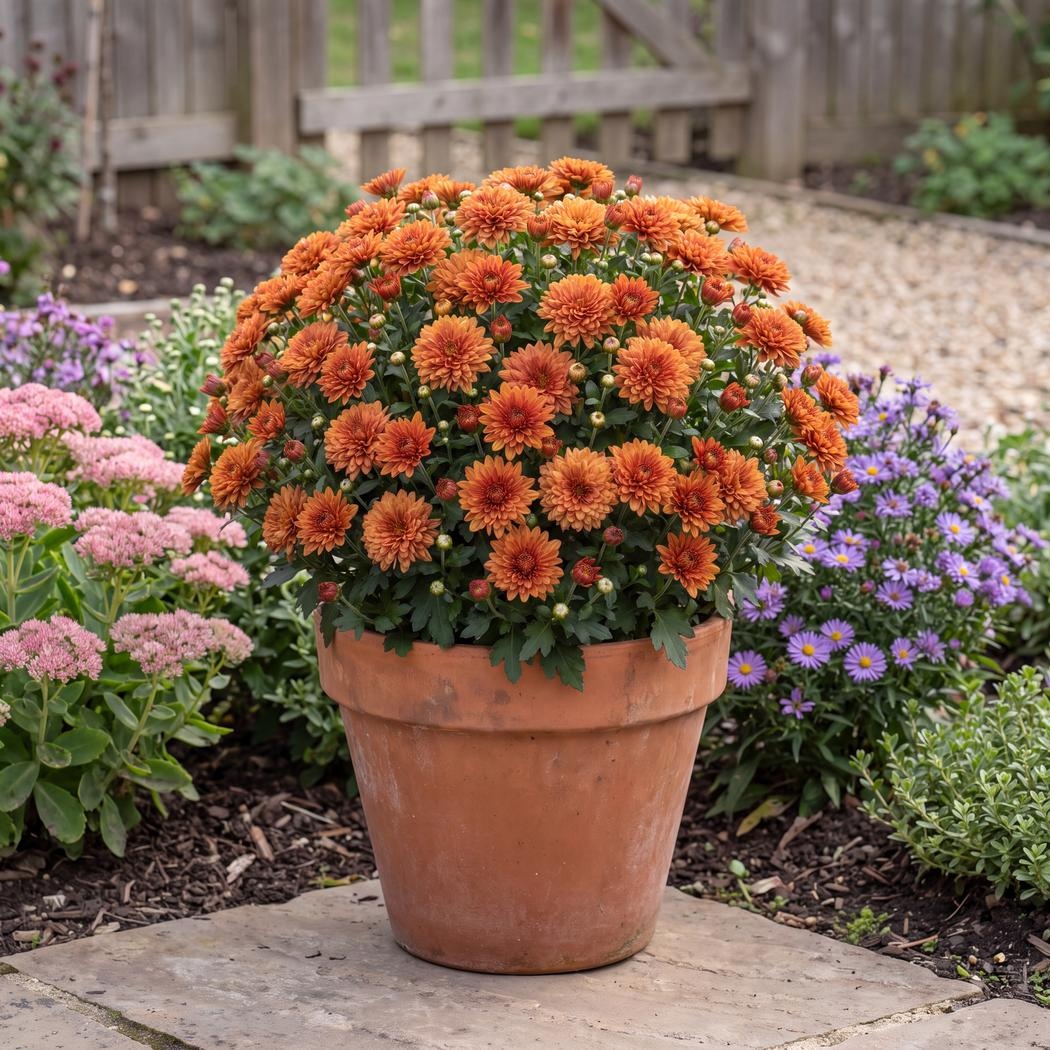
Chrysanthemum morifolium Jolt Bronze forms a compact mound covered with decorative bronze-orange flowers in early fall.
- Description
- Additional information
Description
Chrysanthemum morifolium Jolt Bronze brings a dense display of decorative bronze-orange flower heads to the early-fall garden. Its naturally rounded, compact growth fits neatly at the front of a sunny border or in a patio container.
The green foliage is alternate, ovate to lanceolate, and pinnately lobed, creating a leafy mound beneath the many-petaled blooms. Flower heads open during September and October, providing a useful late-season accent and attracting visiting butterflies.
Grow it in fertile, neutral, moist but well-drained soil in full sun. Water at soil level, pinch the stem tips in spring for fuller branching, and deadhead faded flowers to keep the display tidy.
Additional information
| Height | 1 ft – 1 ft |
|---|---|
| Spread | 10 in – 1 ft |
| Flowering months | September, October |
| Synonyms | Chrysanthemum indicum Jolt Bronze, Chrysanthemum morifolium Bronze, Dendranthema grandiflorum Jolt Bronze |
| Family | Asteraceae |
| Hazardous | yes |
| Variegated | no |
| Color flower autumn | Brown, Orange |
| Aspect | South, West |
| Foliage | Deciduous |
| Habit | Bushy, Compact |
| Moisture | Moist but Well Drained |
| Ph | Neutral |
| Position | Full sun |
| Shape | Round, Mound-forming |
| Suggest planting location | Butterfly Garden, Flowering borders, Cut flower use, Patio and container use, Cottage and informal gardens |
| Type | Perennial |
| Use for | Butterfly-Friendly, Cutting Garden, Container Planting |
| Years to max height | 1 |
| Soil | Loam |
| Local names | Garden Mum |
| Blomidon Item No | ZCHRMOB5RD |
| Usps | Bronze decorative blooms cover its rounded autumn mound., Compact growth suits borders, containers, and cutting gardens., Mid-season color continues through September and October. |
| Propagation | Take soft stem cuttings in spring and root them in moist, well-drained growing medium. |
| Pests | Watch for aphids, thrips, whiteflies, spider mites, and lace bugs. |
| Diseases | Avoid overhead watering and provide good airflow to reduce white rust, leaf spots, bacterial blights, powdery mildew, and root rot. |
| Pruning | Pinch stem tips during spring to encourage dense branching, and deadhead faded flowers. |
| Hazardous information | Contact with the foliage may cause mild skin irritation, and ingestion may cause stomach upset or vomiting; keep it away from pets and sensitive children. |
| Watering instructions | Keep soil evenly moist but well drained, watering at soil level. |
| Sunlight instructions | Grow in full sun in a sheltered bed with good air circulation. |