
Asclepias tuberosa ‘Gay Butterflies’
$27.99
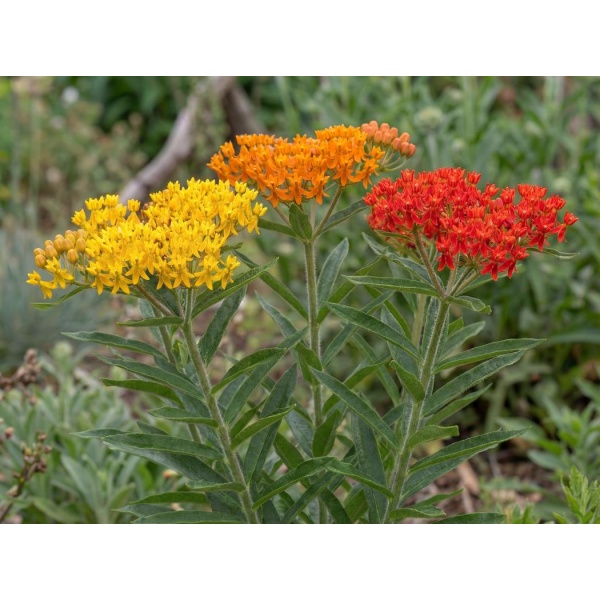
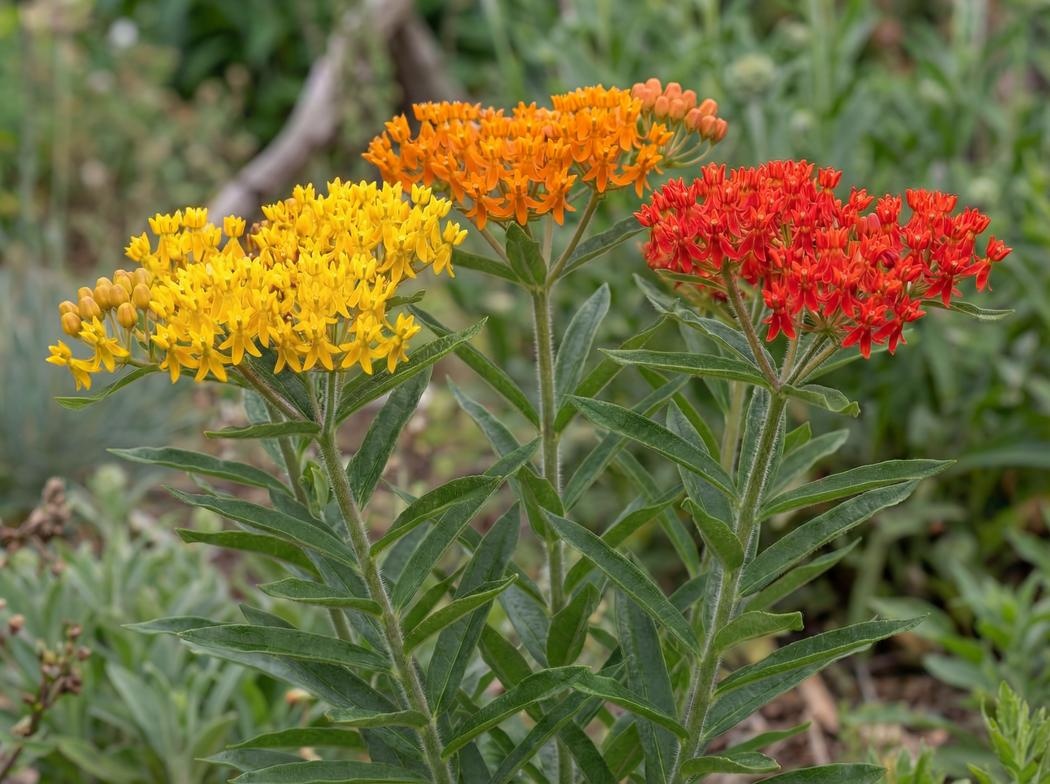
Asclepias tuberosa Gay Butterflies Group is a taprooted prairie perennial with upright leafy stems and rounded clusters of yellow, orange, pink, and red flowers that feed butterflies and other pollinators.
- Description
- Additional information
Description
Asclepias tuberosa Gay Butterflies Group is a long-lived, taprooted herbaceous perennial that forms an upright clump about 60 to 90 cm high and 45 to 60 cm wide. Narrow lance-shaped green leaves line the sturdy stems, and rounded terminal umbels open from early to late summer in a lively mixture of yellow, golden orange, pink, and red. The reflexed petals and raised floral hoods give each small bloom the characteristic milkweed structure. Slender green pods mature to brown and may release silky seed in autumn. The flowers provide nectar for many pollinators, while the foliage is a larval food source for monarch butterflies.
Grow Gay Butterflies Group in full sun and freely drained acidic, neutral, or alkaline soil. Sandy, gravelly, or lean loam is preferable to rich wet ground. Water young plants deeply while roots establish, then allow the soil to dry between waterings. Avoid moving established plants because the deep taproot resents disturbance. Little feeding is required; excess fertility can produce weak growth. Leave some stems and pods for wildlife and winter structure, then cut old growth before new shoots emerge. Milky sap and other plant parts may be harmful if eaten and can irritate sensitive skin. Watch for aphids and milkweed bugs, but avoid broad insecticides where beneficial caterpillars feed.
Additional information
| Height | 2 ft – 3 ft |
|---|---|
| Spread | 1 ft – 2 ft |
| Flowering months | June, July, August, September |
| Synonyms | Asclepias tuberosa 'Gay Butterflies', Asclepias tuberosa Gay Butterflies |
| Family | Apocynaceae |
| Hazardous | yes |
| Variegated | no |
| Color flower autumn | Red, Yellow, Pink, Orange |
| Color flower summer | Red, Yellow, Pink, Orange |
| Aspect | South, West |
| Foliage | Deciduous |
| Habit | Clump-former |
| Moisture | Well Drained Soil |
| Ph | Acid, Alkaline, Neutral |
| Position | Full sun |
| Shape | Mound-forming, Upright |
| Suggest planting location | Pollinator Garden, Flowering borders, Patio and container use, Cottage and informal gardens, Wildlife friendly gardens, Gravel and stone gardens, Prairie style planting |
| Type | Perennial |
| Use for | Deer resistant, Butterfly-Friendly, Cutting Garden, Xeriscape, Pollinator-Friendly |
| Years to max height | 2 |
| Drought resistance | yes |
| Soil | Sand, Gravelly soil |
| Harvest in | 7, 8, 9 |
| Local names | Gay Butterflies Butterfly Weed, Gay Butterflies Milkweed, Butterfly Flower |
| Blomidon Item No | ZASCTUGB0001G |
| Cultivation | Plant in full sun without disturbing the deep taproot, water through establishment, avoid rich or persistently wet soil, and leave some seed heads for wildlife. |
| Usps | Multicolored umbels combine yellow, orange, pink, and red., Flowers and foliage support butterflies and other pollinators., Deep taproot supports strong drought tolerance after establishment. |
| Diseases | Generally resilient in freely drained soil. Root rot can occur in persistently wet ground, while rust, leaf spots, and powdery mildew may appear where airflow is poor or foliage remains wet. |
| Hazardous information | All parts contain milky sap and cardiac glycosides and may be harmful if eaten. Sap can irritate sensitive skin and eyes; wear gloves when cutting and keep plant material away from children and pets. |
| Watering instructions | Water deeply during establishment, then let the upper soil dry before watering again. Keep winter soil freely drained and avoid persistent saturation. |
| Sunlight instructions | Plant in full sun in an open border or prairie-style setting where stems receive direct light for most of the day. |
| Common Name | Gay Butterflies Butterfly Weed |