
Aruncus diocus
$24.99
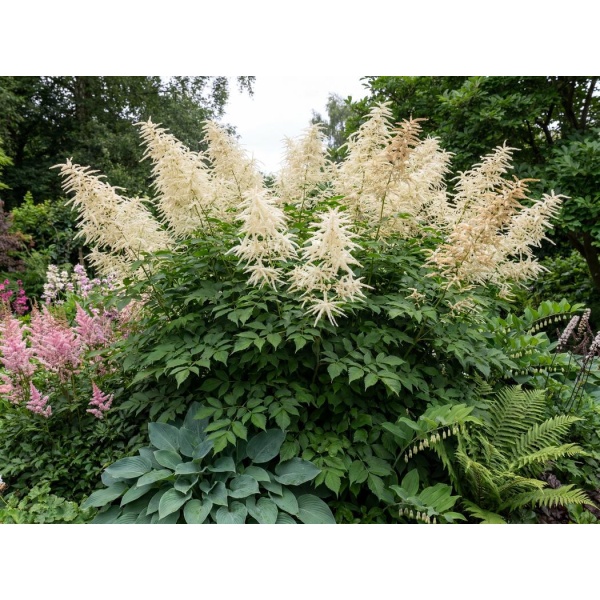
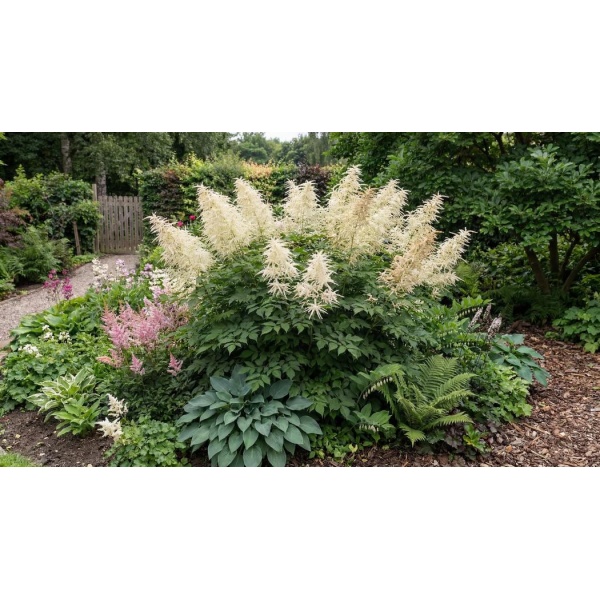
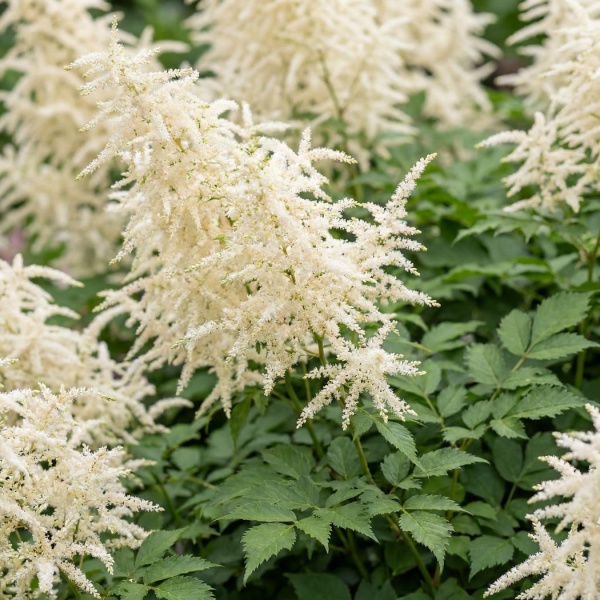
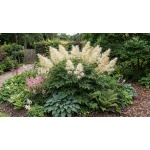
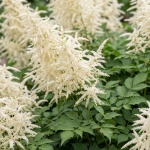
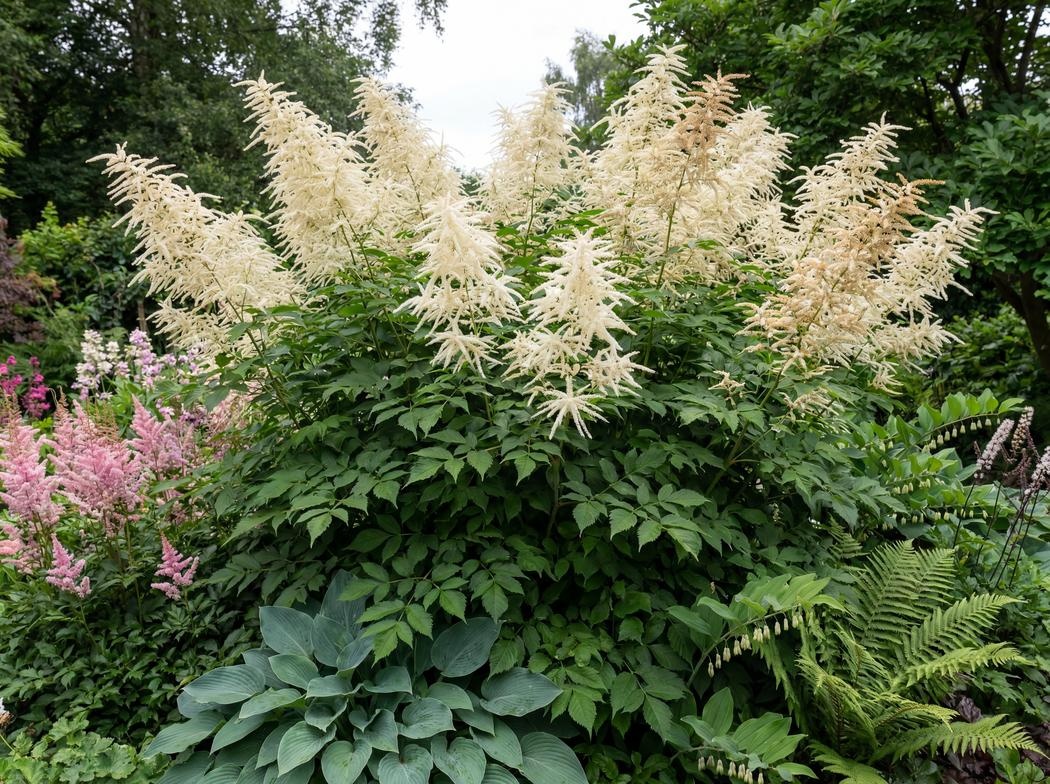
Aruncus dioicus is a tall clump-forming perennial with dark green pinnate leaves, feathery cream-white panicles and yellow-orange autumn foliage.
- Description
- Additional information
Description
Aruncus dioicus forms a bold upright clump of dark green, pinnately compound leaves beneath airy cream-white flower panicles. Separate male and female plants carry slightly different plumes, with male flowers generally producing the showier display.
Grow it in fertile soil that stays evenly moist, choosing full sun where moisture is reliable or partial shade in warmer regions. The architectural flower plumes work well at the back of borders, beside water and in woodland or rain-garden planting.
Spring and early-summer flowers support visiting bees and butterflies and can be cut for arrangements. Yellow-orange autumn foliage extends the seasonal display before the deciduous stems die back.
Additional information
| Height | 5 ft – 8 ft |
|---|---|
| Spread | 2 ft – 3 ft |
| Flowering months | May, June |
| Synonyms | Actaea dioica, Aruncus diocus, Aruncus vulgaris, Spiraea aruncus |
| Family | Rosaceae |
| Hazardous | unknown |
| Variegated | unknown |
| Color flower spring | White, Cream |
| Color flower summer | White, Cream |
| Aspect | East, West, North |
| Foliage | Deciduous |
| Habit | Bushy, Clump-former |
| Moisture | Wet or Damp Soil, Moist but Well Drained |
| Ph | Acid, Alkaline, Neutral |
| Position | Full sun, Partial shade |
| Shape | Upright |
| Suggest planting location | Woodland Garden, Flowering borders, Cut flower use, Cottage and informal gardens, Rain Garden |
| Type | Perennial |
| Use for | Architectural, Cutting Garden, Pollinator-Friendly |
| Years to max height | 2 |
| Drought resistance | no |
| Soil | Chalk, Clay, Loam, Sand |
| Local names | Goats Beard, Bucks Beard, Brides Feathers |
| Blomidon Item No | MO23015533, 7937657110579, ZARUDI0001G, 201920946, 201810844 |
| Propagation | Propagate by division in early spring, leaving at least one eye on each section, or grow from seed. |
| Pests | Blackfly and sawfly larvae may damage the plant. |
| Diseases | Generally disease-free, although leaf spot may occur. |
| Pruning | Cut stems to just above ground level in autumn, or remove spent flower stalks earlier if seed plumes are not wanted. |
| Watering instructions | Keep the root zone evenly moist, especially in full sun and dry spells. |
| Sunlight instructions | Grow in full sun with steady moisture or in partial shade farther south. |