
Acer rubrum
$419.99
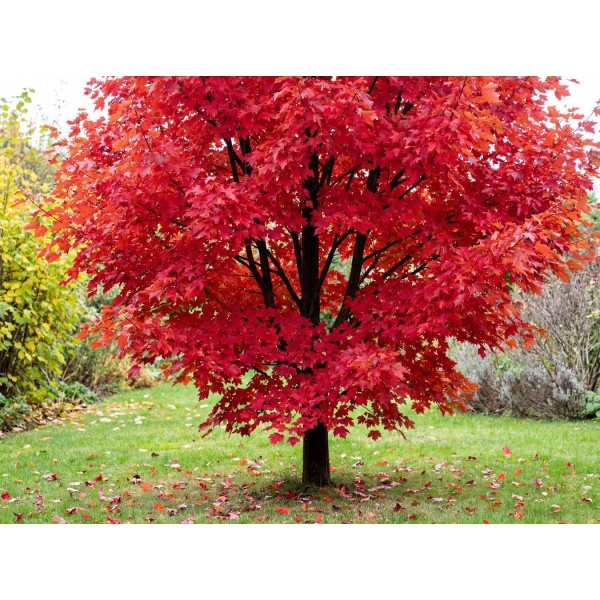
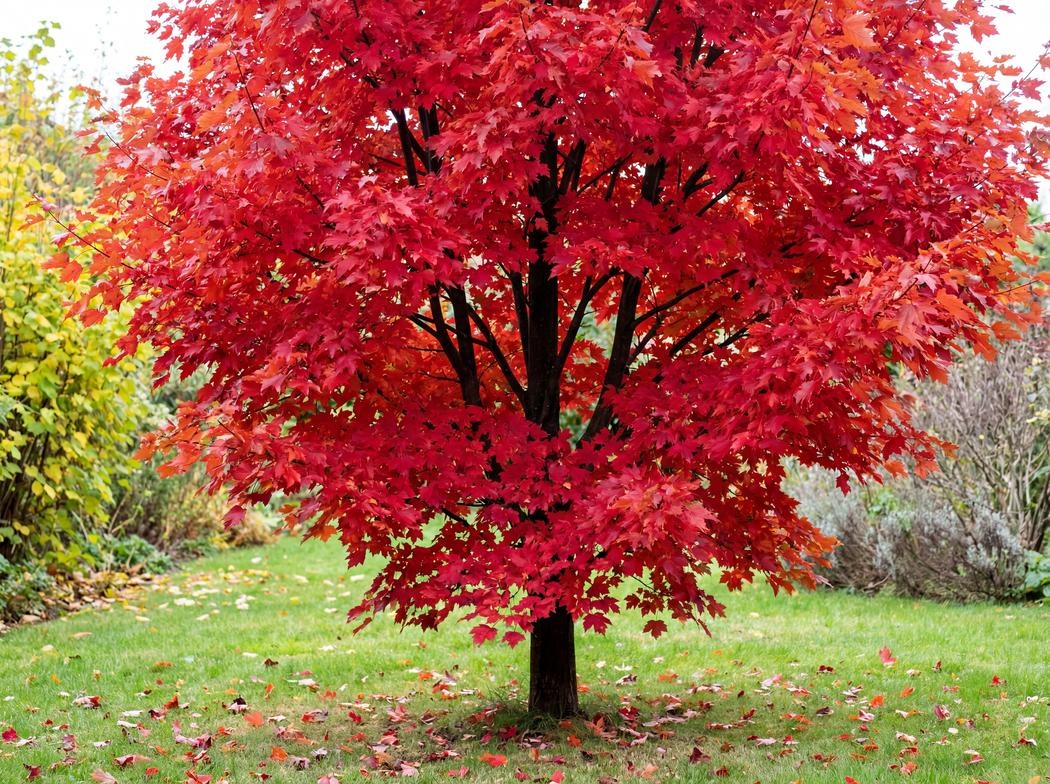
Acer rubrum makes a broad shade tree with green leaves that turn red, orange, and yellow in fall, suited to full sun or partial shade and moist soil.
- Description
- Additional information
Description
A broad canopy makes Acer rubrum a shade tree for spacious gardens, parks, and boulevard-style plantings. Its green, lobed leaves turn red, orange, and yellow in fall.
Plant it in full sun or partial shade in moist, well-drained, acidic to neutral soil. It tolerates clay and wet sites but is sensitive to drought and salt. Wilted leaves are toxic to horses and donkeys if eaten.
Additional information
| Height | 40 ft – 98 ft |
|---|---|
| Spread | 30 ft – 50 ft |
| Flowering months | March, April |
| Synonyms | Acer coccineum, Acer sanguineum, Rufacer rubrum |
| Family | Sapindaceae |
| Hazardous | yes |
| Variegated | unknown |
| Color flower spring | Red |
| Aspect | East, South, West, North |
| Foliage | Deciduous |
| Habit | Bushy |
| Moisture | Moist but Well Drained, Well Drained Soil |
| Ph | Acid, Neutral |
| Position | Full sun, Partial shade |
| Scent | Fragrant |
| Shape | Oval, Round |
| Suggest planting location | Architectural planting, Wildlife friendly gardens, Rain Garden |
| Type | Tree |
| Use for | Architectural, Bird-Friendly, Pollinator-Friendly |
| Years to max height | 20 |
| Drought resistance | no |
| Soil | Chalk, Clay, Loam, Sand |
| Local names | Carolina Maple, Red Maple, Scarlet Maple, Soft Maple, Swamp Maple |
| Blomidon Item No | ACERU00003G, ACERU00007G, ACERU01507G, ACERU050WB, ACERU060WB, ACERU070WB, ACERU25020G, 100-4691, 100-7015, 201831717, 201810378, 201810379 |
| Cultivation | Grow in full sun or partial shade in moist, well-drained soil. Acid soil supports the best fall color. Leave ample room around the broad crown and surface roots. |
| Usps | Green leaves turn red, orange, and yellow in fall., Its broad canopy provides shade from late spring through fall., Give it full sun or partial shade and evenly moist soil. |
| Propagation | Propagate by seed or grafting. |
| Pests | Acer gall mite, aphids, caterpillars, and horse chestnut scale may occur. |
| Diseases | Verticillium wilt, Acer leaf scorch, and honey fungus may occur. |
| Pruning | Remove diseased, damaged, congested, or crossing branches in late summer. |
| Hazardous information | Wilted or partially dried leaves are toxic to horses and donkeys if eaten. |
| Watering instructions | Keep the soil moist but well drained. |
| Sunlight instructions | Grow in full sun or partial shade. |