
Acer griseum
$299.99
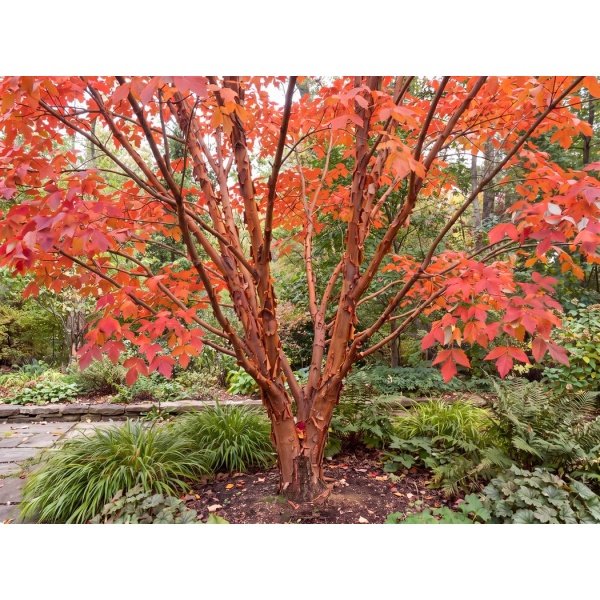
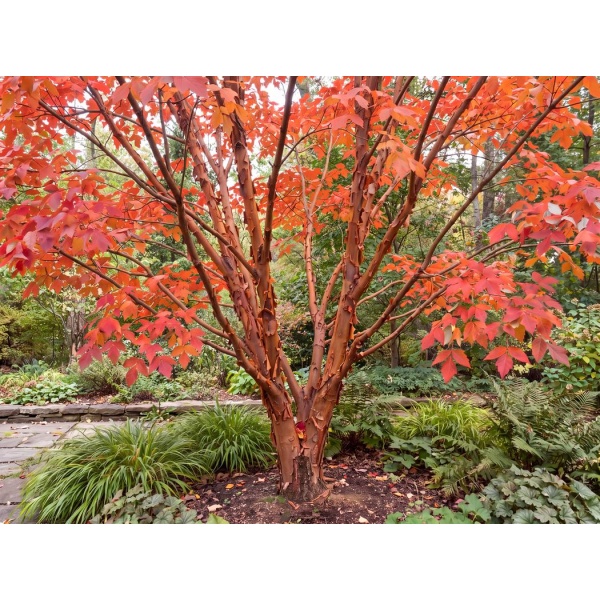
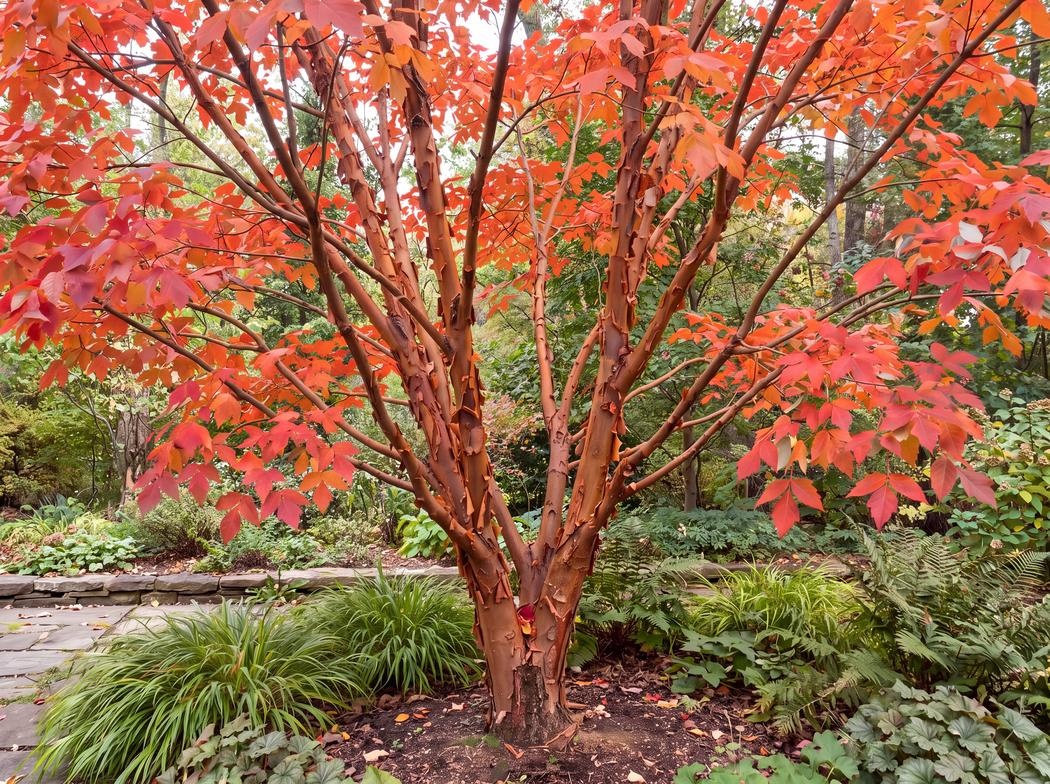
Acer griseum brings peeling cinnamon-brown bark and red-orange fall color to a compact, slow-growing specimen tree for courtyards and smaller gardens.
- Description
- Additional information
Description
Peeling cinnamon-brown bark makes Acer griseum a small specimen tree with a clear purpose in the garden. Papery curls remain on the trunk and branches, keeping the tree distinctive after its leaves fall. Trifoliate green leaves turn red and orange in autumn, while the open oval crown and slow growth fit courtyards, patio borders, and smaller gardens.
Plant it in full sun or partial shade in moist, well-drained soil. Water during dry spells while the tree establishes, and use garden compost as mulch to conserve moisture. Little pruning is needed; remove dead or damaged growth only while the tree is fully dormant or in late summer.
Additional information
| Height | 26 ft – 39 ft |
|---|---|
| Spread | 13 ft – 26 ft |
| Flowering months | April, May |
| Synonyms | Acer nikoense var. griseum |
| Family | Sapindaceae |
| Hazardous | unknown |
| Variegated | unknown |
| Color flower spring | Yellow |
| Aspect | East, South, West, North |
| Foliage | Deciduous |
| Habit | Bushy |
| Moisture | Moist but Well Drained |
| Ph | Acid, Alkaline, Neutral |
| Position | Full sun, Partial shade |
| Shape | Oval, Round |
| Suggest planting location | Pollinator Garden, Woodland Garden, Low maintenance planting, Urban and courtyard gardens |
| Type | Tree |
| Use for | Architectural, Low maintenance, Pollinator-Friendly |
| Years to max height | 20 |
| Drought resistance | no |
| Soil | Chalk, Clay, Loam, Sand |
| Local names | Paper Bark Maple, Paperbark Maple |
| Blomidon Item No | MO23000153, ACEGI00005G, ACEGR050WB, ACEGR060WB, 201945795, 201966958, 201966959, 202069108, 202001805, 83381, 201994459, 202017273, 201994739, 55089, 201831368, 201810250, 201831637 |
| Propagation | Propagate by seed or grafting; most seeds have poor viability. |
| Pests | Watch for Acer gall mite, aphids, caterpillars, and horse chestnut scale. |
| Diseases | Verticillium wilt, Acer leaf scorch, and honey fungus may occur. |
| Pruning | Remove dead or damaged shoots only when fully dormant or in late summer. |
| Watering instructions | Keep the soil moist but well drained, especially during dry spells. |
| Sunlight instructions | Grow in full sun or partial shade in a sheltered position. |