
Hosta ‘Frances Williams’
$27.99
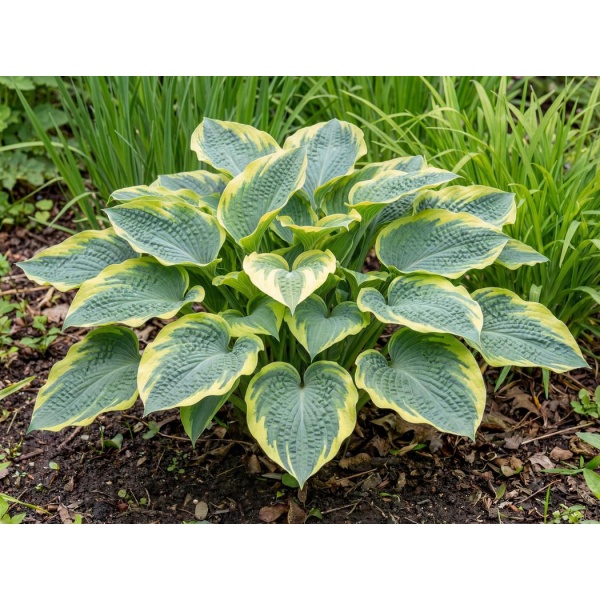
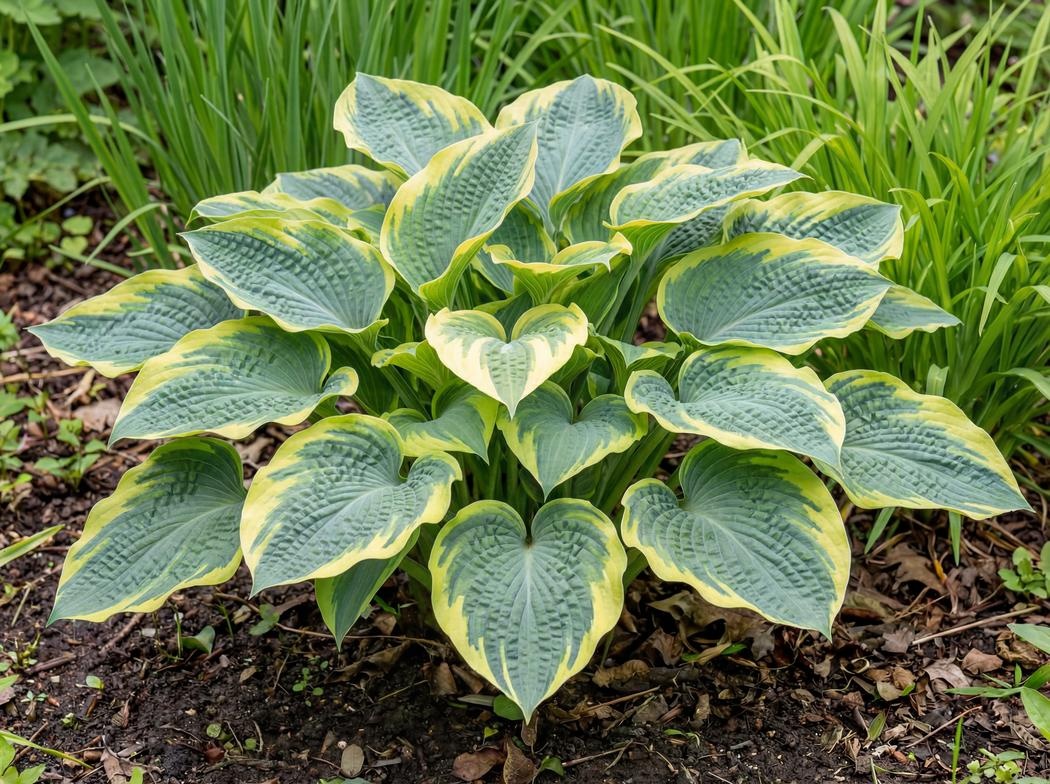
Hosta Frances Williams forms a broad deciduous mound of puckered blue-gray leaves with irregular yellow-green margins and pale summer flowers.
- Description
- Additional information
Description
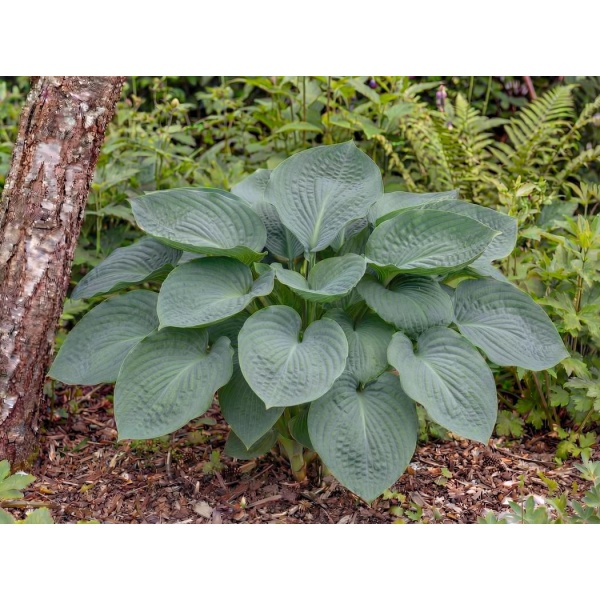
Hosta Frances Williams is a large clump-forming deciduous perennial about 20 to 30 inches tall and 20 to 40 inches wide. Broad heart-shaped to rounded leaves are thick, puckered, and strongly veined. Their blue-gray to gray-green centers have wide irregular greenish-yellow margins that can mature toward creamy beige.
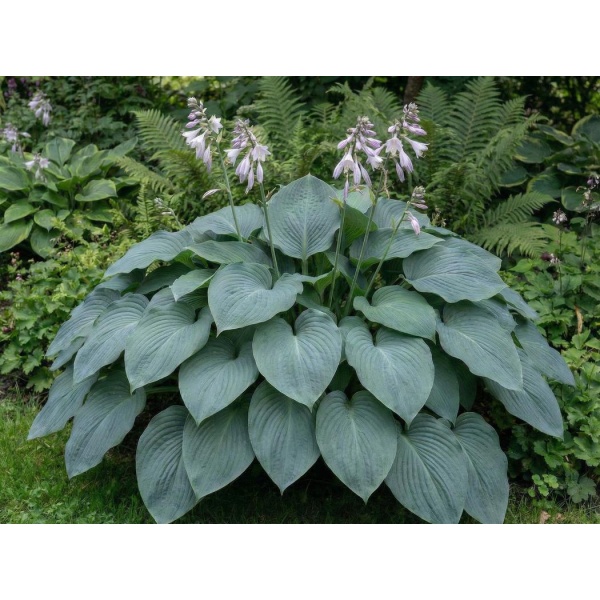
Pale lilac to mostly white funnel-shaped flowers rise in compact racemes in June and July. Grow the plant in partial shade or full shade in fertile, humus-rich, moist but well-drained acidic to neutral clay or loam. Morning sun is suitable, but protect the foliage from hot direct sun and cold drying winds. The bold variegated mound suits shady borders, woodland gardens, groundcover groups, underplanting, courtyards, and large outdoor containers.
Space plants about 4 feet apart. Keep the soil consistently moist during active growth, applying water beneath the leaves, while avoiding waterlogging. Established plants tolerate some dry shade. Apply a light liquid fertilizer in early spring or use a slow-release top dressing without overfeeding. Divide in early spring or late summer. Remove spent foliage as needed and clear dead leaves after dormancy. Monitor for slugs, snails, vine weevil in containers, aphids, spider mites, thrips, mice, voles, nematodes, anthracnose, leaf spot, root rot, crown rot, and viruses. All parts are toxic to dogs, cats, and horses; saponin ingestion may cause vomiting, diarrhea, or depression.
Additional information
| Height | 50 cm – 75 cm |
|---|---|
| Spread | 50 cm – 100 cm |
| Flowering months | June, July |
| Synonyms | Hosta 'Frances Williams', Hosta Eldorado, Hosta sieboldiana Frances William, Hosta sieboldiana Frances Williams, Hosta Yellow Edge |
| Family | Asparagaceae |
| Propagation | Propagate by division in late summer or early spring. |
| Pests | Slugs, snails, vine weevil in containers, aphids, spider mites, thrips, mice, voles, nematodes, deer, and rabbits may occur. |
| Diseases | Hosta virus X, tobacco rattle virus, tomato ringspot virus, anthracnose, leaf spot, root rot, and crown rot may occur. |
| Pruning | Remove spent foliage as needed and clear dead foliage after it dies back at the end of the growing season. |
| Hazardous information | All parts are toxic to dogs, cats, and horses. Saponin ingestion may cause vomiting, diarrhea, or depression. |
| Hazardous | yes |
| Variegated | yes |
| Watering instructions | Keep the soil consistently moist during active growth, applying water beneath the leaves, while avoiding waterlogging; established plants tolerate some dry shade. |
| Sunlight instructions | Grow in partial shade or full shade, ideally with some morning sun. |
| Color flower summer | Purple, White |
| Aspect | East, West, North |
| Foliage | Deciduous |
| Habit | Clump-former |
| Moisture | Moist but Well Drained |
| Ph | Acid, Neutral |
| Position | Partial shade, Full shade |
| Shape | Mound-forming, Spreading |
| Suggest planting location | Urban and courtyard gardens, Flowering borders, Patio and container use, Cottage and informal gardens, Ground cover planting, Underplanting for roses and shrubs |
| Type | Perennial |
| Use for | Ground cover, Cutting Garden, Low maintenance, Container Planting |
| Years to max height | 2 |
| Drought resistance | moderate |
| Soil | Clay, Loam |
| Local names | Frances Williams hosta |
| Blomidon Item No | MO23019321, ZHOSSIFW0001G |
| Usps | Large puckered blue-gray leaves carry wide irregular yellow-green margins., Pale lilac to mostly white racemes rise above the foliage in early summer. |
| Common Name | Frances Williams Hosta |